


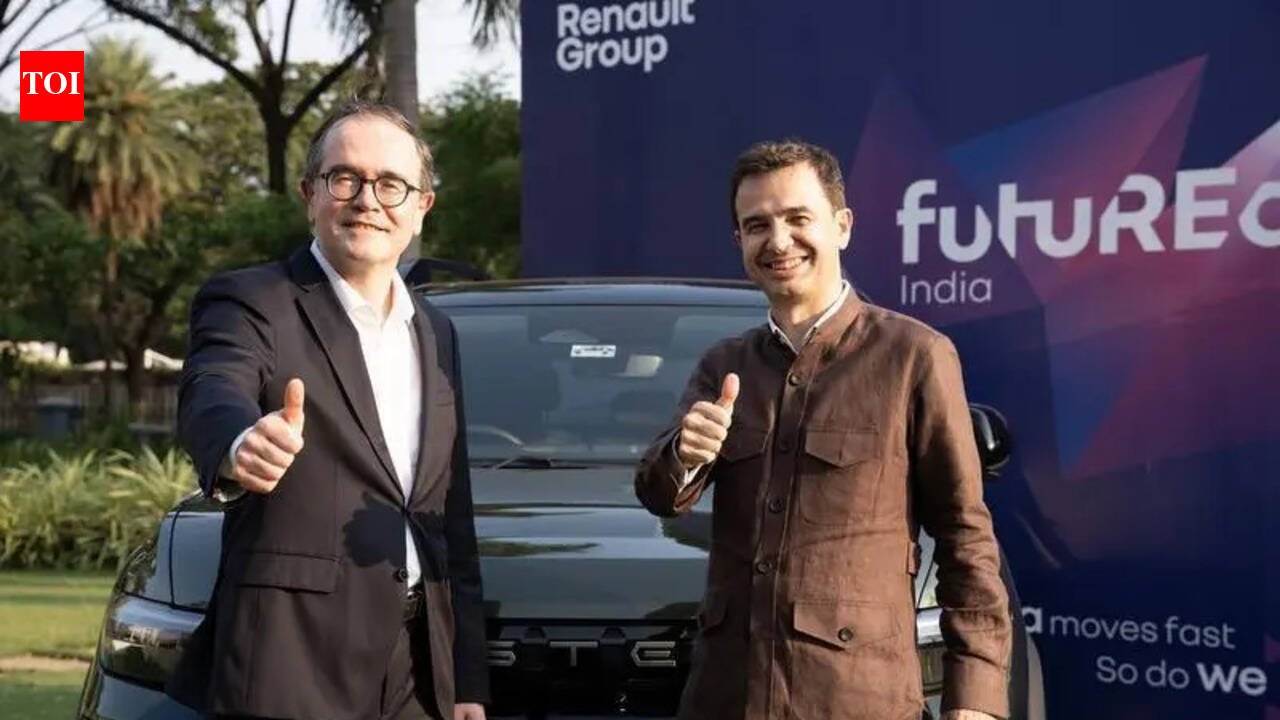
A few weeks ago, Chennai played host to a quiet but strategically significant development amid the din of election rallies. Francois Provost, chief executive of the 58 billion euro French auto major Renault Group, spent nearly a week in India—much of it in Chennai—signalling the city’s growing importance in the global ambitions of Europe’s third-largest carmaker.The visit is one of Provost’s major international engagements after unveiling Renault’s four-pillar ‘futuREady 2030′ strategy in Paris in mid-March. Notably, India featured prominently in the blueprint—the country is no longer viewed merely as a sales market, but as a critical hub for engineering, manufacturing scale, and exports, with Chennai at the centre of that vision. India alone accounts for over a third of total industry volume growth in the markets where Renault operates, making it one of the most compelling growth engines globally.This renewed focus represents a turning point in Renault’s 15-year-old India journey, which has seen both promise and setbacks. Unlike several Western peers—and even its alliance partner, Nissan Motor Co—Renault built momentum steadily in India, powered by the success of models such as the Duster. The compact SUV Duster, along with a few other offerings, helped the brand gain traction, taking volumes to over 92,000 units in FY21 and lifting market share to around 3.5%, with the company eyeing the 1 lakh milestone and further growth in the following years.But the trajectory faltered soon after. A combination of factors, such as pandemic-related disruptions and geopolitical shocks—including the Russia-Ukraine war—weighed heavily on Renault’s global operations. The company’s exposure to markets such as Russia and China added to the strain, while its sub-₹10 lakh-heavy portfolio in India compressed margins. Volumes in India halved from their peak, and market share slipped to below 1%.Now, under Provost, India has moved from the periphery to the core of Renault’s growth narrative—and Chennai has emerged as its operational and strategic anchor. “India has a key role to play,” Provost said during his address at Renault’s technology centre near Chennai, its largest outside France, with a workforce of around 6,000 engineers. The workforce may grow further in the coming years, given its expanding role in developing vehicles on new platforms.Renault’s technical centre, which includes a design centre, is working on key architectures such as the Renault Group Entry Platform and the Modular Platform. These platforms will focus on the next generation of vehicles, many of which will be developed and engineered in India for both domestic and international markets.It has a manufacturing base at Oragadam, on the outskirts of Chennai. Supported by nearly 130 suppliers, the 500,000-unit production campus—now fully owned by Renault following the buyout of its alliance stake—will be integral to its growth plans. Beyond catering to local demand, it will serve as a key export base for vehicles and components, further integrating India into Renault’s global value chain.The company’s ambitions in India are now significantly larger. Renault plans to position the country among its top three global markets (now India is among top 15 markets), backed by its most aggressive product renewal cycle yet. The carmaker intends to expand its portfolio to seven models by 2030, spanning multiple powertrains and segments.The strategy builds on an already robust foundation. Renault has established a wide retail footprint in India, with over 350 sales touchpoints and more than 450 service centres, providing the backbone for its next phase of growth.For decades, Tamil Nadu’s automotive identity has been shaped by early movers such as Hyundai Motor India and Ford Motor Company. With Ford’s manufacturing operations in the state now shut, Renault is well placed to emerge as the next major force in the region, with Chennai set to anchor its engineering, manufacturing, and export strategy.
