










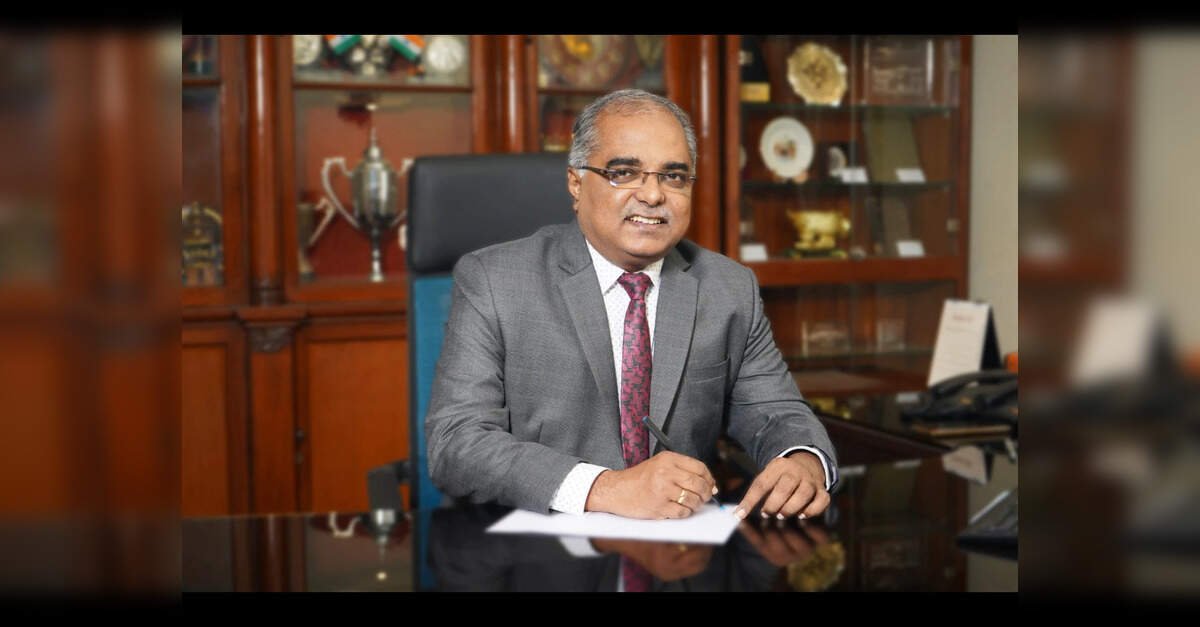
By Dr Paul Wilson
In the recent past, higher education enrollment across the states have begun to plummet due to want of applications. Many arts and science colleges in addition to Engineering colleges have begun to close down redundant departments not knowing as to how to deal with the crisis. Has the higher education landscape come to a point of saturation as it is not able to cope up with the rapid technological advancements and appropriate itself accordingly? Will closing down the degree programmes be the ultimate solution for the current challenges experienced by the higher educational institutions? How can we comprehend the need for designing curriculum, pedagogy, introducing flexibilities in teaching, learning and assessments as per the end user’s perspectives, academic identity and epistemological shift and reimagine key aspects of higher education? This article dwells on a few important features to be considered based on the observed trends and interventions to be administered to mitigate or nourish the same as per the need.
Restructuring of Curriculum: Conventional disciplines are not gaining traction any more. The need of the hour is to immediate restructuring of the time-tested disciplines of sciences, social sciences and humanities in lieu of abolishing them abruptly owing to zero enrollment. The market demand for disciplines such as Maths knowledge base for AI and computer science, Biology for interdisciplinary research, Physics and Chemistry for materials based The idea of liberal arts as degree programme with transdisciplinary perspectives to be handled by faculty from various disciplines should be considered as new age degree programme to be launched by autonomous colleges and universities. Restructuring Social Sciences and Humanities as Digital Humanities and Computational Social sciences mapped with vocational titles in addition to offering civic formation, cultural capital, and broad intellectual enrichment would be an option to count on in the present dispensation.Non-linear consumption of knowledge: Secondly, the way knowledge is generated, consumed, validated, and applied in the modern information ecosystem is progressively changing to a non-linear mode. Knowledge flowed hierarchically downward from recognized gatekeepers (textbooks, institutions, tenured academics) to the learner. A non- linear science curriculum introduces systems biology or climate science early on and liberates the content delivery from a structured and hierarchical concept progression. Students should be trained to look at a single event (like globalization) through multiple lenses simultaneously including economic data, cultural anthropology, ethical philosophy, and political science through the design of lessons. Non-linear thinking could be leveraged through solving real-time problems using project-based learning and facilitating the learning of concepts as and when the need arises. In addition, designing thinking and systems thinking framework for solving problems could be employed as pedagogiesInterpreting languages such as English and Tamil partially from literature to language based on the market demand would revive the demand through building relevance. Further, repurposing language learning to discipline specific modules such English for Psychology, English for Philosophy in under graduation in lieu of imposing literature for those who learn languages as part I and II under CBCS pattern. Re-structuring the degree programmes including English, Philosophy, Political science, Economics etc from Liberal arts framework breaks the Silos and introduce new cross-disciplinary connections for non-linear ways of learning.
Reimagination of academic flexibilities: Reimagination of higher education includes Curricular Flexibility by facilitating Cross-disciplinary or interdisciplinary Pathways through elective courses under Part IV of CBCS framework for those aspiring to pursue cross majors in their higher academic progressions. Academic Pathway Flexibility could be offered through allowing students to register for their value-added courses through academic bank of credits using their APAAR IDs.
Students of present generation prefer pedagogical flexibility through personalized learning and self-paced learning offered through the learning management system using blended hybrid flexible (HYFLEX) ways.
Competency based Assessments: Talent acquisition platforms seek portfolios rather than resume of students to evaluate their competencies. New age assessments encompass competency-based assessments for portfolio building rather than scoring marks through rote learning and conventional assessments.
Current tertiary education platform offers research and career Flexibility for students through Dual and twin degrees and Stackable micro credentials. Autonomous colleges can redeem this facility
iN with the approval from their respective academic councils and due diligence to inform the affiliating universities as per UGC regulation available. Universities need to quickly equilibrate themselves with these flexibilities to prevent redundancy and consequent insolvency.
Reimagination from “Ivory Tower Custodians” to “Workforce Ecosystem Hubs”: A Workforce Ecosystem Hub is a tertiary education model where a college or university operates as a co-creation engine rather than a mere degree vendor. Instead of educating students in a vacuum and sending them off into the labor market, the university embeds employers, regional development boards, labor data analytics, and civic stakeholders directly into its operational and academic core. This academic shift would begin to be integrated as student support services in the years to come and would position the institution different from neighbouring institutions. Consequently, the dynamic engagement of “work of education” with that of “world of work” would render the academic institutions relevant and resilient with changing socio-economic and cultural contexts.
The epistemological shift from “Intrinsic Civic Value” to “Hyper-Pragmatic Utility”: Knowledge is no longer just produced but valued for its economic returns – Value for Money, along with social or political value that it creates. Consequently, the students behave more like informed consumers owing to the lack of ethical reasoning, civic education and cultural knowledge. The problem of overemphasis on marketable skills leads to reckoning of education as a tool of economic production rather than human development. The Shift can be identified as from learning about the past to prediction thus mapping with a concrete vocational title as epistemological shift (Who validates this knowledge, and does it actually help solve real-world problems?). While this transition being an inevitable social change, the state and central ministry of education should initiate counter cultural movement in mitigating the growth of utilitarian mind set at the cost of civic sense by insisting on mandatory civic education as part of higher education through social immersion programmes.
In conclusion, mere closure of institutions or merger of departments would not be an ideal solution for the enrollment challenges encountered in the higher education landscape. Educational leaders to be discerning and proactive with no delay to sense the perspectives of Gen Zs and market demands continually and appropriate the curriculum, pedagogy and assessment accordingly. Colleges to be liberated from the clutches of complacent universities through autonomy to experiment new ways to be resilient. Political appointments of inefficient faculty in the universities through nepotism in the country is navigating the higher educational institutions towards redundancy and insolvency. We are now in a state of clarity without agency; seeing the problem clearly, understanding the solution intellectually, yet lacking the institutional agency to translate that understanding into action.” Will the ministry of education from the state and centre be proactive or only reactive after witnessing the danger?
Dr Paul Wilson is the Principal and Secretary of Madras Christian College, Chennai.
DISCLAIMER: The views expressed are solely of the author and ETEDUCATION does not necessarily subscribe to it. ETEDUCATION will not be responsible for any damage caused to any person or organisation directly or indirectly.


