


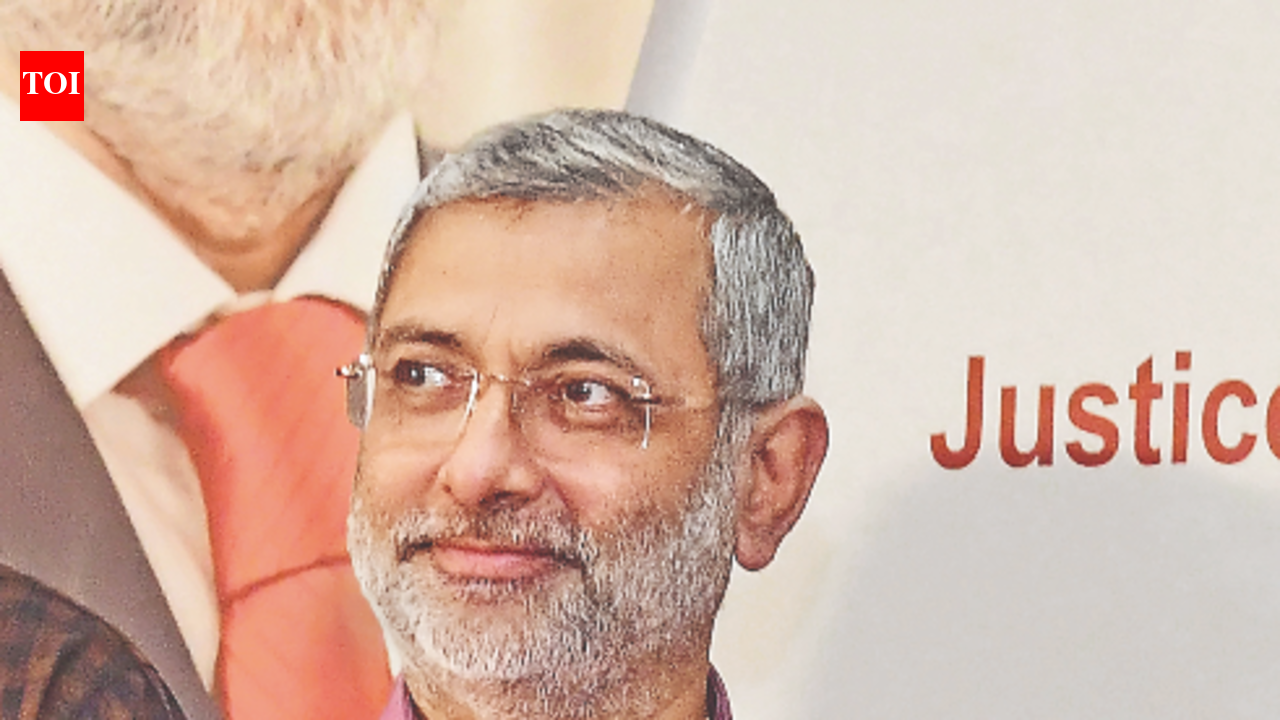
K ChandruIn the late 1950s, when C N Annadurai, chief minister and founder of DMK, raised the slogan “North rises, South diminishes … Sindri is there, but no munthri here”, people laughed at the contrast he drew: the north had a fertilizer unit at sindri while the south did not even have a cashew factory. The slogan was not only about the underdevelopment of south India after Independence, but also about the failure of Five-Year Plans to address fiscal issues in a more decentralized and distributive justice-based manner.
The issues were also about administrative and constitutional power sharing between the Union and states. The first to bear the brunt were the Communists, dismissed from an elected govt by a fiat of the Centre headed by Jawaharlal Nehru. The shadow of Article 356 began to loom over elected state govts, especially those led by opposition parties. Even when allowed to continue, states felt the pinch of financial control over the distribution of levies collected. Added to this was the role of governors appointed by the Union, who began to play a kind of politics not envisaged by the constitution makers. After holding a monolith of power across the country from 1952 to 1967, the Indian National Congress was, for the first time, made to bite the dust in eight states. Having enjoyed power at the Centre and state levels, the Congress found it difficult to accept opposition parties questioning them. One mechanism ‘invented’ by it was to appoint governors of its choice — usually discredited octogenarians with little relevance to the state’s political landscape, willing to spend their final years in Raj Bhavans (Lok Bhavans). It was only when the move started creating instability in states, did govts, particularly in Kerala and Tamil Nadu, wake up to what they saw as the new designs of the ruling party at the Centre.In the early 1960s, the DMK raised the question of whether states needed the post of governor. After capturing power in 1967 and demanding greater autonomy for states, the TN govt appointed a committee headed by P V Rajamannar, retired chief justice of Madras high court, to recommend constitutional changes. The committee did not recommend abolition of the governor’s post. Instead, it suggested that the state govt should have a say in the selection. The office remained though often perceived as being used by the Centre to intimidate or destabilise popular govts.It was the height of the dictatorial attitude of the Centre when it imposed a national emergency (June 1975–1977) and curtailed fundamental rights. It also assumed greater powers by amending the Seventh Schedule and transferring subjects exclusively reserved for the State List to the Union List through the 42nd Amendment. This again raised the question of whether India’s federal structure was being converted into a more unitary state.When Kerala and West Bengal had Left Front govts and TN had a DMK govt, discussions began on the need to revisit Centre-state relations. In Oct 1983, at a meeting of all political parties and five chief ministers in Srinagar, West Bengal chief minister Jyoti Basu made a statement on Centre-state relations. The resolution adopted at the meeting assumed importance, and the Union govt subsequently appointed the Justice Sarkaria Commission to review Union-state relations. Justice R S Sarkaria, a former Supreme Court judge, circulated a detailed questionnaire to those concerned on issues including the role of governors and administrative and financial relations. After four years, the Commission submitted a 1,600-page report in 1988 suggesting reforms in Centre-state relations. However, nothing worthwhile came out of it. The BJP govt, which has been in power for the past 11 years, has continued to steer the country with the expanded powers it inherited and has shown little inclination to dismantle this structure. It has made newer and more serious inroads into Centre-state relations by enacting parliamentary legislation on subjects allocated to states, with or without consent, concentrating power at the Centre. Once again, opposition-ruled states, particularly in the south, have alleged governors are being used as instruments to destabilise elected govts. It was the DMK govt that approached the SC over delays by the governor in granting assent to bills passed by state assemblies under Articles 200 and 201 of the Constitution. A bench led by Justice Pardiwala ruled in Nov 2025 that the govt must function within the four corners of a written Constitution and remain accountable. The SC held the governor does not possess unfettered powers and cannot deviate from the concept of responsible constitutional govt.The Centre did not seek a review or file a curative petition. Instead, it invoked Article 143, asking the President to seek the SC’s advisory opinion on 14 questions, including powers of governors and the President in granting assent to bills passed by state assemblies and Parliament. A five-judge bench, despite resistance from opposition-ruled govts, answered these queries, bringing the issue back to square one. The judgment made the present DMK govt headed by M K Stalin constitute a high-level committee on Union-state relations, headed by former judge of the Supreme Court Justice Kurian Joseph. Introducing its first report, Stalin said he was placing it before the public in the hope that it would stimulate informed debate, restore balance to Union-state relations, and contribute to a constitutional settlement in which the Union is strong because it is focused and the states are strong because they are trusted. Part I of the report addresses contentious issues such as decentralisation, state autonomy, constitutional amendments, territorial integrity, language, the governor, delimitation, elections, education, health and GST.While the Committee will submit two more parts in the coming months, it is worth examining whether the present recommendations on governor appointments mark a radical departure from the 1971 Rajamannar Committee report.The Rajamannar Committee had recommended that governors be appointed in consultation with the state cabinet or through a high-powered body constituted for the purpose. The new committee proposes appointment from a panel of three names approved by the state legislative assembly. Sarkaria Commission in 1988 recommended consultation with the Vice-President of India, Lok Sabha speaker and the chief minister. The 1983 Srinagar resolution recommended the governor be appointed by the President based on a panel forwarded by the state govt.Having the legal option to curb what they describe as the Centre’s authoritarian tendencies, opposition parties have taken the issue to the people. The opposition-led govts of TN, Kerala and West Bengal, all facing elections and contesting the National Democratic Alliance, are likely to place the Justice Kurian Joseph Committee’s recommendations at the centre of their electoral platform. Their argument is that reforms are necessary and that meaningful democracy requires genuine sharing of powers between Union and states.(The writer is a retired judge of madras high court)


