



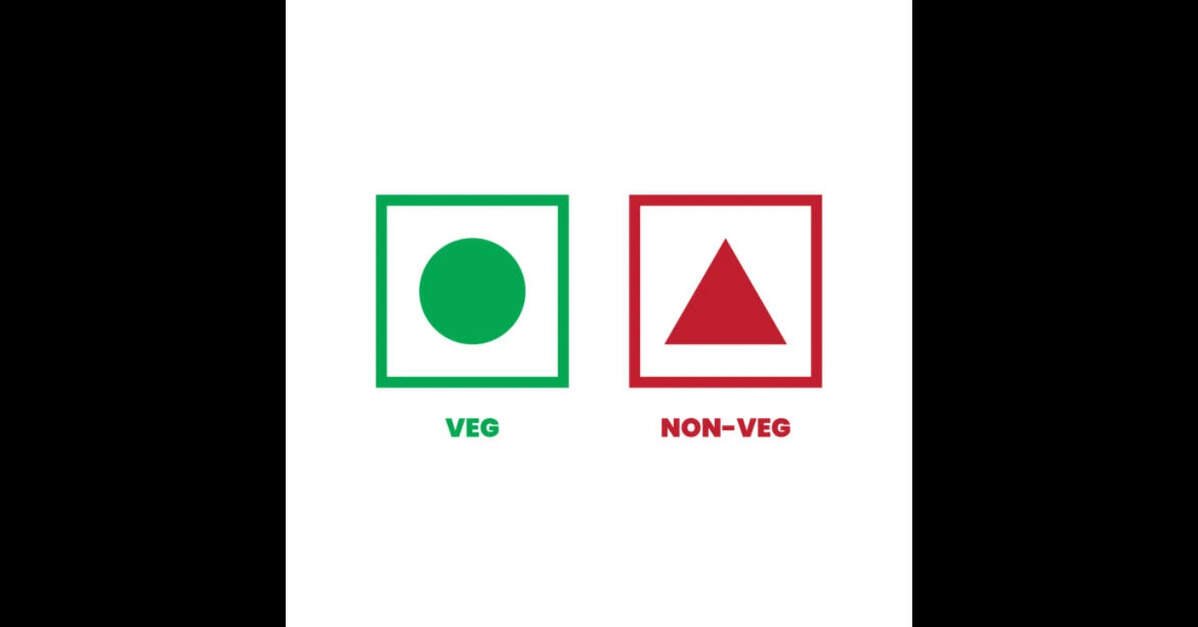
After more than a decade of regulatory uncertainty and litigation, the Centre has made vegetarian and non-vegetarian origin symbols voluntary for soaps, shampoos, toothpastes, cosmetics and toiletries, ending the mandatory disclosure requirement under the Legal Metrology framework.
The Legal Metrology (Packaged Commodities) Fourth Amendment Rules, 2026, notified last month, as G.S.R. 826(E), omit Rule 6(8) of the Legal Metrology (Packaged Commodities) Rules, 2011, which had made the declaration mandatory. The amendment places the declaration under Rule 6(4A), a provision dealing with additional declarations that manufacturers, packers and importers may make on packages.
Under the amended provision, manufacturers, packers and importers may indicate a red or brown dot for non-vegetarian origin and a green dot for vegetarian origin on soaps, shampoos, toothpastes, cosmetics and toiletries. The symbols can therefore continue to be used, but are no longer compulsory under the Legal Metrology Rules.
The change follows a long-running dispute over whether the Legal Metrology framework administered by the Consumer Affairs Ministry could impose an ingredient-origin disclosure on products principally regulated as cosmetics under the Drugs and Cosmetics framework administered by the health authorities.
The Centre introduced the requirement through the Legal Metrology framework in 2014, inserting Rule 6(8) into the Legal Metrology (Packaged Commodities) Rules, 2011. The provision stated: “Every package containing soap, shampoos, tooth pastes and other cosmetics and toiletries shall bear at the top of its principal display panel a red or as the case may be, brown dot for products of non-vegetarian origin and a green dot for products of vegetarian origin.”
The Bombay High Court was moved by the Indian Beauty and Hygiene Association, which challenged the notification on the ground that the Legal Metrology framework could not introduce a labelling requirement and that it could only be addressed under the Drugs and Cosmetics regime.
On September 9, 2014, the Bombay High Court directed the authorities not to take coercive action against the petitioners for not making the declaration, relying on the Supreme Court’s observations on consultation with the DTAB.
The issue also reached the Delhi High Court through Reckitt Benckiser (India) Ltd.’s 2015 writ petition, W.P.(C) 1989/2015. The company challenged the jurisdiction of the Director of Legal Metrology to prescribe the disclosure and argued that the issue fell within the Drugs and Cosmetics framework. In March 2015, the court had directed that no coercive action be taken against Reckitt for not making the declaration until further orders.
The regulatory position subsequently diverged between the Legal Metrology Department and the health authorities.
In 2018, the Drugs Technical Advisory Board had initially agreed to a proposal to make the green and red/brown symbols mandatory under the Drugs and Cosmetics Rules and suggested stakeholder consultation. However, after the Cosmetics Rules, 2020 came into force, the DTAB reconsidered the issue in April 2021 and declined to recommend a mandatory requirement.
The DTAB noted that there was no clarity or system in the country to certify whether cosmetic ingredients were vegetarian or non-vegetarian. It also observed that mandatory labelling could complicate regulation and add to the regulatory burden. The Board consequently recommended that the indication remain voluntary and be left to the company’s decision.
The Delhi High Court, in an order dated February 7, 2026, expressly noted the divergence between the two regulatory positions. A Bench of Justice Prathiba M. Singh and Justice Madhu Jain observed that while the Legal Metrology Rules made the symbols mandatory, the DTAB had taken the position that the indication should be voluntary.
The court directed the Director of Legal Metrology and the Drugs Controller General of India to hold a joint consultation with stakeholders and arrive at a comprehensive decision on whether the disclosure should continue to remain mandatory or be made voluntary.
“The Department of Consumer Affairs made two changes to Rule 6 of the 2011 Rules. First, they omit sub-rule (8). Since 2014, that sub-rule required every package of soap, shampoo, toothpaste and other cosmetics and toiletries to carry a red or brown dot for non-vegetarian origin and a green dot for vegetarian origin. Second, they place the same dot language in sub-rule (4A) as a new clause (d),” said Mohit Mansharamani, counsel, SKV Law Offices.
“The placement is what matters. Sub-rule (4A) says nothing in the rule prevents a manufacturer, packer or importer from declaring the listed items in addition to the mandatory declarations. It is the provision that permits barcodes, QR codes, e-codes and logos of Government schemes. Moving the dot there turns an obligation into a permission: a company may carry the dot but is no longer required to,” he added.
The regulatory difficulty also stemmed from the nature of cosmetic supply chains. Cosmetic formulations can contain raw materials whose ultimate source may not be apparent from their ingredient names, making a binary vegetarian or non-vegetarian declaration dependent on information and documentation across multiple stages of the supply chain.
“Many standard cosmetic raw materials can come from either plant or animal sources. Glycerin, stearic acid and squalane are common examples. An ingredient’s name does not reveal its source, so the origin of a finished product depends on documentation through the supply chain. The health regulator’s own stated objection was that India has no system to certify whether a cosmetic ingredient is vegetarian or non-vegetarian. The amendment does not fix that gap. It does not define “vegetarian origin” or “non-vegetarian origin” for cosmetics and toiletries, and it does not set up any certification mechanism,” Mansharamani added.
AZB & Partners senior partner Hardeep Sachdeva said commercial considerations can also form part of the assessment of regulatory change.
“Established consumer recognition and historic investment do not create an absolute right to continue using a descriptor, but they can be relevant when examining proportionality, transition periods and the commercial impact of a regulatory change.”
“The amendment is significant because the earlier requirement had remained disputed since 2011, particularly on whether the Legal Metrology framework could require ingredient-origin disclosure for cosmetics regulated principally under the Drugs and Cosmetics regime. The change also addresses a practical compliance difficulty: ingredients such as glycerin, stearic acid, squalane and emulsifying agents may come from plant or animal sources through complex supply chains. Companies may still voluntarily disclose origin, but should ensure that any claim is accurate, substantiated and supported by supplier documentation,” said Alay Razvi, managing partner, Accord Juris.
“For companies, the choice is now commercial, but it carries risk. A company that displays a green dot is making a claim about what the product is made of. The Consumer Protection Act, 2019 treats a false claim about the composition of goods as an unfair trade practice, so a voluntary dot is still a claim the company must be able to prove,” said Mansharamani.
“The litigation now has an unusual posture. The provision challenged in W.P.(C) 1989/2015, Rule 6(8), no longer exists. How the petition is formally disposed of is for the Delhi High Court to decide,” Mansharamani concluded.
