






Yet – in public – Europe’s leaders have remained cautiously quiet.
Though not, it seems, out of any lack of support for Mark Carney.
A number of Europe’s leaders, like Finland’s president – but also French President Emmanuel Macron and Italian Prime Minister Giorgia Meloni, herself once a true Trump fan – are involved in behind-the-scene chats with Carney about deepening relations, I’m told.
But – and it’s a big but – no leading European politician wants to stick his or her neck out for Carney in public right now and risk having voters at home blame them for possibly incurring the wrath of – and fresh punitive tariffs from – the US president.
Over the coming months, every large country in the EU holds key elections. Germany’s took place just over a week ago. France chooses a new president in April and early May. Italy, Spain and Poland have yet to set a date for their parliamentary elections.
When it comes to applauding Carney right now, Europe’s leaders are hiding behind the EU institutions.
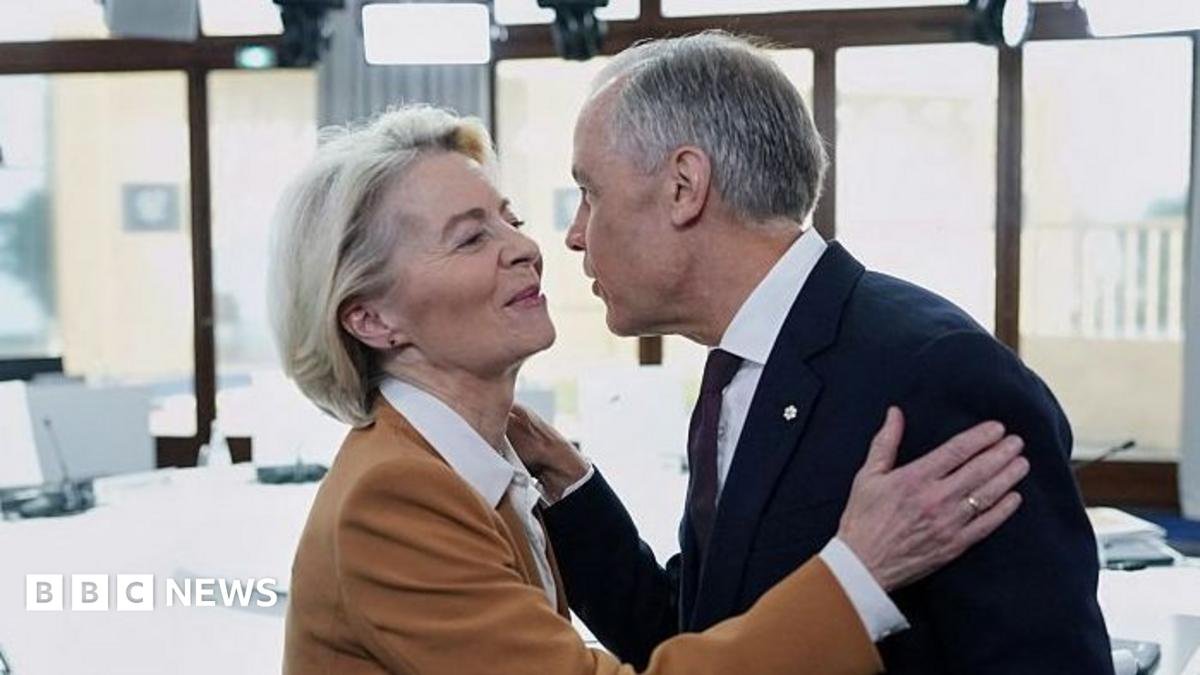
Under EU rules, the European Commission deals with trade on behalf of the member states. The EU Commission and EU parliament presidents invited Carney to Strasbourg this week.
But some officials I speak to in Brussels warn that Carney should also wake up and smell the European coffee.
Brussels may feel warmly towards Canada, and believe Ottawa shares many of the same values and priorities, but there are still loud EU voices, like France, that prefer to prevent non-member countries from getting too favourable a deal.
That’s despite pressure on the EU to show more flexibility when it comes to accommodating allies, considering the turbulent times we live in.
It’s a conundrum the UK faces too.
Carney flies to Liverpool later this week, after leaving the European Parliament, for his first face-to-face meeting with new UK prime minister, Andy Burnham.
As well as discussing UK-Canada ties, who knows – might the two men end up debating ways to best woo the EU, too?


