



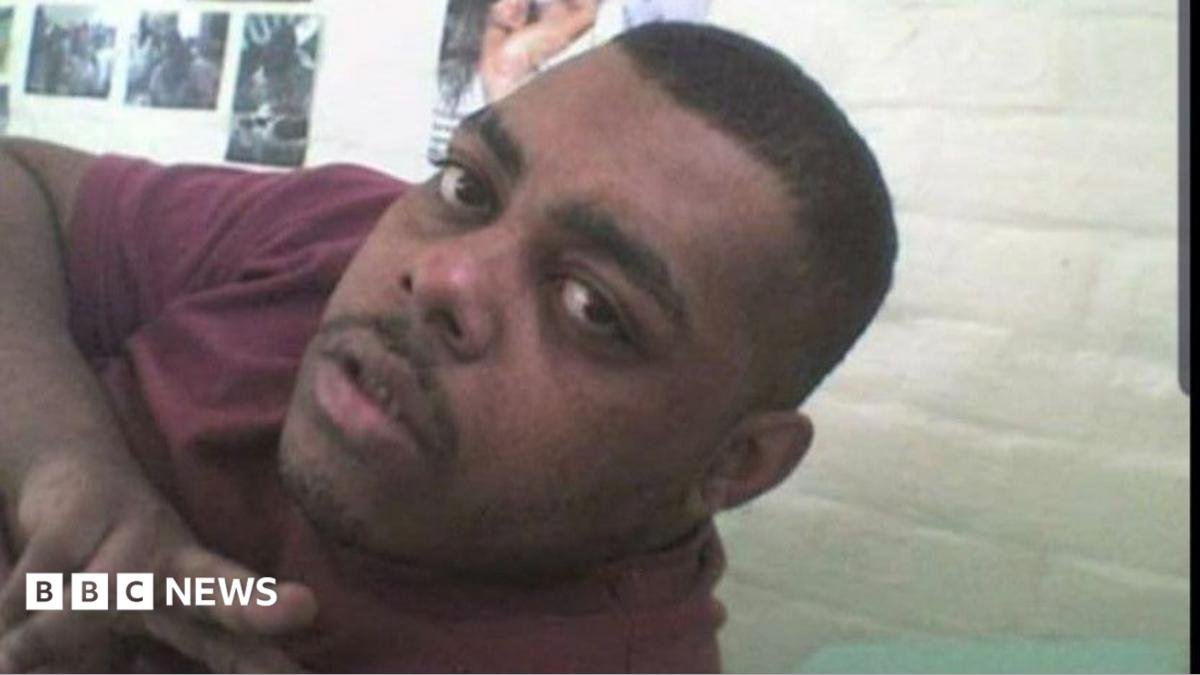
Introduced in 2005, IPPs were established to keep serious offenders, who were perceived to be a risk to the public, in prison.
They imposed a minimum sentence for offenders, but no maximum or end date, with criminals having to serve the minimum term before being considered for release by the parole board.
But this is not automatic.
They are also subject to licence conditions which they must follow or risk being recalled to prison once they are released.
IPPs were scrapped in 2012 due to criticism for being handed out for less serious crimes but it was not retrospective, meaning – as of July – there were about 2,400 people still in prison on IPP sentences, according to the United Nations, external.
However, the Ministry of Justice (MoJ) said there were 2,271 IPP prisoners in custody, as of 30 June.
The organisation, which wants an end to IPPs, said the sentence “violates serious human rights”.
Anthony drew parallels between Leroy’s sentence and offenders such as Jeffrey Gaffoor, who murdered Lynette White in one of Wales’ most notorious crimes.
Gaffoor was was released from prison in 2025 after serving 21 years for stabbing the 20-year-old to death in 1992.
“Leroy stole a phone, how is it right?”
