









India needs to diversify its crude and gas suppliers, expand strategic storage and strengthen port infrastructure as growing security tensions in West Asia expose vulnerabilities in the country’s energy supply chains.The latest flare-up involving Saudi Arabia and Yemen’s Houthi rebels has highlighted the risks of relying on a limited number of routes and infrastructure for energy imports.The situation comes as the Strait of Hormuz has remained effectively blocked for months, disrupting a key route for global energy supplies, experts told PTI.The stakes are high for India, which relies heavily on imports to meet its energy needs. Any disruption to global supplies can expose the economy to shortages and sharp swings in energy prices.Government data shows India’s overall dependence on imported primary energy was about 42% in 2024-25. However, dependence varies by fuel, with crude oil import dependence at about 89%, natural gas at 49% and coal at around 18%.
‘India needs alternative energy routes‘
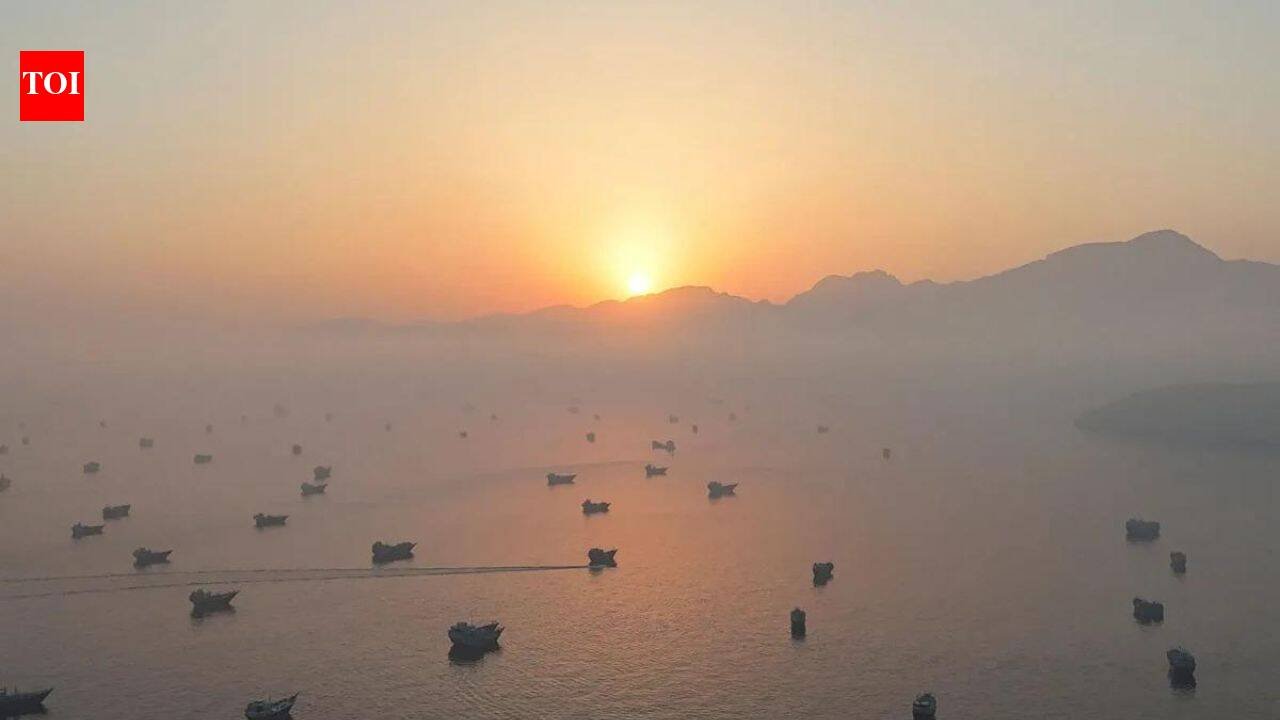
Experts said India’s challenge is not just finding alternative suppliers but also creating multiple routes and logistical options to keep energy supplies moving during a regional crisis.However, they cautioned that alternative sources cannot fully replace Gulf supplies in the near term because of higher costs, longer transit times and compatibility issues with India’s existing refining and energy infrastructure.The Strait of Hormuz, which connects the Persian Gulf with the Gulf of Oman, carries roughly a fifth of global energy supplies during peacetime. Its disruption since February, amid the Iran-Israel-US conflict, has restricted commercial shipping and disrupted energy flows.The escalation around the Red Sea and Bab el-Mandeb has added another layer of risk to shipping routes connecting the Gulf with global markets.Crude oil, liquefied natural gas (LNG) and liquefied petroleum gas (LPG) from major Gulf producers such as Saudi Arabia, Iraq, the UAE, Kuwait and Qatar traditionally reach India through routes exposed to regional security risks.India imported about 1.8 billion barrels of crude oil in 2025, with 48% coming from the Gulf region, according to Rajeev Agarwal, senior research consultant at the New Delhi-based Chintan Research Foundation.“Going forward, India will have to follow a multi-pronged strategy to safeguard its energy security,” Agarwal told PTI.He said India has already diversified its crude purchases across more than 40 countries, with Russia, the US, Nigeria and Venezuela emerging as important suppliers.Cauvery Ganapathy, climate and energy fellow at the Dubai-based Observer Research Foundation Middle East (ORF ME), said India could temporarily reroute Gulf-origin crude through the Mediterranean Sea or tap cargoes already at sea through spot trading, swaps and other forms of international arbitrage.“One must, however, be mindful of the limitations of this approach in terms of the volumes available as well as the competition for it,” she said.Ganapathy supported diversifying India’s crude sourcing across different markets but cautioned that moving away from Gulf supplies could increase costs.“The re-routing and sourcing from other countries come with their own set of concerns such as high risk premiums, higher voyage time, which can be expected to have a direct bearing on the affordability element,” she told PTI over email.
Why India needs more strategic oil reserves
Mannat Jaspal, climate and energy director at ORF ME, said India needs to expand its strategic buffers through Strategic Petroleum Reserves (SPR) as well as commercial inventories.SPRs are government-controlled crude oil stocks maintained for emergencies when regular supplies are disrupted.In May, India and the UAE signed a strategic collaboration agreement under which Abu Dhabi National Oil Company could increase its crude storage in India’s strategic petroleum reserves to up to 30 million barrels. The agreement also includes exploring crude storage in Fujairah as part of India’s strategic petroleum reserve, along with potential LNG and LPG storage facilities in India.“The announcement that the UAE will be increasing its crude oil storage capacity in India by almost six times the current volume is a case in point,” Jaspal told PTI.She also called for greater diversification of LNG supplies from the US, Australia and Africa, along with higher domestic gas production and greater use of renewable energy.Ganapathy said expanding SPR capacity should be a priority for India, the world’s third-largest oil importer. However, she warned that storage infrastructure must also be capable of handling different varieties of crude.
Could UAE and Oman offer alternative routes?
Experts said the UAE and Oman could provide another layer of resilience to India’s energy supply chains. Fujairah, on the UAE’s Gulf of Oman coast, is outside the Strait of Hormuz and has emerged as a major oil storage and bunkering centre.Oman, meanwhile, has ports including Duqm and Salalah that could potentially support alternative maritime routes.Jaspal said these ports could provide “alternative transhipment, storage and bunkering hubs that are outside the Strait of Hormuz”.However, she cautioned that such facilities cannot completely eliminate India’s exposure to Hormuz for oil and gas originating inside the Persian Gulf, as those supplies would still have to reach an outside port.Agarwal said Oman’s Duqm, Salalah, Sur and Muscat ports should be upgraded, with pipelines connecting oil terminals to the ports and facilities developed for loading tankers.Ganapathy pointed out that not all energy sources can be shifted to alternative routes in the same way.“Not every form of energy can be transported through pipelines like in the case of oil. LPG, something that India is heavily dependent on the Gulf for, being a case in point,” she said.She said LPG requires specialised and time-sensitive logistics and cannot remain at sea indefinitely. Alternative routes would also need maritime protection, potentially extending the security challenge into the western Indian Ocean and waters near Africa, she warned.The experts said the latest developments in West Asia underline the need for India to treat energy security as a combination of supplier diversification, strategic reserves, flexible refining capacity, alternative ports and protected maritime corridors.


