


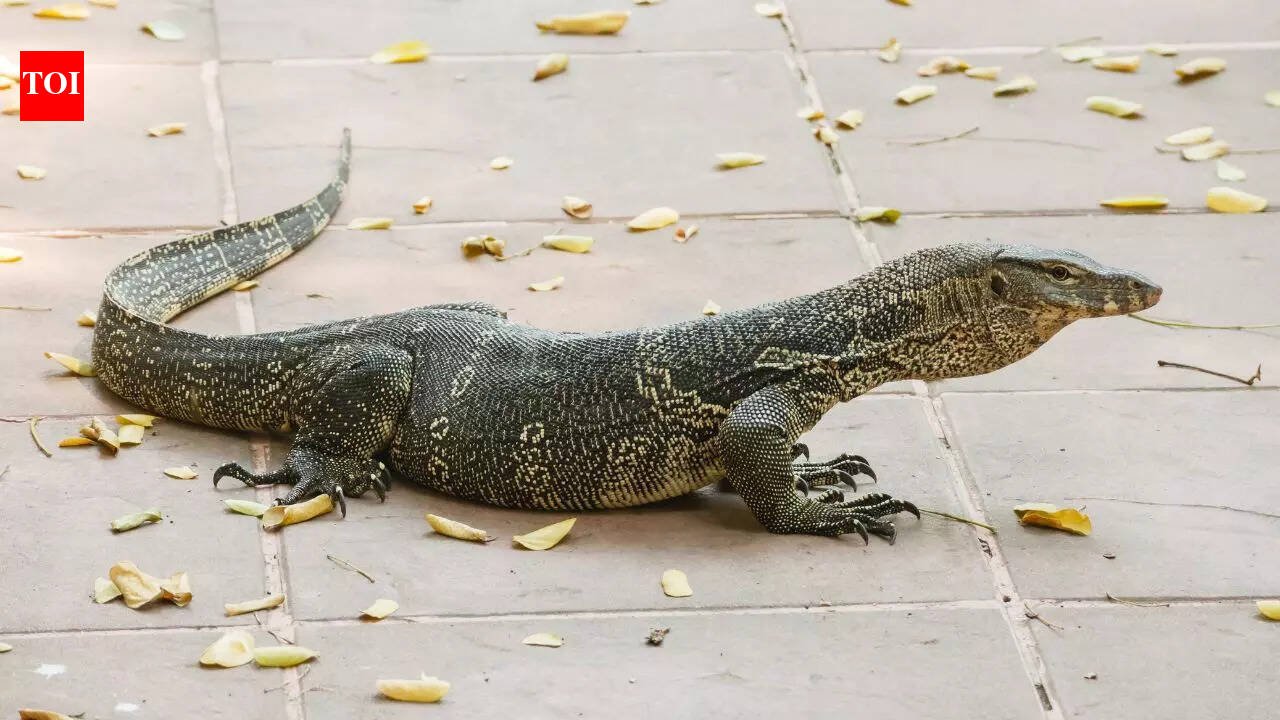
Monitor lizards are often confused with common house lizards. At first glance, both have long bodies, sharp claws and extended tails. When people see a small wall lizard drop its tail and run away, the question naturally follows. Can larger reptiles, such as monitor lizards, do the same thing? If a monitor lizard loses its tail, will it grow back?This question has a clear scientific answer. Many lizard species have been studied and documented for their ability to lose and regrow their tails, a process called autotomy and regeneration. But not all lizards can do this. Monitor lizards are not the same type of animal as geckos or skinks, which often lose their tails.To find out if monitor lizards can grow back their tails, we need to look at reptile biology, how they have changed over time, and scientific studies on how things can grow back. Here you will get to know how tail autotomy works, which lizards can grow back their tails, where monitor lizards fit into the scientific picture, and what studies show about their ability to heal.
What is tail autotomy in lizards
Tail autotomy is a defense mechanism seen in many lizard species. The word “autotomy” comes from the Greek and means “self-cutting.” When threatened by a predator, certain lizards can voluntarily detach their tail. The detached tail continues to move for a short time, distracting the predator. Meanwhile, the lizard escapes.According to a research published in the journal Biological Reviews and studies in reptile physiology, this process occurs because some lizards have fracture planes inside their tail vertebrae. These are pre-formed weak points that allow the tail to break off cleanly without major blood loss.After detachment, many species regenerate a new tail over time. The regrown tail is usually made of cartilage instead of bone and may differ in colour and structure from the original.
What type of lizards can regrow their tails
Tail regeneration is common in several lizard families. Geckos, skinks, and some iguanas are well known for their ability to shed and regrow tails. According to the book Biology of the Reptilia edited by Carl Gans, tail autotomy has evolved independently multiple times in lizard evolution.The regenerated tail is not identical to the original. Various studies show that regenerated tails don’t have real vertebrae; instead, they form a rod of cartilage. The arrangement of muscles and the patterns of scales may also be different.This ability helps lizards survive, especially smaller ones that are at risk of being eaten.
Can monitor lizards regrow their tails
Monitor lizards belong to the family Varanidae and the genus Varanus. There are more than 80 recognised species worldwide, including the Nile monitor, Asian water monitor and Komodo dragon.Scientific evidence shows that monitor lizards do not possess the same tail autotomy mechanism found in geckos or skinks.According to research on tail autotomy and anatomy, many lizard species possess intra-vertebral fracture planes in their tail vertebrae. These fracture planes are specific structural features that allow a lizard to shed its tail as a defensive response. When a tail is dropped, the fracture plane splits along the vertebrae, and sphincter muscles minimise blood loss. This structural adaptation is well documented across reptile taxa that use autotomy as a defence strategy.This means they cannot intentionally drop their tails as a defense strategy.
Why did monitor lizards lose this ability
Evolution shapes survival strategies differently for different animals.Small lizards are vulnerable to birds, snakes and mammals. Shedding a tail increases survival chances. Monitor lizards, however, grow much larger and are active predators. Many species can defend themselves aggressively.A peer-reviewed research article published in PLoS ONE found that when lizards lose their tails through autotomy, it can significantly reduce their running speed and change their behaviour. This supports the idea that losing a tail affects balance, mobility and activity, and thus carries a biological cost for survival and fitness.Monitor lizards use their tails as weapons. Observational studies in wildlife research show that some species whip their tails to defend themselves. This defensive strategy reduces the evolutionary need for tail shedding.
How do monitor lizards defend themselves
Since they cannot drop their tails, monitor lizards rely on other survival mechanisms:
- Strong jaws and sharp teeth
- Powerful claws
- Tail whipping as a physical defense
- Speed and climbing ability
- Swimming skills in aquatic species


