








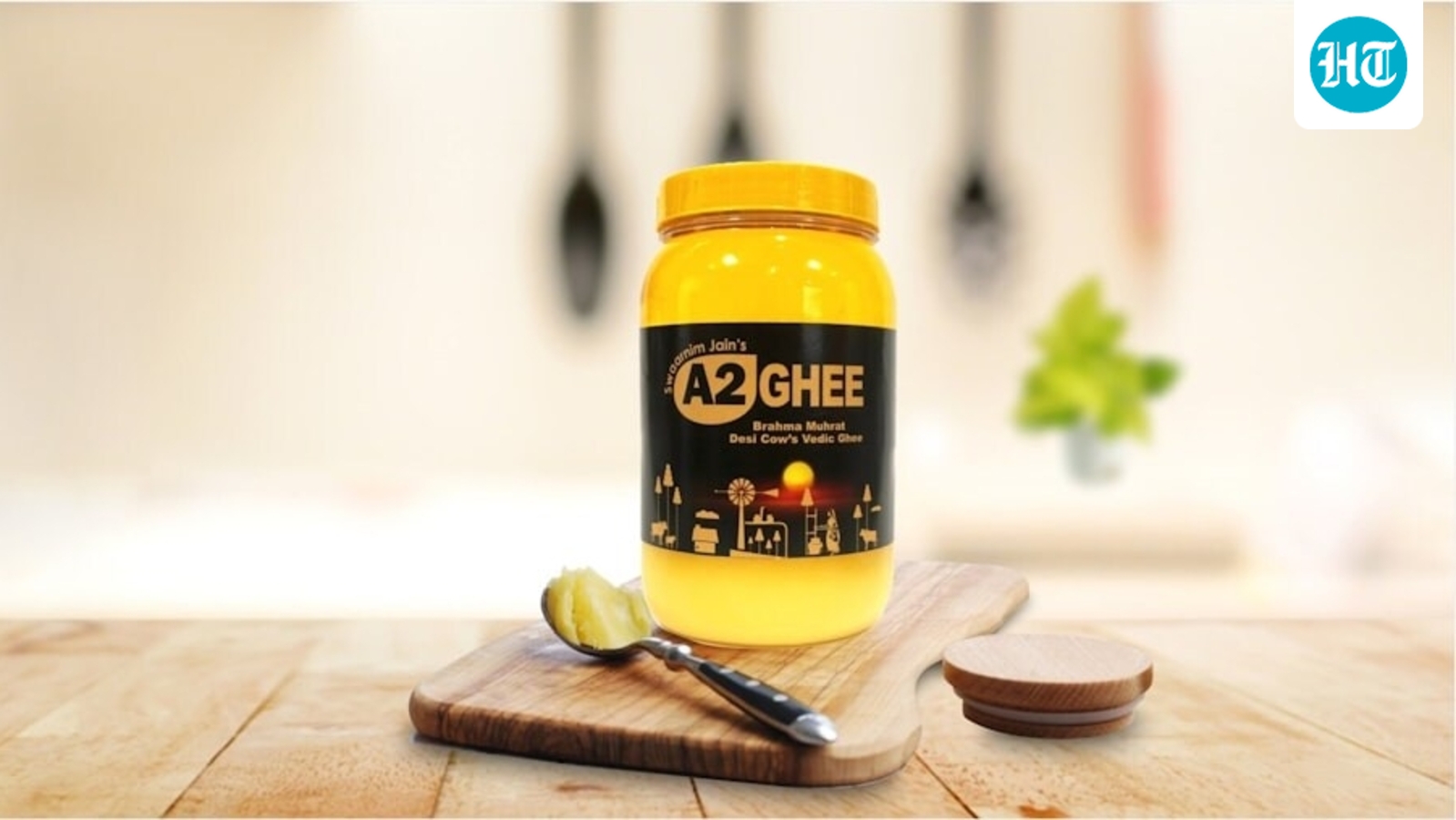
If you’ve been casually buying ₹2,000 jars of ‘pure’ A2 ghee, we have some news for you. Dr Alok Chopra, a Delhi-based cardiologist with 40 years of experience, took to Instagram on September 6 to drop a truth bomb about your favourite kitchen staple. Also read | Adding ghee to your diet? Dehradun physician busts common myths, explains how much to eat and how to identify pure ghee
The main takeaway? If you think grabbing any ghee bottle marked with an ‘A2’ label guarantees top-tier health benefits, Dr Chopra wants you to pause and reconsider: “We need to have a serious conversation about the packaged ghee you have been buying from the supermarket, whether it’s regular ghee or even A2 ghee, because the label alone doesn’t tell you whether you’ve bought the right ghee.”
Homemade is still the ultimate gold standard
Before jumping into what store-bought labels actually mean, Dr Chopra made his top preference clear. If you want the absolute best quality, your best bet is going back to basics. “Now, if you ask me what the best ghee is, I would say make it at home. Believe me, your grandmother could do it, so can you,” he shared.
The veteran cardiologist added that the traditional method itself is surprisingly simple and relies on a time-honoured, multi-step process: “The traditional process isn’t complicated. Milk becomes curd, curd is hand-churned into white butter, and that butter is slowly cooked over a low flame to become ghee. Now that to me is the gold standard.”
What to look for when buying ghee
Of course, in a world dominated by work deadlines and busy schedules, spending hours churning ghee may not always be practical. Dr Chopra acknowledged this reality, saying, “But I also understand that today’s lifestyle is very different. Most of us don’t have the time to make ghee at home. So if you are buying packaged ghee, this is what you should be looking for.”
To help navigate cluttered supermarket shelves, Dr Chopra broke down the essential criteria every consumer needed to evaluate:
⦿ Quality of the cow: “Firstly, make sure it’s A2 cow ghee. That’s about the quality of the milk.”
⦿ Quality of the process: “Secondly, how is it made? Look for bilona or cultured ghee, which means it has been made from curd and not directly from cream.”
⦿ Traditional churning methods: “See if the brand mentioned traditional hand churning, because that’s how our grandparents made white butter before converting it into ghee.”
Why does any of this distinction matter?
According to Dr Chopra, many mass-market brands skip the traditional curd-churning phase entirely to reduce production costs and save time: “Many commercially available ghees, even premium A2 ghees, are made directly from cream because it’s faster and cheaper. That does not necessarily make them bad, but they are not the same as traditionally prepared bilona ghee.”
To make smart purchasing decisions easy, he summed up the entire concept into one simple rule that every shopper should memorise before their next grocery run, sharing, “So remember this very simple rule: A2 tells you about the milk, bilona tells you about the process. And when you are choosing ghee, both matter.”
Note to readers: This report is based on user-generated content from social media. HT.com has not independently verified the claims and does not endorse them.
This article is for informational purposes only and not a substitute for professional medical advice.


