



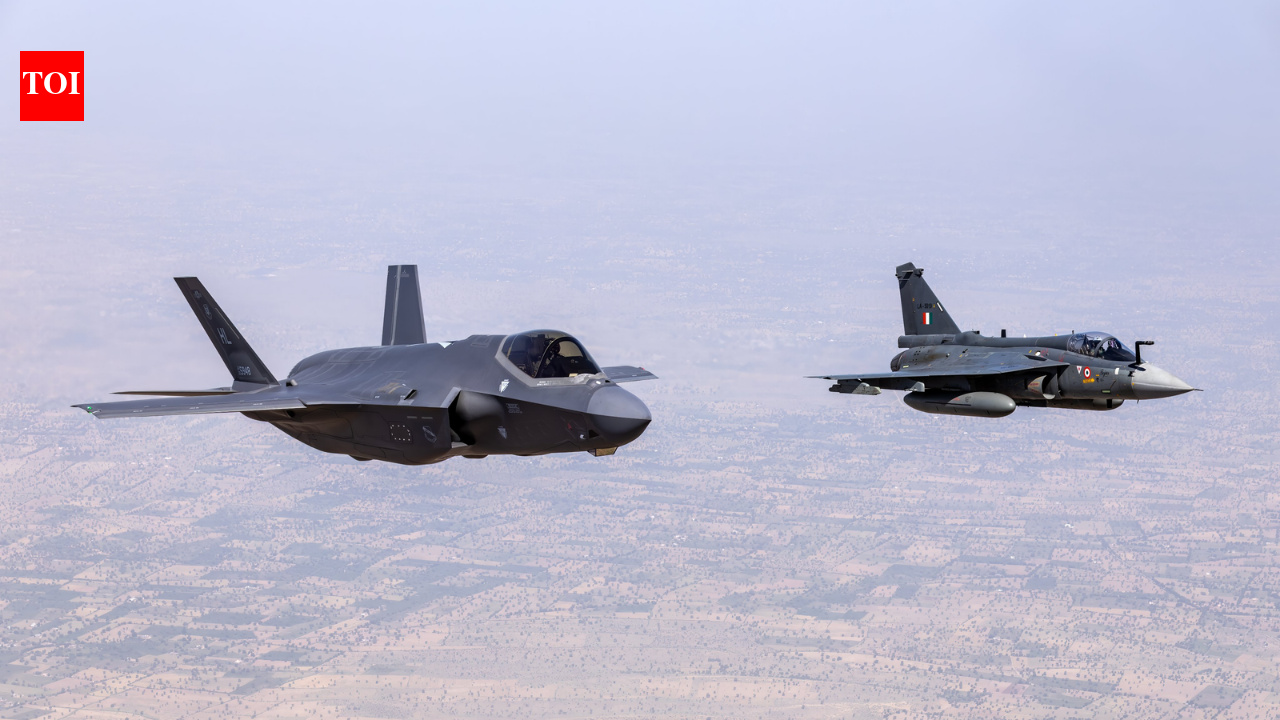
The politics and diplomacy underpinning global arms sales are increasingly shaping how countries approach defence procurement. While advanced weapons offer significant military advantages, the risks of long-term dependence on foreign suppliers have become an equally important consideration. Recent deliberations among NATO members over the US-led F-35 fighter programme illustrate how diplomatic disagreements can affect access to military technology. They also raise important questions for India about strategic autonomy and atmanirbharta in defence.A weapons purchase involves far more than acquiring hardware. Buyers often depend on suppliers for spare parts, software, ammunition, maintenance and upgrades throughout a platform’s service life. Export approvals, sanctions and technology-transfer restrictions can further determine how effectively a country can operate, maintain or modify its equipment.Turkey’s removal from the F-35 programme in July 2019 remains one of the clearest examples of these risks. Ankara was an original programme partner but proceeded with the purchase of Russia’s S-400 air defence system despite Washington’s objections. The US argued that operating the Russian system alongside the F-35 could compromise sensitive information about the aircraft. Turkey lost both its planned jets and its industrial role in the programme. The episode demonstrated how a procurement decision involving one supplier can jeopardise access to another’s weapons, even when the buyer is a NATO ally and a programme partner.European countries have acquired the F-35 for its stealth capabilities, advanced sensors and interoperability with allied forces. European companies also participate in its manufacturing and support. Yet involvement in the programme does not give buyers full control over the aircraft’s development. Britain’s efforts to integrate additional weapons onto the F-35, for instance, depend on software and upgrades managed through the US-led programme. Delays can disrupt national capability plans, reinforcing concerns about Europe’s dependence on American defence technology.Claims that the F-35 has a remote kill switch remain unsubstantiated. The more concrete concern is whether restrictions on spare parts, technical support, software updates or access to critical data could gradually undermine operational readiness. Portugal illustrates the trade-off. On October 8, Lisbon was considering the F-35 alongside European alternatives to replace its F-16 fleet. The American aircraft’s continued presence among the options suggests that concerns about dependence have not outweighed its perceived military advantages.For New Delhi, these questions intersect with its long-standing pursuit of strategic autonomy. India procures military equipment from Russia, the United States, France, Israel and other countries while seeking to expand domestic manufacturing. Its inventory includes several American-origin platforms, such as C-17 and C-130J transport aircraft, P-8I maritime patrol aircraft, Apache and Chinook helicopters, MH-60R naval helicopters and M777 howitzers. Defence cooperation with Washington has also expanded to include proposals for co-production and technology transfer.India’s experience offers its own lessons about the political risks of dependence. The sanctions imposed after its 1998 nuclear tests demonstrated how geopolitical decisions can disrupt access to defence-related technology and equipment. More recently, India’s purchase of the S-400 raised the possibility of sanctions under the US Countering America’s Adversaries Through Sanctions Act (CAATSA). However, India’s strategic circumstances differ from Turkey’s, and the two cases should not be treated as equivalent.India’s response has been to diversify its sources of military equipment while pushing for domestic manufacturing and greater technology transfer. Both approaches can reduce dependence, but neither guarantees operational independence. Local assembly, for instance, does not necessarily give a country control over the software, critical components or intellectual property needed to maintain a weapon system.Ultimately, the test of strategic autonomy is not simply whether a country can manufacture or purchase an advanced weapons platform. It is whether it can continue to operate, maintain and upgrade that platform if relations with the supplier deteriorate. In an increasingly contested geopolitical environment, control over software, spare parts, upgrades and the technology underpinning a weapons system may prove as consequential as the hardware itself.
