


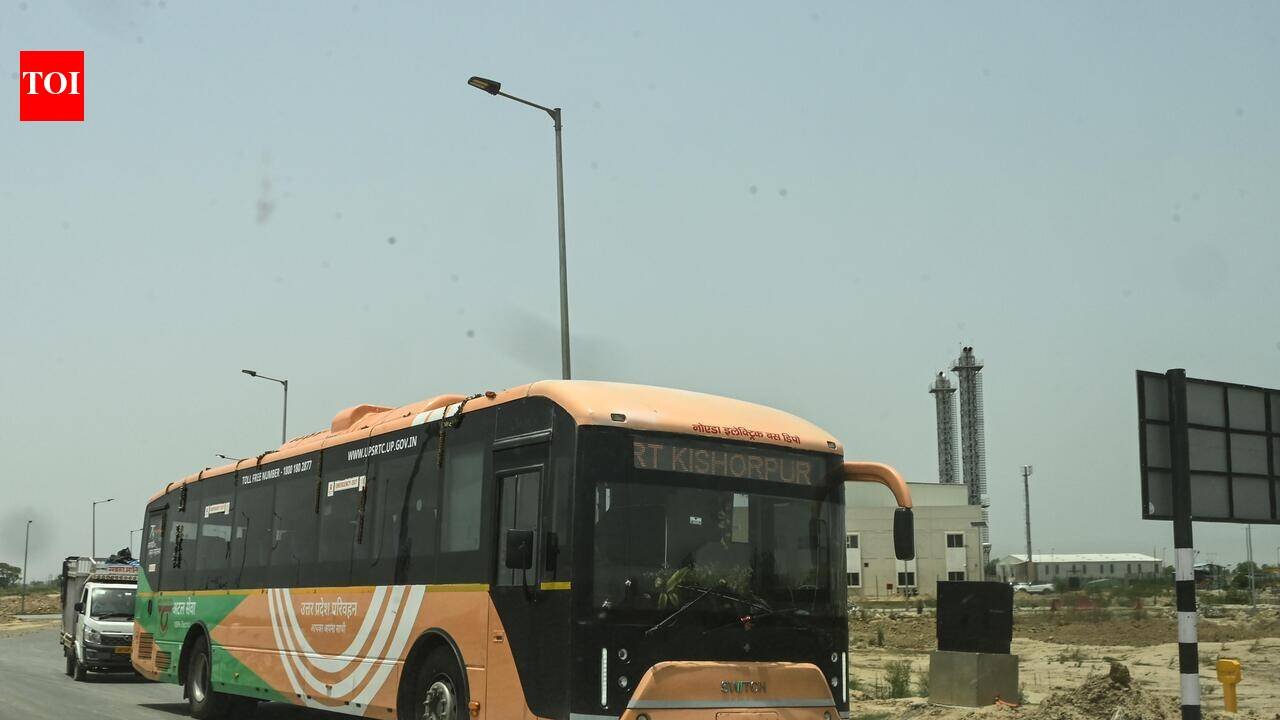
Noida: Noida and Ghaziabad are running on a fraction of the city bus fleet they actually need, leaving commuters increasingly dependent on autos and expensive app-based cabs for journeys that should ideally be covered by public transport.According to a Centre for Science and Environment (CSE) report, Noida needs more than 250 city buses but has only 110 operated by UP Roadways. Ghaziabad’s gap is even wider. Against a requirement of over 600 buses, it currently has just 50 electric buses.The shortage is all the more a concern for residents of Greater Noida, where several metro stations lack reliable last-mile connectivity. Commuters living away from Aqua Line often have little choice but to take autos or cabs to reach stations, adding significantly to their daily travel costs. The problem has persisted despite the growth of residential sectors around the metro network.The gap has also followed commuters to Noida International Airport. While bus services were launched when flights began, their reach and reliability have remained a concern. In July, TOI reported that passengers at Botanical Garden were struggling to locate airport buses, with no designated stops, timetable or staff to guide them. Seven of 26 buses assigned to routes leading to Yamuna Expressway and further to the airport in Jewar were found parked for recharging.The airport’s connectivity challenge was even more evident after commercial operations began in June. Many passengers TOI spoke to said passengers faced cab fares of Rs 800-1,400 from various parts of Noida. While other modes of public transport like metro and rapid rail are in the pipeline, they are still years away. This makes the dependency on buses all the more pressing.“Yes, it is now widely felt that there is a big gap in last-mile connectivity due to which ridership in modes of commute is not reaching its optimum potential,” said Kesari Nandan, regional manager at UPSRTC.NCR Transport Corporation and urban development department have now been tasked with finding ways and routes that can help expand city bus services.The CSE report also said that India currently has only 13.3-13.8 buses per lakh urban population against a benchmark of about 44. UP Roadways, with an active fleet of 95,000, has been described as “financially stressed”, with a cost recovery of only 68% in 2024-25 — the third lowest among 12 state transport undertakings studied.The report, however, insisted that the scale of expansion needs to grow rapidly to meet the rising urban demand. UP, officials said, plans to add 1,725 e-buses under PM eBus Sewa, including 100 for Ghaziabad alone. “The project is in the stage of tendering,” Nandan said.
