



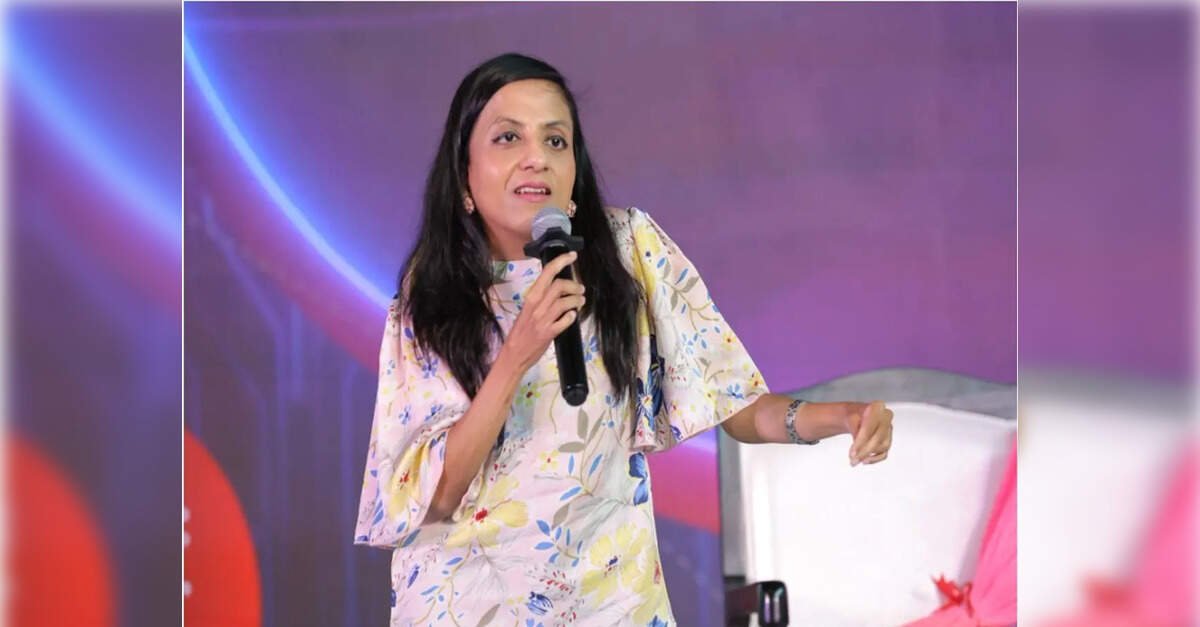
India’s school education transformation must go beyond enrolment and academic outcomes to build an education system that is inclusive, teacher-led and capable of preparing students for life in a rapidly changing world, education leaders said on Friday.
Speaking during the Day 2 Opening Session with Government Leaders & Education Dignitaries at the third edition of the ETEducation Annual Education Summit 2026, organised around the theme “India’s Education Revolution: For the World, With the World,” speakers said the next phase of reform will depend on whether schools can combine technology with human values, strengthen teachers and ensure that no learner is left behind.
A recurring message across the discussion was that India’s education revolution will ultimately be measured not by access alone, but by whether every child develops the capabilities required to participate in the country’s growth journey.
Ira Singhal, Deputy Secretary, Department of School Education & Literacy, Ministry of Education, Government of India, said inclusive education must become central to India’s education agenda.
“When we talk of every single child, we need to talk of actually every single child,” she said.
Singhal argued that India’s demographic advantage will create long-term value only if children with special needs are fully integrated into education systems and provided equal opportunities to learn, participate and thrive.
She said technology and artificial intelligence are expanding what learners can achieve and creating possibilities that did not exist earlier.
Citing examples of assistive technology, Singhal said AI-enabled tools are helping children overcome traditional barriers and access new forms of learning and expression.
“Every child’s capability has changed, and that is what we need to start catering for,” she said.
At the same time, she cautioned that technology should be adopted responsibly and sensitively.
“Indiscriminate use of technology always has to be cautioned,” she said.
Singhal also highlighted the potential of technology to support more personalised learning pathways, including wider access to Individualised Education Programmes for children who may not have access to specialist support.
Building on the discussion around capability and access, Prof Pankaj Arora, Chairperson, National Council for Teacher Education (NCTE), said the quality of school transformation will ultimately depend on teachers.
“No education system can rise above the quality of its own teachers,” Arora said.
He described teachers as the central force behind India’s education reform journey and said the country’s ambitions under Viksit Bharat@2047 will require empowered educators, strong professional standards and future-ready pedagogy.
According to Arora, the National Education Policy (NEP) 2020 represents a shift from rote learning to experiential, competency-based and holistic education.
He highlighted the role of the Integrated Teacher Education Programme and emphasised that teachers must prepare students not only for examinations but for life.
“Teachers who prepare learners should not be doing it just for examination, but also for life,” he said.
Arora also positioned artificial intelligence as an enabler rather than a replacement for educators.
“AI is not AI versus teachers. AI should empower teachers,” he said.
He argued that while AI can support instruction, personalisation and assessment, teachers remain essential in helping students develop meaning, values, judgement and human connection.
Expanding the conversation beyond classrooms and curriculum, Manoj Mittal, Founder, DAV United Foundation, said future readiness must include capabilities that extend beyond technical and academic skills.
“Are we preparing the person who we want to work tomorrow?” Mittal asked.
He said schools must pay greater attention to health, emotional well-being, relationships, financial literacy and enterprising mindsets if they want students to succeed in a changing world.
According to Mittal, students are often taught subject expertise but receive limited preparation in managing health, finances and real-life decision-making.
“Before we think of skills like how good I am at coding, engineering, medicine or any discipline, am I good at knowing about being healthy, having great relations and managing my finances?” he said.
He also argued that schools should encourage an enterprising mindset across students, teachers and leaders.
“Every teacher can be enterprising, every parent can be enterprising, every principal can be enterprising,” Mittal said.
Across the discussion, speakers agreed that the future of school education cannot be defined only through marks, digital access or employability indicators.
Instead, India’s next education leap will depend on whether schools can combine inclusion, empowered teachers, responsible use of technology and life capabilities to prepare students for a more uncertain and interconnected future.
As India advances towards its education and development goals, the message from the summit was clear: building globally relevant education will begin with creating classrooms where every child is included, every teacher is empowered and every learner is prepared not only for work — but for life.


