


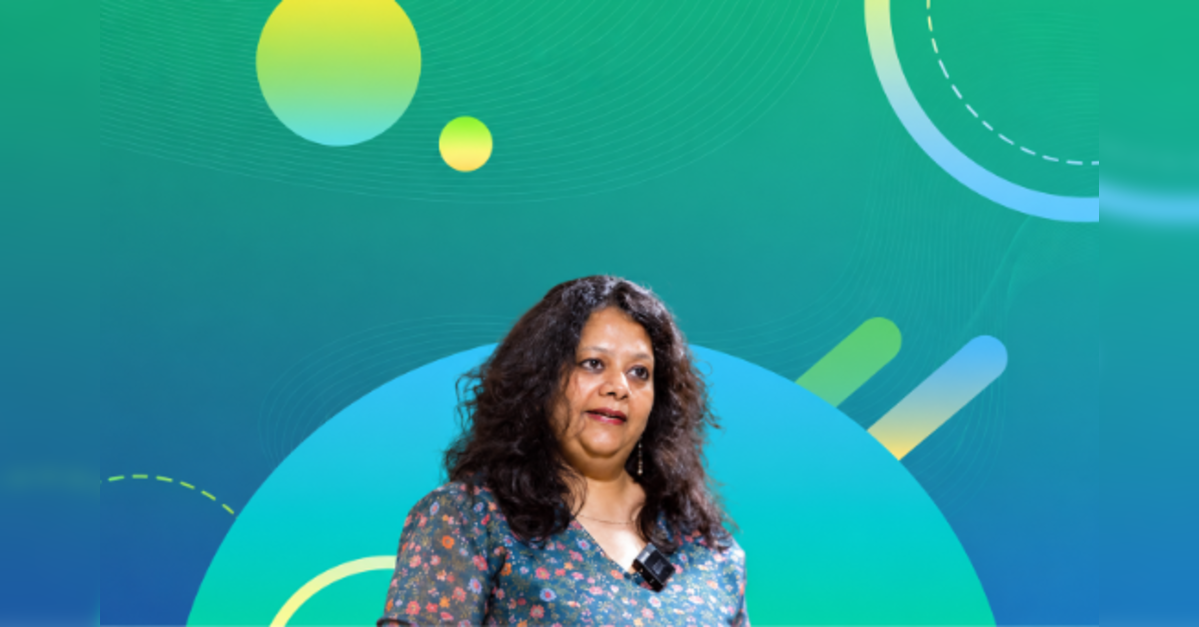
By Mona Bagla
As India’s creator economy surges and artificial intelligence transforms every industry, the most valuable professional of the future will not just be someone who creates — but someone who knows how to build the world around creativity.
India has always had the creative soul. For centuries, we were known to be a civilisation so abundant in craft, culture, and commerce that traders from across the world came seeking it. That spirit never left — and it is finding new expression. From films like RRR winning at the Oscars to studios powering global animation pipelines, Indian creativity is crossing borders in ways that would have seemed unimaginable a generation ago. A Boston Consulting Group report projects that India’s creator economy will influence over $1 trillion in consumer spending by 2030. What is still catching up is the belief — the conviction that someone from anywhere in this country can build the next great creative enterprise. What the creative industries need is an ecosystem where that courage is met with mentorship, resources, and the tools to turn imagination into enterprise.
Two stories give me hope. Walt Disney once said, “I was never a good artist. I was never satisfied with what I did, but it was a means to an end.” He gave up drawing and became something rarer — a creative visionary who unified thousands of artists around a single idea and built an empire from that understanding. Apple took the same instinct further, becoming the world’s most valuable brand by insisting that technology and beauty were the same conversation. The result? $391 billion in annual revenue in 2024, according to Apple’s annual report. What both built was not just a product. It was a world around an idea.That is the Orange Economy — also known as the Creative Economy — a term now recognised by the United Nations and embraced by policymakers worldwide. It spans film, gaming, music, animation, fashion, design, and digital content. India’s creator economy, valued at INR 125 billion in 2024, is projected to reach INR 500 billion by 2030, growing at 25% annually, according to EY. The media and entertainment industry crossed ₹2.78 trillion in 2025, according to the FICCI–EY Media & Entertainment Report 2026. Creative exports grew 20% in 2023, reaching over $11 billion, according to the Confederation of Indian Industry. India is not just participating in this economy. It is helping shape it.In the 1990s, a creative career meant fashion designer, graphic artist, architect, musician, or actor. Today, an Experience Curator designs the emotional arc of a museum or live event. A Virtual Reality Designer builds worlds for education and therapy. A Food Stylist shapes how the world sees and remembers a meal. A Museum Curator is no longer a keeper of objects — they are a storyteller, researcher, and experience architect. The list keeps growing, and the most exciting careers on it may not have names yet.
And then there is AI — the technology reshaping every conversation, every industry, every morning headline. I find myself less interested in what it can do, and more curious about what it cannot. It cannot feel the energy shift when a creative idea lands. It cannot sense the hesitation behind a client’s silence. It cannot taste the difference between a good idea and a great one — that ineffable quality, like umami, the fifth taste, the one you cannot describe but instantly recognise. Human creativity lives in that space. As neuroscientist Dr Dean Burnett has noted, human art is the outcome of a brain that uses emotion to guide its thoughts and decisions. No algorithm has that. What AI does is amplify the human behind the prompt, and what it produces is only as good as the thinking and emotional intelligence directing it.
The creative professionals of tomorrow will need to master skills many of us had to learn without a map. To read a room and a balance sheet with equal confidence. To understand intellectual property as the foundation of a creative business. To navigate data without losing instinct. To tell a story across cultures without losing meaning. A new kind of education is emerging for exactly this — one where creative practitioners, technologists, historians, visual and performing arts experts, and industry leaders have come together to give creativity structure, strategy, and the business intelligence to last. To develop the one who can stand before an orchestra yet to play and already know how the music ends.
That is the creative entrepreneur India needs. Not just a creator, but a navigator. Someone who can hold a vision steady in one hand and a pivot in the other. The creative economy is not waiting for permission. It is waiting for people ready to lead it.
Building something of your own is not a straight line. Every entrepreneur knows this. Most pivots come not from failure but from a sharper understanding of what the idea really wanted to become. The cha-cha, as writer and journalist Robert Brault once put it, is not the stumble — it is the choreography. Step forward, step back, and step forward again. The rhythm becomes instinct. The vision becomes clear. And what looked uncertain was always part of the performance.
The ones who will shape what comes after AI are probably already asking questions nobody else is asking yet. That curiosity is not a distraction. It is a direction. And every great direction begins with a single question — one that Robert Schuller asked, and that has never stopped being relevant:
“What would you attempt to do, if you knew you could not fail?”
Mona Bagla is a Professor of Practice in Communication Design and Interior Design at the University of York, Mumbai, where she teaches the Business of the Creative Industries.
DISCLAIMER: The views expressed are solely of the author and ETEDUCATION does not necessarily subscribe to it. ETEDUCATION will not be responsible for any damage caused to any person or organisation directly or indirectly.
