







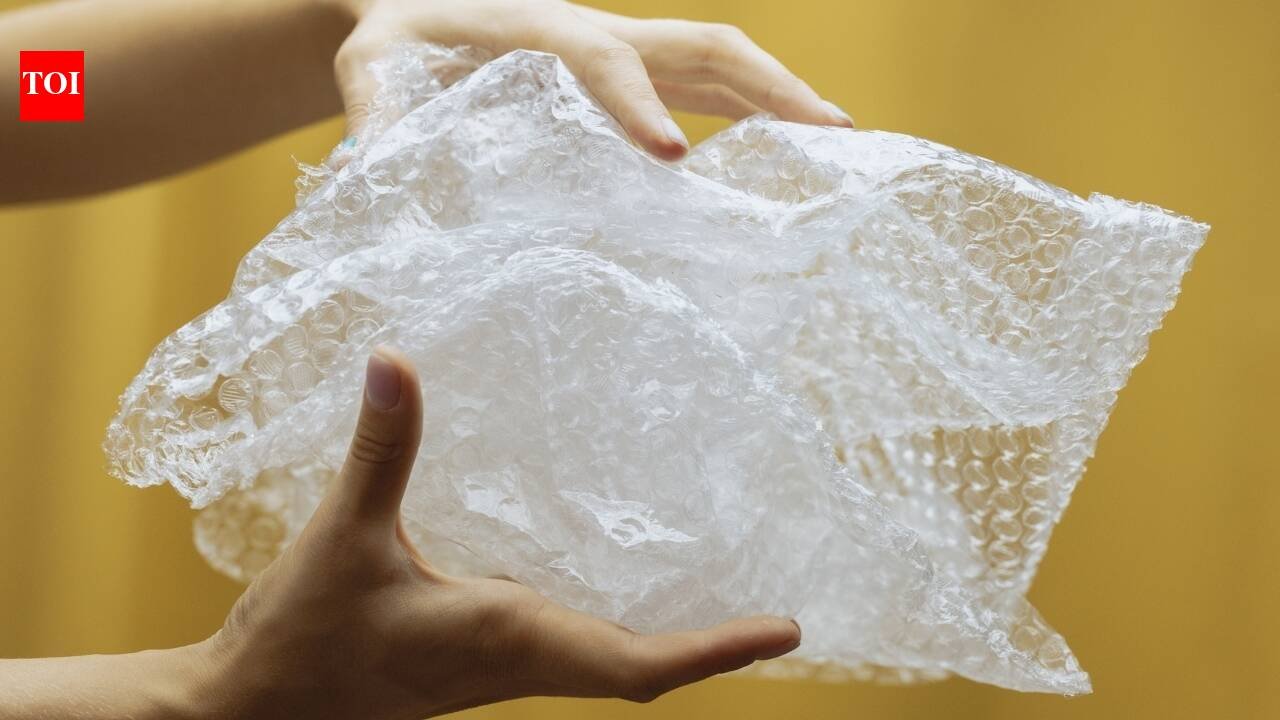
That sheet of plastic with tiny bubbles has become almost impossible to separate from the idea of opening a parcel. But its original purpose had nothing to do with shipping, boxes, or fragile objects.In fact, bubble wrap began as an attempt to create a new kind of wallpaper.Its journey from an unsuccessful decorating idea to a packaging staple is a classic example of an invention finding its real purpose much later.
The idea started with wallpaper
In 1957, engineer Alfred W. Fielding and inventor Marc Chavannes were working in Hawthorne, New Jersey, on a new wall covering.They laminated plastic sheets in a way that trapped air between them, creating a surface covered with raised pockets.The finished material had a distinctive three-dimensional texture, but it did not become the fashionable wall treatment its creators had hoped for.That could have been the end of the experiment, except the material itself had some useful qualities.It was lightweight, flexible, and contained thousands of small air pockets.Those characteristics made Fielding and Chavannes wonder whether their creation could have a practical use beyond interiors.
The next stop was the greenhouse
Their second idea was to use the material as insulation for greenhouses.The trapped air offered insulating properties, making the concept technically plausible.But the product did not succeed in that market either, leaving the inventors with a material that had yet to find its place.The important discovery was still sitting inside those little pockets of air.When pressure was applied to the material, the bubbles could provide cushioning.That property eventually led the inventors towards packaging.
Then computers entered the story
Fielding and Chavannes founded Sealed Air Corporation in 1960, with the bubble-filled material as its signature product.The breakthrough came when the company began looking at the growing computer industry.IBM was introducing its 1401 computer, and transporting such equipment safely created a very different problem from insulating a greenhouse or decorating a wall.The fragile machines needed protection during transit.Bubble-filled plastic offered a lightweight layer that could cushion the equipment.IBM began using the material to protect its 1401 computers during shipment, giving bubble wrap the commercial application its creators had been searching for.
The invention did not need to change. Its purpose did
That is what makes the history of bubble wrap so interesting.The material itself was essentially the same unusual creation that had failed as wallpaper.What changed was the problem it was being asked to solve.Instead of being judged on how it looked on a wall, its value now came from what the trapped air could do around a delicate object.Sealed Air continued developing the product for protective packaging, and bubble wrap eventually became a familiar part of shipping fragile goods.And then there is the part that needs no explanation: people discovered that the bubbles were fun to pop.So the next time you tear open a package and find a sheet of bubble wrap inside, remember that you are looking at the result of a rather unexpected detour.It started with a wall, failed as a greenhouse solution, and finally found its calling inside a box.Thumb image: Canva (for representative purposes only)


