


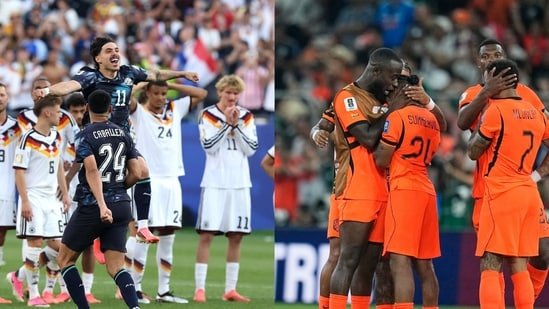
For all the talk about expansion, mismatches and the fear that the World Cup would become too large for its own good, the first real verdict from the 2026 knockouts has landed with a different force altogether. This is not a tournament being diluted by numbers. This is a tournament being hardened by belief.

Brazil are still alive, but only just. Germany are gone. The Netherlands are gone. Morocco, Paraguay, Canada and Japan have already shown that the old hierarchy may still exist on paper, but it no longer travels with automatic protection once the whistle blows. The World Cup still has famous shirts, but it is quickly running out of untouchable teams.
The clearest image came in Houston, where Brazil, the five-time champions, were taken to the final breath by Japan. This was not a ceremonial knockout tie in which the heavyweight absorbed a few early punches before asserting the natural order. Japan led through Kaishu Sano in the first half, defended with intelligence, broke with conviction and forced Brazil into the uncomfortable business of chasing a game they were expected to control.
Casemiro eventually dragged Brazil level, but even then there was no procession. Japan held on. Brazil pushed. The clock moved towards extra time. Then, in the 95th minute, Gabriel Martinelli struck the winner, and Brazil survived 2-1. That word matters: survived. They did not cruise into the last 16. They were pushed there, late and breathless, by a side still searching for its first World Cup knockout victory.
If Brazil’s escape was the warning, Germany’s exit was the proof. The four-time champions had topped Group E and scored freely in the first round, yet even their group-stage campaign had carried a small crack after a defeat to Ecuador. Paraguay found that crack and widened it into one of the tournament’s biggest shocks.
Germany had the ball, the pressure and the heavier name. Paraguay had nerve, organisation and enough clarity to turn the match into the kind of contest reputations hate. Julio Enciso gave them the lead, Kai Havertz equalised, and from there the game became a test of German patience against Paraguayan resistance. It went to penalties, and suddenly, history had no muscle. Paraguay won 4-3 in the shootout. Germany, the old penalty kings, were out.
Then came the Netherlands. Another group winner. Another team with numbers that suggested authority. The Dutch had topped Group F unbeaten, scoring 10 goals and looking, at least from distance, like one of the tournament’s more convincing European machines. Morocco were not interested in distance. They made the game close, tense, physical and emotionally exhausting.
Cody Gakpo’s second-half goal seemed to have taken the Netherlands through, but Morocco refused to accept the script. Issa Diop’s stoppage-time header made it 1-1. Extra time could not separate them. Penalties did. Yassine Bounou saved, Ismael Saibari converted, and Morocco marched on while the Netherlands joined Germany on the wrong side of the new World Cup order.
Also Read: The unfinished rebuild: Why Germany remain stuck in the shadow of 2014
The warning was there before the knockouts
The temptation is to call these shocks. They are, in result. But they are not random. The group stage had already been building the case that this World Cup would not bend easily before pedigree.
Brazil began with a 1-1 draw against Morocco and only finished above them on goal difference. Spain were held by Cabo Verde. Portugal drew with DR Congo and Colombia. England were held by Ghana. Belgium topped their group with only five points. Japan went through unbeaten. Morocco finished level on points with Brazil. Paraguay emerged from third place and then eliminated Germany. These are not scattered accidents. They are signals from a tournament in which the middle class has arrived with structure, confidence and enough tactical personality to make the elite sweat.
The expanded World Cup has not created passengers
That is the real story of the expanded World Cup. More teams did not simply mean more passengers. It meant more second chances, more different football cultures in the knockout bracket, more opponents with less fear and more clarity about how to survive 90 minutes against a giant. In the old format, some of these sides might have gone home before their argument could be heard. In this one, they get a knockout stage. And once they get there, the pressure flips.
For the traditional powers, the Round of 32 is not a soft landing. It is a trapdoor. The bigger team is expected to win, expected to entertain, expected to justify the gap between name and opponent. The smaller or less-decorated side can turn the night into a problem-solving exam. Block the centre. Slow the rhythm. Attack the space. Stay alive until the favourite starts thinking about the consequences. Then strike.
That is what Japan almost did to Brazil. That is what Paraguay did to Germany. That is what Morocco did to the Netherlands.
A warning for the giants still to come
And now the message travels to the rest of the so-called big teams still waiting for their knockout tests. France, Spain, Portugal, England, Argentina and others may look at the bracket and see winnable fixtures. They should also look at Brazil’s 95th minute, Germany’s broken shootout aura and the Dutch collapse in Monterrey.
This World Cup is not asking the giants who they used to be. It is asking who they are tonight. From here, reputation is only the starting whistle. The rest has to be earned.
