



Dear Reader,


In Manali, the light streams in early, lighting up our bedroom at 5:30 am. It’s deliciously cozy under the quilt, but I think about my to-do list. Time to head downstairs to get tea.
In my grandmother’s kitchen, I switch on the electric kettle. As the water boils, I spoon tea leaves into the pretty china teapot my daughters bought me for my birthday. It has dainty Chinese girls in swirling red and white gowns, blue clouds, and, in a corner, a little Shinto shrine. Beside it, on the wooden tray, I set out two mismatched mugs, and then finally the most important thing of all—my grandmother’s quilted half-moon cover that keeps the pot warm.
This tea cozy takes me back to tea times in the study in this family home, to the silver teapot and the perfectly matched Worcestershire bone china cups, to the glass jar of home-baked Shrewsbury biscuits, and to the freshly baked chiffon cake sliced in the middle and filled with strawberry jam, with a dusting of icing sugar on top.
It’s amazing, really, how this tiny piece of quilted cloth can conjure such vivid memories. But then, objects have always told stories.
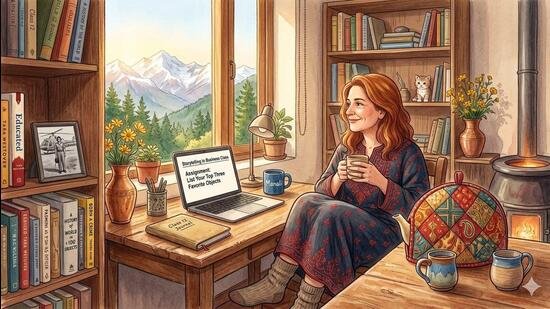
In my “Storytelling in Business” class, I do an assignment with my students. Write a list of your favorite objects, I tell them, and then describe the top three. The results are fascinating, featuring things like a cricket bat, a pendant, a book. Students come up to me at the end of the class and say, “Thank you, Professor, for doing this exercise; we are so busy with our Bombay MBA lives, we rarely think about the past.” It reminds me how easily the past lies dormant, waiting for something as simple as an object to bring it alive.
In A History of the World in 100 Objects, Neil MacGregor talks about the things that make us human. The former director of the British Museum lists objects like the Gilgamesh Flood Tablet—a tiny clay object that contains a chapter from the world’s oldest literary story.
In The Penguin Podcast, I listen to Salman Rushdie talk about his favorite Montblanc fountain pen, and Kate Atkinson describe the antique silver hare she has had since childhood.
A few years ago, in a conversation with Mughal history writer Ira Mukhoty, I asked her this same question, and she had such a moving story about a book of Mughal history she inherited from her father.
As I sit upstairs in the study and lift the tea cozy, that timeworn quilted keeper of warmth, I pour my second round of tea. It is still piping hot. I realize my list of objects is already forming in my head: a stuffed kitten from my childhood, which my mother got me from her trip to Japan, the kitten’s red and white dress faded with age. There’s my Class 12 journal full of scrawly fountain pen writing, filled with stories of meeting Prime Minister Rajiv Gandhi and going on television for a pilot quiz program, and surely this teapot too. There are so many more; it’s tough to play by my own rules and contain my life in three objects, but I will try.
What about you, dear reader? If you were to tell the story of your life in three objects, what would they be?
Sonya Dutta Choudhury is a Mumbai-based journalist and the founder of Sonya’s Book Box, a bespoke book service. Each week, she brings you specially curated books to give you an immersive understanding of people and places. If you have any reading recommendations or reading dilemmas, write to her at sonyasbookbox@gmail.com. The views expressed are personal


