


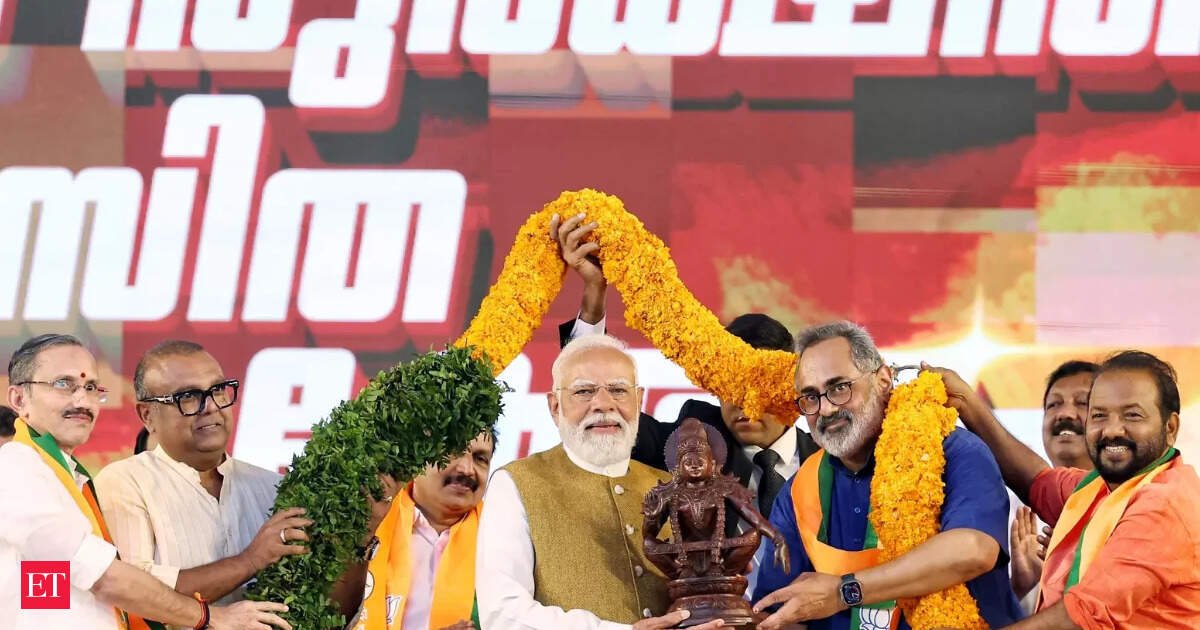
While the party is contesting all 140 Assembly seats, its campaign is concentrated in districts where it sees a realistic chance of converting organisational gains and local body performance into electoral victories. These include Thiruvananthapuram, Palakkad, Thrissur, Kasaragod and Pathanamthitta.
Also Read: Kerala Assembly Elections 2026 Voter Turnout: Polling held across 140 seats, final turnout at 78.27%
The effort comes as the BJP seeks to improve on its limited Assembly footprint in the state. The party has had only one MLA in Kerala so far (O Rajagopal, who won the Nemom seat in 2016). Since then, it has remained outside the Assembly, even as it has expanded its vote share and improved its presence in local bodies and, more recently, won its first Lok Sabha seat from Kerala in 2024.
Party leaders say the current election marks an attempt to convert that incremental progress into legislative gains. BJP national secretary Anil K. Antony said the party expects gains across constituencies while maintaining focus on key battleground seats.
The National Democratic Alliance (NDA) has fielded 122 men and 18 women candidates — with the BJP alone fielding 14 women, the highest among all parties in the state.
Thiruvananthapuram: Core urban battleground
In Thiruvananthapuram district, the BJP is focusing on Kazhakkootam, Nemom and Vattiyoorkavu, three constituencies where it has built a significant base in recent elections.In Kazhakkootam, former Union Minister V Muraleedharan is the BJP candidate. The party’s confidence is driven by its strong local body performance, including winning 14 of 28 wards in the area. Muraleedharan had finished second in 2016, while the party also improved its vote share in 2021.
He is up against CPI(M) leader Kadakampally Surendran, a former Devaswom Minister and two-time MLA, while the Congress has fielded former MLA T Saratchandra Prasad.
Nemom remains one of the most closely watched constituencies in Kerala. It features Education Minister V Sivankutty (CPI(M)), BJP state president Rajeev Chandrasekhar and Congress leader KS Sabarinadhan.
The BJP’s optimism in the seat stems from its 2016 win by O Rajagopal, the party’s only Assembly victory in Kerala so far. However, the constituency has remained highly competitive, with narrow margins and shifting voter alignments. The seat has also seen heightened scrutiny following the Special Intensive Revision (SIR) of electoral rolls.
In Vattiyoorkavu, the BJP has fielded former DGP R Sreelekha, who joined the party in 2024. She faces CPI(M)’s VK Prasanth and Congress veteran K Muraleedharan, son of former Chief Minister K Karunakaran.
The BJP is banking on its strong performance in recent local body elections in the constituency, where it secured a significant vote share. The contest remains multi-cornered, with both LDF and UDF fielding strong candidates with prior electoral experience.
Pathanamthitta: Sabarimala and social arithmetic
In Pathanamthitta district, often referred to as the “Sabarimala district”, the BJP is focusing on Aranmula, where it has fielded former Mizoram Governor Kummanam Rajasekharan.
Also Read: 2026 polls last three-front contest in Kerala: BJP leader Rajeev Chandrasekhar
The constituency features CPI(M) MLA Veena George and Congress Youth leader Abin Varkey, creating a three-cornered contest. The BJP is attempting to consolidate Hindu votes while also banking on a potential split in Christian votes between the LDF and UDF candidates.
The party continues to reference the Sabarimala issue in its political messaging, although the LDF and UDF retain strong organisational bases in the region.
Elsewhere in the district, constituencies such as Tiruvalla and Ranni remain largely a contest between the LDF and UDF, with the BJP playing a limited but targeted role.
Thrissur: Symbolism, controversy and political visibility
Thrissur has emerged as one of the BJP’s most politically significant districts following Suresh Gopi’s election as the party’s first Lok Sabha MP from Kerala in 2024.
In the Assembly contest, the BJP has fielded former Congress leader Padmaja Venugopal, in line with its strategy of bringing in high-profile candidates with local recognition.
However, the party’s campaign has also been marked by controversy. Opposition parties have alleged voter inducement through the distribution of free kits, a charge the BJP has denied.
In Guruvayoor constituency, BJP candidate B Gopalakrishnan has faced criticism over remarks on religious representation, triggering legal scrutiny. The constituency remains politically sensitive due to its religious demographics and long-standing electoral patterns.
Despite these issues, the BJP is projecting Thrissur as an example of its growing acceptability in central Kerala, aided by its Lok Sabha breakthrough and intensified campaign outreach.
Development-focused campaign pitch
Across Kerala, the BJP has largely centred its campaign on development, governance and infrastructure, marking a shift from earlier elections where ideological themes were more prominent.
Party leaders have highlighted projects such as Vande Bharat trains, proposed AIIMS facilities and broader national infrastructure development as key achievements under the Centre.
Union ministers including Nirmala Sitharaman and Kiren Rijiju have campaigned in the state, reinforcing this development narrative.
However, opposition parties continue to raise issues such as voter list revisions, minority-related political concerns, and the impact of central policy decisions, including amendments to the Foreign Contribution (Regulation) Act (FCRA), which have entered the political debate.
Kerala’s dependence on Gulf remittances and sensitivity to external economic disruptions also remain part of the broader political and economic context.
Structural challenge remains
Despite targeted campaigning, organisational expansion and high-profile candidates, the BJP continues to face a structural challenge in Kerala’s entrenched two-front system dominated by the LDF and UDF.
While the party has improved its vote share over successive elections and secured a Lok Sabha breakthrough in 2024, whether it will be able to convert that momentum into Assembly representation remains uncertain.
The current campaign reflects a mix of selective targeting, localised mobilisation and a development-heavy pitch, but whether it can translate into seats will be the decisive test of the BJP’s Kerala strategy.
