


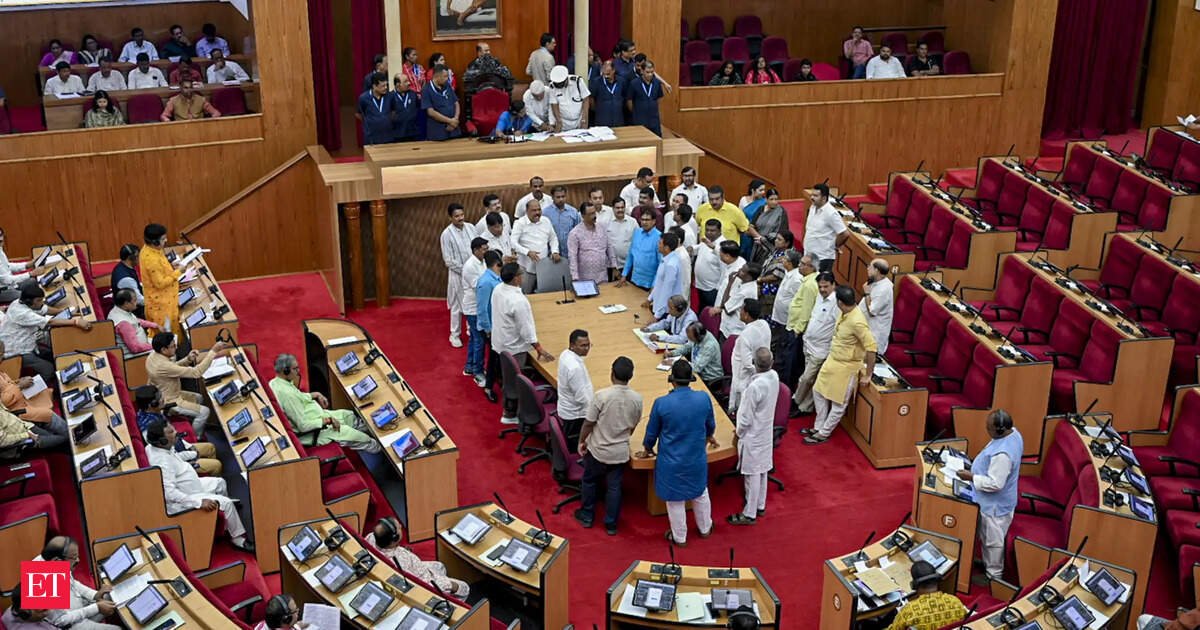
The state’s ruling BJP, on the other hand, accused the opposition parties of blocking the means to implement the women’s quota in the legislature.
The special session of the assembly in the BJP-ruled state was convened days after a Constitution Amendment Bill to implement 33 per cent reservation for women in legislatures in 2029 and increase the number of Lok Sabha seats to 816 was defeated in the Lower House of Parliament.
Several opposition parties, such as the Congress, have voted against the bill.
While speaking to reporters on Saturday, BJD MLA Arun Kumar Sahoo called the special session a “drama” by the BJP.
“What is the need for holding a special session on women’s reservation when a bill in this regard has already been passed in 2023?” he asked.
Leader of the Opposition Naveen Patnaik had earlier demanded a special session to discuss Odisha’s political rights in the wake of the delimitation bill.Patnaik, a former chief minister, had demanded delinking the women’s reservation bill from the delimitation bill as he feared that the state’s representation in Parliament would be reduced if the delimitation bill was passed.
“But the government did not make any arrangements for a special session. Now, after the Constitution Amendment Bill was defeated, the BJP is organising drama like holding rallies on streets and misleading people,” Sahoo said.
The BJP has been holding rallies across the country denouncing the stance taken by the opposition parties on the issue.
Another BJD MLA, Ganeswar Behera, alleged that the special session was called to mislead the women of Odisha.
Congress lawmaker Ashok Das also denounced the session, calling it politically motivated.
“The women’s reservation bill was passed in Parliament in 2023 with our support. Now, we demand implementation of the Act that was passed in 2023. There is no point in making drama by holding rallies and special sessions,” he said.
Senior BJP leader and state minister Gokulananda Mallik said the special session is convened to discuss the 33 per cent reservation for women in Parliament and state assemblies.
“I strongly condemn the BJD and Congress for opposing the prime minister’s initiative for women’s reservation. It is hypocrisy of the BJD and the Congress. They are blocking the means to implement the women’s quota,” the minister said.
Mallik also accused the opposition of shedding crocodile tears for women.
While 298 members voted in support of the bill in the Lok Sabha, 230 MPs voted against it. Out of 528 members who voted, the bill required 352 votes for a two-thirds majority.
According to the Constitution (131st Amendment) Bill, Lok Sabha seats were to be increased to 816 from the current 543 to “operationalise” the women’s reservation law before the 2029 parliamentary polls, following a delimitation exercise based on the 2011 Census.
Seats were also to be increased in state and Union territory assemblies to accommodate 33 per cent reservation for women.
