



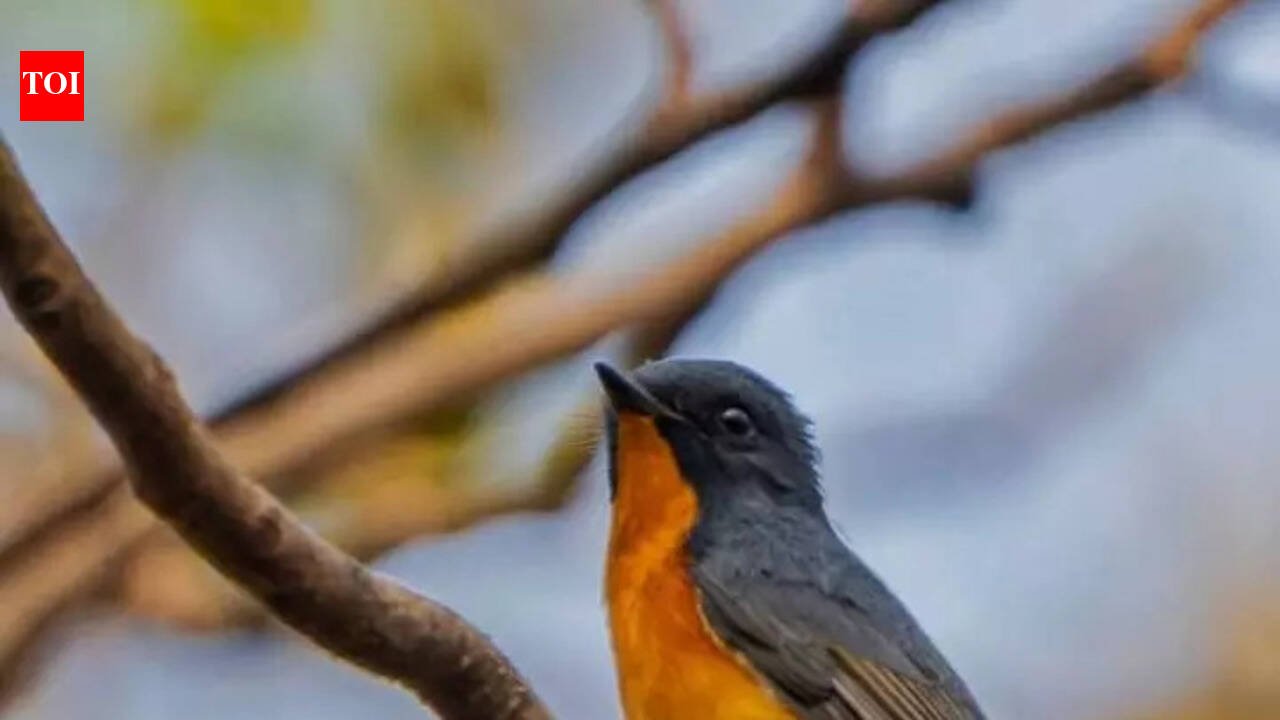
Kolkata: A Lions Club project to turn a section of the Lions Safari Park at Rabindra Sarobar into a play area for the disabled, and the contention of naturalists that paving the ground will destroy the biodiversity hot spot, which attracts scores of resident and migratory birds, has started a debate on who should have priority: humans or nature.At the centre of the disquiet is the excavation of around 13,000 sq ft of land in Safari Park that used to host the Laughing Club. Safari Park president S S Rajput said they were building a play area for kids with disabilities and appointed consultants, including members of the spastics and autism societies, to help out. They plan to pave the area with tiles so that wheelchairs can operate on them. But birders oppose this paving of the soft ground, saying it will have a devastating effect on the micro-habitats that sustain the park’s avian and reptilian populations. They pointed out the sighting of a slaty-backed flycatcher, a rare migrant and one of only a few recorded instances in Kolkata, on Wednesday underscored the Lake’s status as a critical biodiversity hub. “The excavation of the ground for tiling represents a systematic dismantling of the habitat. The leaf litter and soft topsoil are essential for the survival of skinks, earthworms, moths and insects, which are the primary food for ground-foraging birds,” said birder Tirthankar Roychowdhury. Birds, such as Indian pitta, orange-headed thrush, scaly thrush, and Indian blue robin, rely on unpaved ground to forage. “Concrete eliminates their fodder, making the area uninhabitable for the migrants,” said naturalist Arjan Basu Roy. Wild mushrooms, which grow in the monsoon on the park ground, play a role in nutrient cycling and soil health. “The phenomenon and its ecological benefits will be lost if the ground is paved,” he added.Rabindra Sarobar complex supports 213 bird species, over 70 species of butterflies, and 25 species of odonates and Safari Park is the core of this diversity. “The paving will lead to the localised decline in butterfly populations,” said birder Saptarshi Chatterjee.But Rajput argued the concern should first be for humans and then birds. “We are trying to do something for the disabled who do not have access to areas, like Rabindra Sarobar. We are investing Rs 15-20 lakh in the project. For us, humans are a priority, birds come later,” he said. Birders offer a counter-argument: to protect the future of our children, we must first protect the earth beneath their feet.“The Lake is not merely a recreational zone. It is a living ecosystem in a city. Migratory birds that visit each year are silent ambassadors of global ecology. It is time to pause, reassess and protect what remains — before the flight paths grow empty,” said birder Tarun P Lala.


