






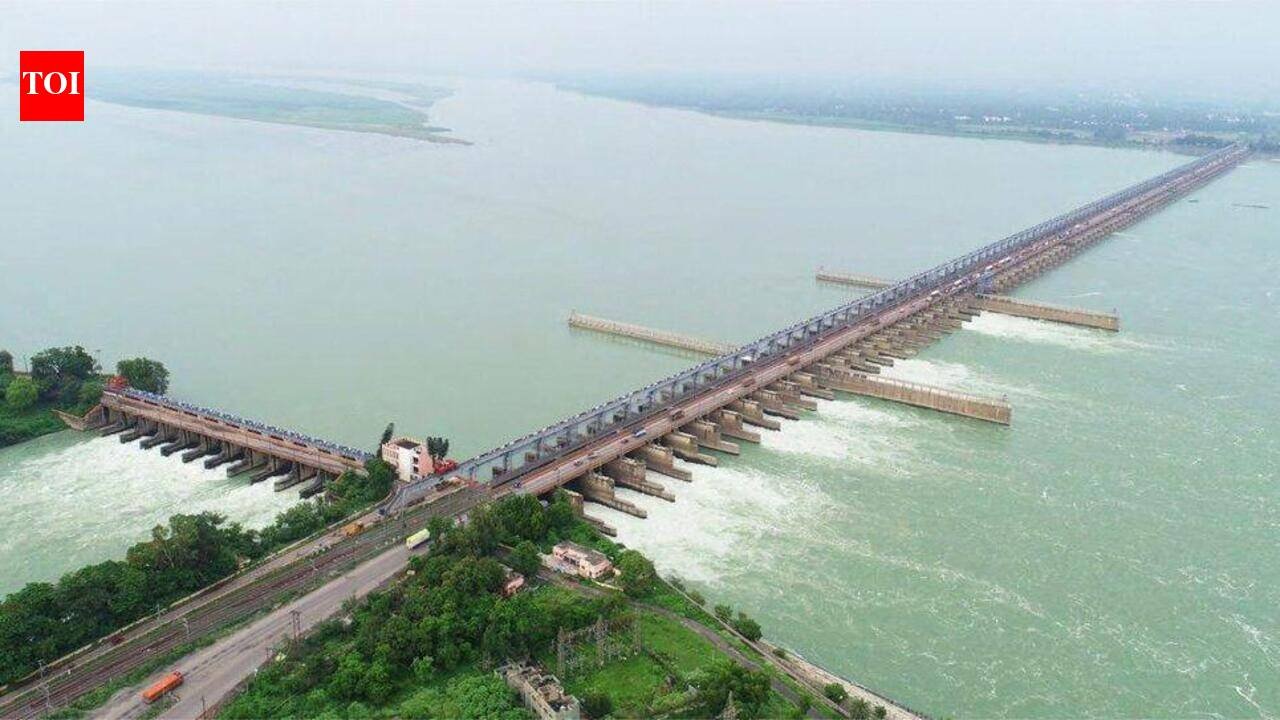
Patna: The 1996 India-Bangladesh Ganga Water Sharing Treaty, a cornerstone of South Asian river diplomacy, is facing a fierce political storm from within India as its Dec 2026 expiration approaches. Decades of ecological distress, severe monsoon flooding and summer water scarcity have pushed Bihar to challenge the status quo. Led by JD(U) — a crucial ally in the ruling NDA govt — and backed by civil society, Bihar is demanding a complete overhaul of how the Ganga’s waters are shared and managed.For 30 years, the treaty has regulated the lean-season flow of the Ganga at the Farakka Barrage in West Bengal. While celebrated internationally as a diplomatic triumph, the view from Patna is starkly different. To Bihar, the treaty represents a generation of structural neglect that has left the state trapped in a destructive “flood-and-parch” cycle.BACKGROUND OF 1996 TREATYThe Ganga Water Sharing Treaty was signed on Dec 12, 1996, by the then Prime Minister of India, H D Deve Gowda, and former Prime Minister of Bangladesh, Sheikh Hasina. Designed with a 30-year validity period, the treaty established a legal formula to divide the lean-season flow of the Ganga River at the Farakka Barrage in West Bengal.The primary historical objective of constructing the Farakka Barrage was to divert water into the Hooghly River to flush out silt and maintain the navigability of the Kolkata Port. However, the subsequent 1996 treaty bound India to guarantee a specific quantum of lean-season water flow down to Bangladesh. While celebrated internationally as a milestone of South Asian bilateral cooperation, the arrangement has drawn deep political resentment from upriver basin states, most notably Bihar.BIHAR’S CONTENTIONSAt the heart of Bihar’s opposition is the Farakka Barrage, located just downstream of the state border in West Bengal. The barrage has caused massive sediment accumulation upstream, effectively turning Bihar’s segment of the Ganga into a shallow, choked basin.Because the treaty mandates a strict timeline for water releases to Bangladesh during the lean season, the barrage alters the natural hydrodynamics of the river. This has triggered severe consequences for Bihar:Siltation crisis: Millions of tonnes of sediment settle annually on the riverbed, drastically reducing the river’s carrying capacity.The flood-and-parch cycle: During the monsoons, the elevated riverbed forces floodwaters out into districts like Bhagalpur and Munger, displacing millions. Conversely, the dry summer months bring acute water scarcity, restricting irrigation and industrial growth.Decoupled guarantees: The 1996 treaty ensures a variable water flow for downstream Bangladesh, but offers no minimum flow guarantees for upstream states like Bihar.“Bihar’s water has been stolen for 30 years,” declared Sanjay Kumar Jha, JD(U) national working president and former Bihar water resources minister, during a news conference at the party headquarters. “While states in India fight over water-sharing issues among themselves, Bihar’s water has been transferred to Bangladesh. The data clearly shows that our economic and ecological interests have been severely compromised,” Jha added.“Bihar is paying 73% of the international burden of this treaty entirely on its own,” asserted Umesh Singh Kushwaha, JD(U) state president, during a virtual review of the party’s ‘Nitish Samvad’ awareness campaign over the treaty. “Our farmers watch their crops ruin. In the monsoons we drown, and in the summers, we are forced to drain our internal rivers just to meet the requirements of Bangladesh, creating drought-like conditions at home,” said Kushwaha.WHAT BIHAR WANTSBihar is no longer content with being a passive geographic corridor. The state govt and regional think tanks have articulated a strict set of demands that must be fulfilled before renewal of the treaty.The Bihar Policy Dialogue (BPD), a collaborative platform comprising intellectuals, civil society members and academicians, convened a meeting in Patna on Sept 26 this year and discussed at length issues related to Ganga water sharing and the Farakka Barrage. “We have demanded that Bihar must be included as a formal stakeholder in all upcoming talks over India-Bangladesh water sharing,” said BPD convener Shashwat Gautam.The BPD also demands that the consent of all co-basin states be made mandatory before any revised agreement is finalised. “The scheduling of water release and retention at Farakka Barrage should be regulated in such a way that navigable water remains available in Bihar’s share throughout the year,” Gautam said.“Until the total availability of water in the Ganga river and the requirement for various uses are assessed and the share among the co-basin states is determined, approval of new projects of the upper riparian states by the Union government should be kept suspended. Immediate curbs should be imposed on the indiscriminate use of the Ganga waters by the upper riparian states,” the Bihar Policy Dialogue said.BIHAR’S 3 KEY DEMANDSScientific silt management: New Delhi must commission a comprehensive, scientific de-siltation strategy for the Ganga basin to restore its depth and natural flow.Long-term water security: Future water-sharing mathematics must scientifically project Bihar’s domestic, agricultural and industrial water requirements up to the year 2050 rather than relying on obsolete 1990s metrics.Decommissioning Farakka: In its most radical long-term demand, JD(U) leaders have consistently urged the Centre to let the current treaty lapse and actively review the utility of the Farakka Barrage itself.THE CENTRE’S TIGHTROPEThe growing rebellion in Patna places the Union govt on a delicate diplomatic tightrope. Regionally, New Delhi is attempting to manage complex bilateral ties with Bangladesh amid shifting political dynamics in Dhaka. Domestically, the NDA relies heavily on the parliamentary support of Nitish Kumar’s JD(U), making Bihar’s domestic grievances impossible to ignore.Recognising the high stakes of Bihar, External Affairs Minister S Jaishankar recently stepped in to assure regional leaders. In a direct communication to JD(U) leadership, Jaishankar confirmed that the Ministry of External Affairs will explicitly consider Bihar’s hydro-ecological concerns before proceeding with any treaty renewal.Whether these inter-ministerial assurances turn into structural changes remains to be seen. What is clear, however, is that as the Dec 2026 deadline inches closer, the path to South Asian river diplomacy will have to run directly through Patna.


