


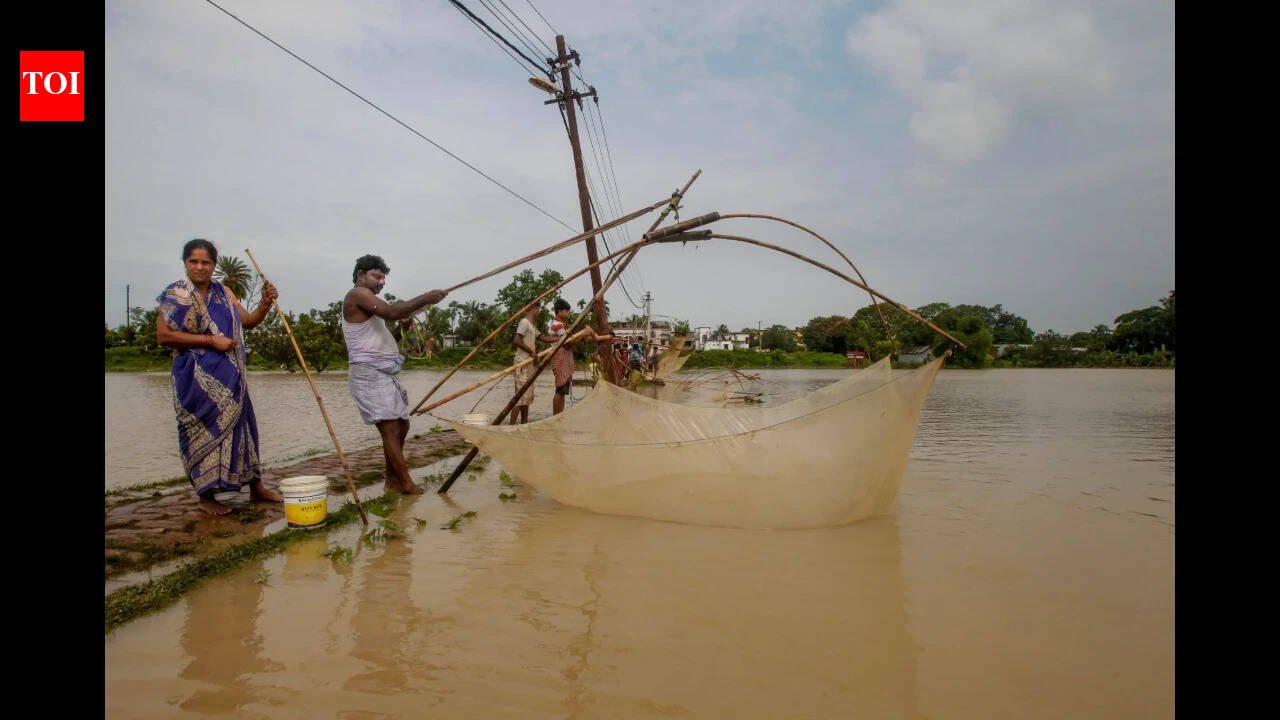
Patna: Bihar may have emerged as the country’s fourth-largest inland fish-producing state, but its traditional fishing communities remain caught in a cycle of floods, poverty, shrinking fish resources and market exploitation. For thousands of fishermen, the state’s impressive fisheries growth has yet to translate into secure and dignified livelihoods.
Image used for representation
Recurring floods remain among their biggest challenges, particularly in north Bihar. Seasonal inundation damages boats, nets, fishing gear and homes, often forcing families to migrate temporarily. Prolonged dry spells create the opposite problem by shrinking water bodies and reducing fishing opportunities.Changes in river ecology have compounded the crisis. Barrages and other river structures, including the Farakka Barrage, have disrupted fish migration routes and contributed to declining catches of commercially important species such as Hilsa. Pollution, chemical run-off, industrial waste and heavy siltation have further damaged rivers and wetlands.Bihar State Cooperative Fisheries Federation director Simran said the state still faces a shortfall of nearly two lakh metric tonnes of fish annually against domestic demand and continues to depend on supplies from Andhra Pradesh and West Bengal. She expressed concern over the under-utilisation of funds sanctioned under the Pradhan Mantri Matsya Sampada Yojana (PMMSY) in 2025-26, saying it was slowing the sector’s growth. Simran called for strict implementation of the Jal Kar Prabandhan Samiti Act, 2008 for better management and development of fisheries.For traditional fishing communities, especially the Mallah and Nishad groups, poverty remains endemic. Many are landless and depend almost entirely on fishing. Disputes over pond leases, high charges and informal local control often push fishermen into the hands of middlemen, while inadequate cold storage forces them to sell catches quickly at low prices.The govt has introduced subsidies for boats, nets and transport vehicles, accident insurance and welfare assistance during fishing bans. It is also encouraging aquaculture through the Mukhyamantri Samekit Chaur Vikas Yojana.Yet, the real test lies in implementation. Bihar’s fisheries boom will become a genuine social revolution only when higher production is matched by secure fishing rights, affordable credit, insurance, better infrastructure and direct access to markets.
