



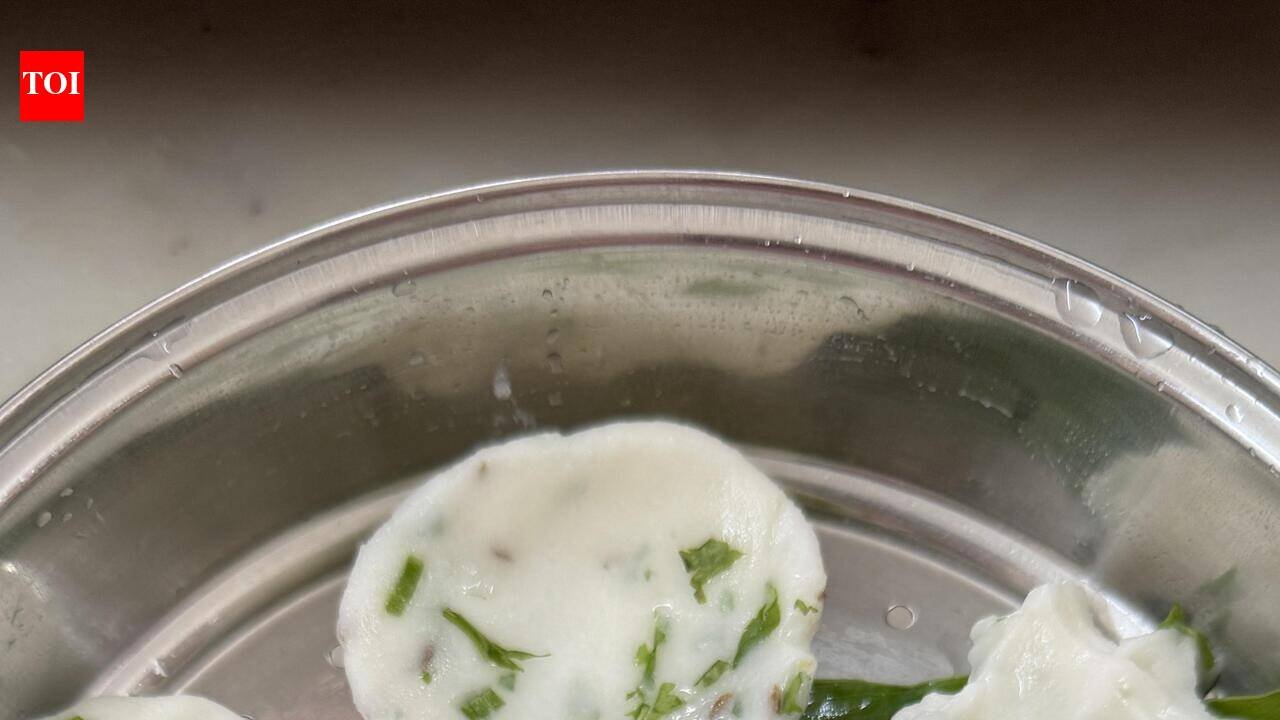
Pune: Ganapati Bappa’s fondness for modaks is no secret. Plump, wholesome pockets of steamed rice-flour dough, stuffed to bursting with a saaran (filling) of coconut, jaggery and cardamom, served with ghee — this classic naivedya (offering) is widely consumed during Ganeshotsav and found in restaurants, sweet shops and homes in different shapes, sizes and flavours.But what about when the stuffing runs out and just the dough (ukad) remains? Enter the lesser-known ‘nivagrya’, a savoury snack consumed with enthusiasm in Marathi homes.‘Nivagrya’, ‘nivigrya’ or ‘nivargya’ — each home has a different pronunciation, but the recipe remains standard. “The leftover ukad is repurposed effortlessly with a little coriander, cumin and green chillies, pressed into small flat shapes with ghee and steamed. It’s a no-waste policy,” shared Aparna Patwardhan, a 63-year-old retired teacher from Bhandarkar Road.According to her, this holistic look at food also extends to ‘Rushichi bhaji’, an item consumed on Rishi Panchami day during Ganeshotsav. The traditional mixed-vegetable dish brings in colocasia (alu), red amaranth (laal maath), ridge gourd (dodka), pumpkin (bhopla), raw banana, sweet potato, ladyfinger, cucumber, sweet corn, and soaked peanuts, seasoned with grated fresh coconut, green chillies, tamarind pulp, jaggery, cumin seeds, and ghee.“Items grown in people’s gardens, not in fields, are typically used. I remember as a child when neighbours shared different vegetables they had grown with each other for each household to make their own bhaji — a community effort,” added Patwardhan.Radhika Natu (55), a senior media and publishing professional from Prabhat Road, echoed, “Some of my fondest Ganeshotsav memories are associated with my mother, Sulochana Nadkarni, a wonderful chef who turned simple ingredients into something special.”“The day after Ganesh Chaturthi, we would eagerly await this steaming hot Rushichi bhaji, made without onion or garlic as a simple sattvic (pure) preparation. The real treat was eating it piping hot with tandulachi (rice) bhakri. It was rustic, wholesome and delicious. Every time I make it today, a little bit of my mother’s kitchen lives on,” she recalled.Each household brings its own magic to these recipes, testified popular vlogger Keertida Phadke (40), a chef and food storyteller documenting India’s regional culinary cultures. “Another way to use leftover modak dough in our home was also to make the rice bhakris with it. It is so well-kneaded by that point that the bhakri has an incredibly soft texture,” she shared.Seasonality is a strong factor when it comes to the ingredients of many dishes made during the Ganapati festival, said Phadke, adding, “For instance, aluche phadphade (a colocasia, dal and peanut curry) is made because the main component is abundantly available around this time. Similarly, tavsali is made as it is a good season for mature cucumbers, especially in the Konkan region, from where many of these recipes hail.”Tavsali is a mildly sweet cucumber (eggless) cake steamed in turmeric leaves, a staple naivedya during Ganesh Chaturthi and Gauri Poojan.“During Gauri Poojan, another popular naivedya in Koknastha homes is ghavan dipped in ghatle — ghavan are soft, delicate lace-like rice crepes, and ghatle is a sweet preparation of coconut milk thickened with rice flour and jaggery,” said Patwardhan. She added, “On Anant Chaturdashi or visarjan day, a popular offering in homes, set on a banana leaf, is vaatli dal (spiced, coarsely ground chana dal), eaten with tempered dahi (curd) pohe.”Another variation on pohe is ‘panchakajjaya’, a prasad from Konkani kitchens that marries pohe with grated coconut (wet or dry), jaggery, cardamom powder, etc.Items like aluchi bhaji and (mirchiche) panchamrut are mainstays in customary thalis during several festive and religious occasions, which makes their inclusion in fare during Ganeshotsav not very surprising. Panchamrut is a sweet-sour-spicy dish that attempts to marry all five basic flavours, featuring green chillies, tamarind pulp, jaggery, roasted peanut powder, coconut, curry leaves, mustard leaves, and more.Many of these dishes, though less known outside Maharashtrian homes, have special memories attached for those who have been consuming them since childhood. Phadke explained, “Khirapat or panchakhadya is a quick, no-cook prasad with five key ingredients whose Marathi names begin with the letter ‘kha’, namely khobra (grated dry coconut), kharik (dry date powder), khaskhas (poppy seeds), khismish (raisins) and khadisakhar (crystal sugar). I remember my brother loving this dish so much that he wanted my mother to send it with him to the US, even when it wasn’t Ganeshotsav time.”All in all, from sweet offerings to savoury delights, Ganeshotsav fare harnesses seasonal ingredients and mouthwatering coastal flavours well beyond the beloved modak.
