



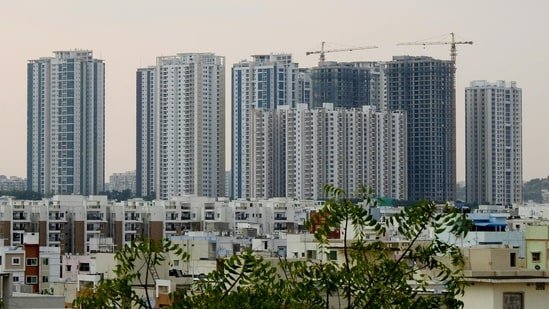
Bengaluru homebuyers are prioritising essentials such as security, water supply and maintenance over brand value when choosing between projects. In Reddit discussions, a buyer seeking a 3BHK under ₹1.5 crore asked whether opting for a Tier-1 developer ensures reliable water supply and 24-hour security, but residents said long-term living quality depends more on RWAs and community management, advising buyers to speak to occupants, especially at night, about security, water availability, tanker use in summers and power issues.


Apartment owners suggested that while developers play a role in initial construction quality and amenities, the long-term living experience often depends more on resident welfare associations (RWAs) and active community management.
“Who manages the place and how active residents are seem to matter more for things like security and water than just the builder’s name,” one user wrote, pointing out that prospective buyers should visit properties at night and speak to residents about issues such as power cuts and water supply before making a decision.
“Honestly, who manages the place (like the RWA) and how active residents are seem to matter more for things like security and water than just the builder’s name. I’d definitely recommend visiting at night and talking to folks living there now–get their take on power cuts, tanker water, that kind of stuff. The builder helps set things up, but day-to-day quality really depends on who’s running it afterwards.”
Water supply concerns persist in Bengaluru’s peripheral areas
Water availability emerged as a central concern, particularly in northern and peripheral micro-markets in Bengaluru where piped river water connections remain limited.
One Redditor pointed out that while tanker water is widely available across the city, dependence on it is common in outskirts developments. “Nearly all of Bangalore on the outskirts have Cauvery water supply issues as there is no connection,” the user noted, suggesting that buyers should physically verify water arrangements before purchasing.
Buyers also highlighted the cost implications of reliance on tankers. One user noted that a large residential complex in the city was spending between ₹33 lakh and ₹50 lakh per month on tanker water, translating to roughly ₹1,300– ₹1,400 per household.
Maintenance models and sustainability practices vary in Bengaluru projects
At the same time, some apartment communities in Bengaluru reported minimal reliance on tanker water due to investments in rainwater harvesting (RWH) and efficient water management systems.
“Our society had 10 rainwater harvesting tanks earlier, which has been increased to 30… I have seen only one water tanker in six years,” a resident shared, adding that maintenance charges of around ₹4.5 per sq ft covered water needs without additional tanker costs.
Rapid urban expansion strains water supply ahead of summer, say experts
Rapid urban expansion in Bengaluru has put increasing pressure on the city’s water resources, widening the gap between supply and demand. While several established localities receive piped water from the Cauvery River, many areas added to the city’s limits over the years continue to remain outside this network.
Urban experts note that in 2007, over 100 surrounding villages were brought under the city’s jurisdiction, including parts of Mahadevapura, Yelahanka, Bengaluru South, and RR Nagar. However, many of these rapidly developing zones, especially those around key IT corridors such as Whitefield and Sarjapur, still lack reliable access to piped water.
As a result, many newer residential areas depend on borewells and private water tankers. As groundwater levels continue to decline, these areas are becoming increasingly vulnerable to shortages, particularly during the summer months, experts say.
(Disclaimer: This report is based on user-generated content from social media. HT.com has not independently verified the claims and does not endorse them)


