



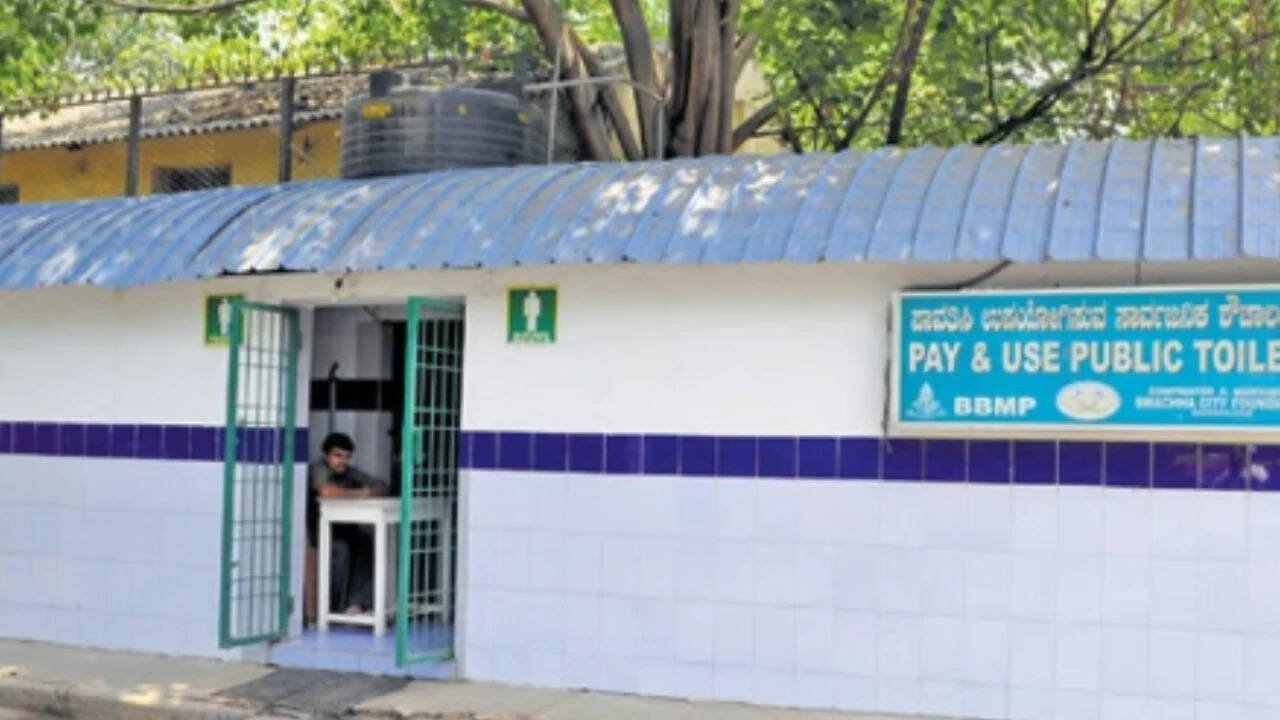
BENGALURU: Bengaluru city, with 1.4 crore people, has only about 900 public toilets, making it one public toilet for every 25,000 to 30,000 citizens, revealed a public toilet audit report released by a voluntary organisation on Wednesday.Bengaluru, home to more than 1.4 crore people, has only around 900 public toilets, roughly one for every 25,000 to 30,000 residents, with more than a quarter of the facilities lying defunct, according to a public toilet audit released by voluntary organisation Bangalore Political Action Committee (B.PAC) on Wednesday.The report, prepared by B.PAC, said Bengaluru’s sanitation infrastructure has failed to keep pace with the city’s rapid growth into a global metropolis.“With only 800-900 public toilets across the city (479 officially listed under GBA), Bengaluru has approximately one public toilet for every 25,000-30,000 citizens, far below the city’s growing needs,” the report said.The audit was conducted during April and May this year by B.PAC’s civic leaders and student volunteers’ unit, B.CLIP. It assessed public sanitation facilities across the city on parameters such as functionality, hygiene, accessibility, safety and user experience.According to the report, 142 public toilets across central, north, south and west Bengaluru were audited. Of these, 37 toilets, or 26%, were found to be completely non-functional.The findings also highlighted concerns over cleanliness and maintenance.Only six toilets, or 4.2%, were rated “very clean”, while 58% were found to have a persistent foul odour.The audit found that only 56% of the toilets were adequately lit, raising safety concerns, especially for women.Accessibility emerged as another major issue. Just nine toilets had ramps, making nearly 94% of the facilities inaccessible to persons with disabilities.Water was available in only about 40% of the functional toilets, while none of the facilities had soap dispensers or dustbins.The report also pointed to a lack of accountability. According to B.PAC, only 15% of caretakers were women, while information on contractors and user charges was largely absent.“Bengaluru’s sanitation challenge is no longer merely about constructing toilets-it is about ensuring that existing facilities remain functional, safe, inclusive and well maintained,” B.PAC said.Among its recommendations, the organisation called for a 30-day emergency repair drive to restore all non-functional public toilets and proposed the creation of a dedicated Public Toilet Management Cell under the Greater Bengaluru Authority (GBA) for unified planning, monitoring and maintenance.B.PAC also recommended replacing “build-only” contracts with five-year operate-and-maintain contracts, backed by strict performance monitoring and the possibility of contract termination in cases of poor upkeep.The organisation urged civic authorities to ensure uninterrupted water supply, proper lighting, soap dispensers, dustbins and regular maintenance at all public toilets.It further called for the creation of more women-friendly and gender-inclusive facilities, including She-Toilets and toilets catering to transgender persons.The report recommended greater community participation by involving resident welfare associations, NGOs and citizen groups in monitoring public sanitation infrastructure.B.CLIP head Raghavendra Poojari H.S. urged the Karnataka government and the GBA to build more than 1,000 modern, user-friendly and well-maintained public toilets through the public-private partnership model.He said priority should be given to high-footfall locations such as bus stations, metro stations, markets, parks, tourist destinations and construction sites while planning new facilities.B.PAC chief executive officer Revathi Ashok said that if Bengaluru aspires to be a global city, it cannot afford to ignore such basic civic necessities.(With PTI inputs)


