


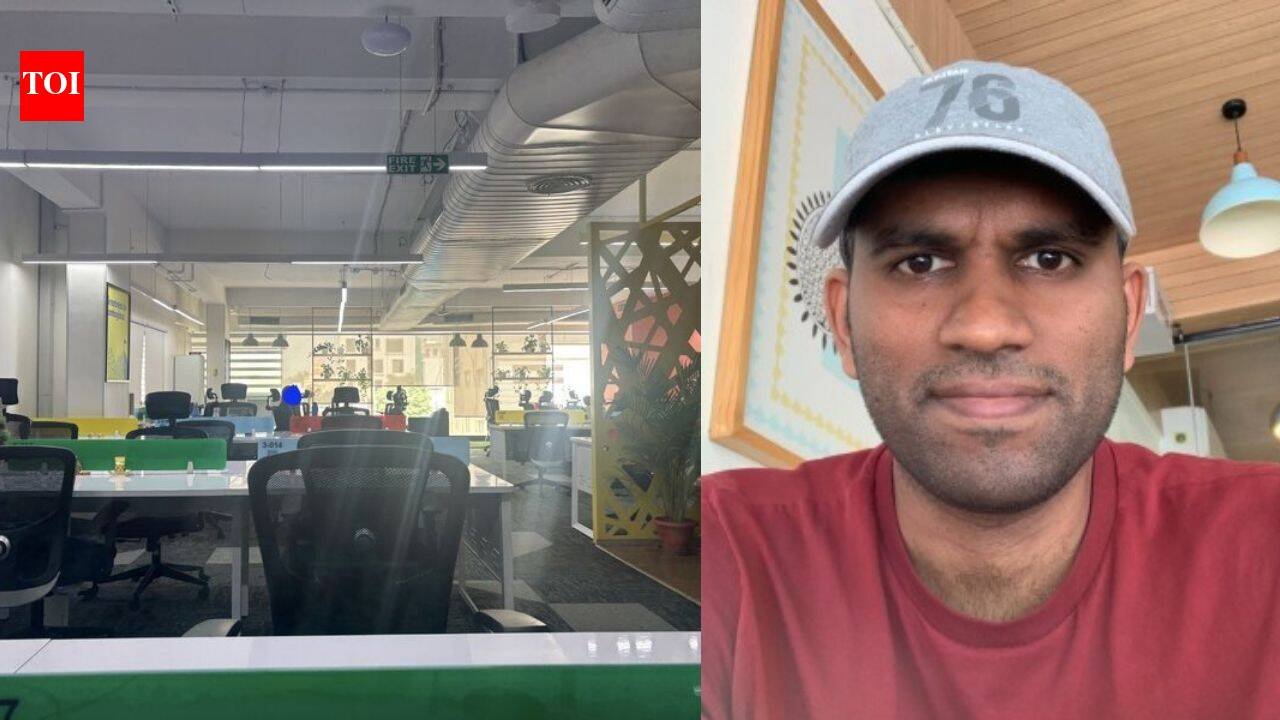
BENGALURU: Entrepreneur Bala Panneerselvam’s photo of his near-empty 10.15 am office floor has struck a chord online, with the founder arguing that Bengaluru’s gridlock is no longer just a commute problem — it’s wrecking people’s ability to function at work.Panneerselvam, who runs Applied AI Studio and the Applied AI Club community, posted the picture on LinkedIn with a blunt caption: “The problem is not the people. But the effort it takes to show up in the office.”He broke down the toll with numbers. A 4-km ride in Bengaluru’s HSR Layout takes 20 minutes on a scooter and 30 by car — with another 10 minutes added during peak hours. Weaving through two-wheelers “jumping signals” along the way, he said, leaves commuters drained before they’ve even logged in.
The return leg is worse, he claimed. Leaving after 6 pm can double the usual travel time, while even a 5 pm exit gets employees home too exhausted to do anything with their evening — which then delays them the next morning too.Panneerselvam cited his own experience: a 17-km stretch from Whitefield to HSR Layout took him two hours at 4 pm, on a day with no rain or unusual disruption. “We’re absolutely destroying our ability to do good work in this city,” he wrote, asking how anyone is supposed to think clearly amid constant chaos.Panneerselvam didn’t stop at describing the problem — he also weighed in on the fix. “The solutions are easy but hard to implement. Focus on reducing cars on the road, provide good public transport, cycle lanes. There are cities with much higher population density who have solved this. Beyond repair is not a valid argument,” he said.He argued the single biggest impact would come from dedicated cycle-only lanes through the city’s narrow streets, and suggested cabs, trucks and buses be kept off already-choked roads where infrastructure hasn’t caught up — while acknowledging a large part of the local economy and political base is tied to cars and autorickshaws.The post drew a wave of agreement in the comments. One user pegged their daily commute at 1.5–2 hours, blaming potholes and broken roads. Another said the real cost wasn’t time lost but showing up “half-dead.”A third argued the city has simply normalised the exhaustion, warning that unchecked growth without infrastructure could see Bengaluru “crumble like a tower of cards.”A fourth suggested the real fix lies outside Bengaluru altogether: Corporates should build centres in tier-2 cities like Kochi and Coimbatore, or Hosur and Mysuru, tapping South India’s deep talent pool and triggering reverse migration away from Bengaluru’s congestion.
