



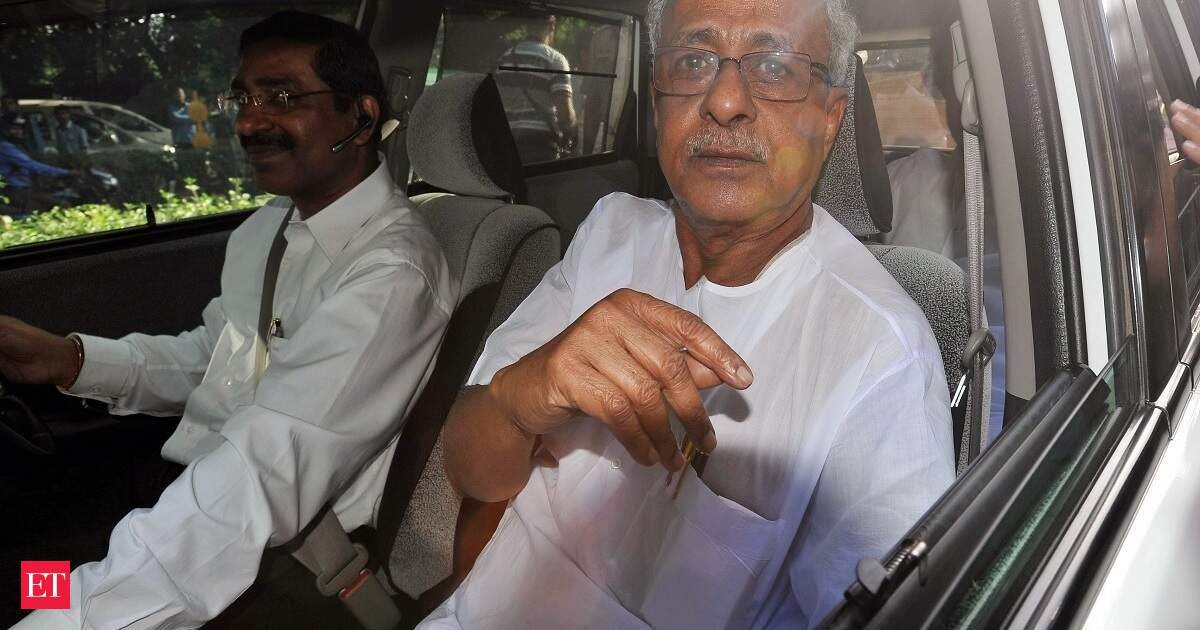
The Adhikari family, once a bulwark of anti-Left politics in the region, later a pillar of the TMC, and now aligned with the BJP, also comprises Sisir’s sons — Suvendu, the leader of opposition in the assembly, Dibyendu, a former MP, and Soumendu, currently representing the Kanthi Lok Sabha seat.
Also read: TMC West Bengal candidate list: Mamata Banerjee announces full list of candidates for 294 seats ahead of assembly elections
The Tamluk, Kanthi (Uttar) and Kanthi (Dakshin) constituencies, which witnessed closely fought contests in 2021, are drawing attention due to shifting loyalties and the impact of the family’s political repositioning over the past decade.
The Tamluk assembly constituency has emerged as a crucial swing seat in the coastal belt, marked by razor-thin margins and a direct TMC-BJP contest.
In the 2021 assembly elections, TMC’s Dr Saumen Kumar Mahapatra retained the seat, defeating Harekrishna Bera of the BJP by just 793 votes, making it one of the closest contests in the state. CPI’s Goutam Panda was also in the fray, but the contest remained largely bipolar.
This narrow margin has elevated the constituency’s status as a politically sensitive assembly segment. However, beyond the vote arithmetic lies the influence of the Adhikari family, which has historically held sway over the broader Tamluk Lok Sabha segment.Also read: EC releases third supplementary voter list in West Bengal
From being a Congress-era anti-CPI(M) force led by Sisir Adhikari to becoming a key pillar of Mamata Banerjee’s rise in rural Bengal, the family built a durable political network.
That equation changed ahead of the 2021 elections when Suvendu shifted to the BJP, disrupting the TMC’s organisational base in Purba Medinipur and enabling the saffron party to quickly emerge as a competitive force.
For the upcoming polls, the TMC has fielded Dipendra Narayan Roy, replacing Mahapatra, while the BJP has renominated Bera. The CPI has named Nabendu Ghara, with the Congress yet to declare its candidate.
Kanthi (Contai) subdivision remains the epicentre of the Adhikari family’s influence and offers the clearest insight into the region’s shifting political dynamics.
For decades, the family functioned as a formidable anti-Left force, consolidating control over local institutions and grassroots mobilisation. Their later alignment with Mamata Banerjee helped the TMC entrench itself in the district.
The family’s defection to the BJP in 2020-21 was therefore not merely a change of party, but a transfer of an entire political ecosystem.
In 2021, Sumita Sinha of the BJP won the Kanthi Uttar seat, defeating TMC nominee Tarun Kumar Jana by 9,330 votes, reflecting a competitive contest.
For the upcoming election, the BJP has retained Sinha, while the TMC has fielded Debasish Bhunia. The CPI(M) has nominated Sutanu Maity.
Here too, the Adhikari factor remains deeply embedded. Voters often distinguish between party identity and local leadership, and the family’s longstanding presence seems to influence electoral behaviour. However, the TMC has attempted to rebuild its organisation, making the contest more competitive.
Kanthi Dakshin has historically been the family’s political nerve centre, represented at different times by Adhikari family members. In 2021, BJP’s Arup Kumar Das won the seat by over 10,000 votes against the TMC.
The saffron party has renominated Das, while the TMC’s Tarun Kumar Jana is in the fray. CPI’s Teharan Hossain adds a third dimension.
While the BJP continues to benefit from the Adhikari network, this is also where the TMC is attempting a comeback.
At the centre of this evolving dynamic is Suvendu Adhikari, whose political journey mirrors the region’s transformation. From being one of Mamata Banerjee’s key lieutenants and a central figure in the anti-land acquisition movements in Nandigram to becoming the BJP’s principal face in Bengal, his shift has had far-reaching consequences.
The family’s consolidation behind the BJP has given the saffron party a durable base in the district, while also intensifying competition with the ruling TMC recalibrating its local leadership and organisational strategy.
These three seats are part of the politically crucial Purba Medinipur district, which has often played a decisive role in shaping electoral outcomes in West Bengal.
The upcoming election is expected to witness intense contests across all three constituencies. The BJP will aim to retain its foothold, backed by the Adhikari family’s influence, while the TMC will attempt to erode that base through governance delivery and organisational rebuilding.
The Left parties and the Congress, contesting separately, could still influence outcomes by splitting votes in tightly contested segments, particularly in Tamluk.
The elections to the 294-member West Bengal assembly will be held in two phases – on April 23 and 29. Votes will be counted on May 4.


