


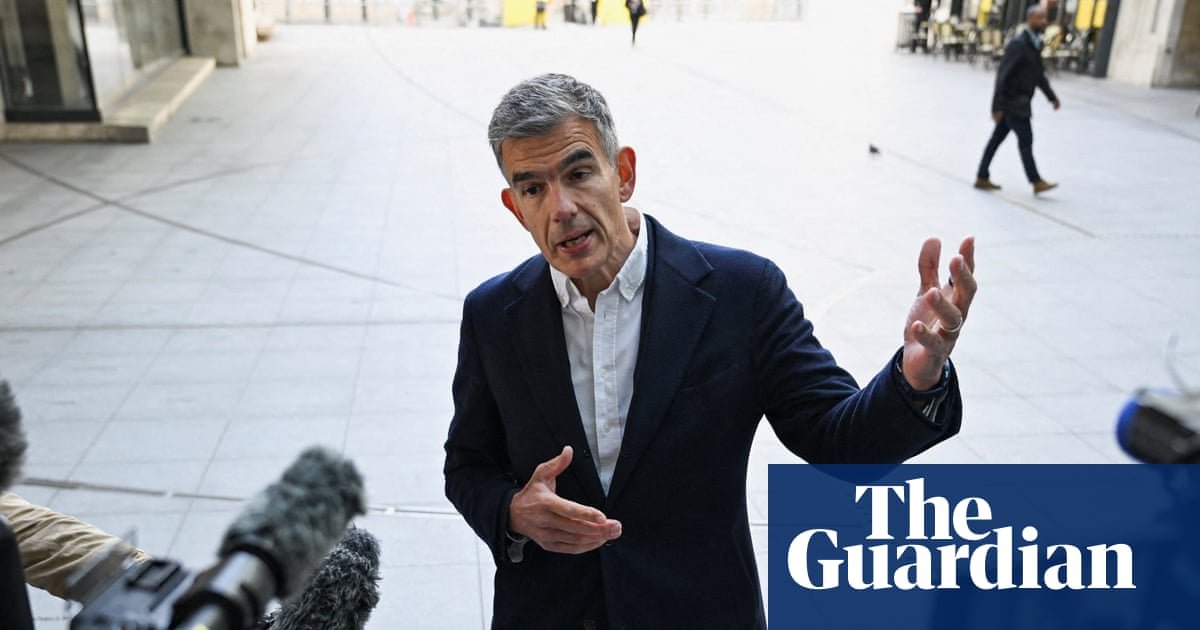
Matt Brittin, the BBC’s new director general, has warned staff that “tough choices are unavoidable” under his tenure, as his first day coincided with a strike by a group of the corporation’s journalists.
Brittin, formerly Google’s most senior executive in Europe, arrived at the corporation’s New Broadcasting House while a group of journalists from the World Service’s flagship show Newshour and Radio 4’s The World Tonight were picketing in response to a plan to increase their workloads.
The action, which relates to a dispute over shift patterns that has been rumbling on for months, is one of a series of planned strikes by the staff. They warn morale is “in the red”.
It is being seen by some insiders as a sign of the obstacles Brittin will face as he attempts to implement sweeping cuts right across the corporation that aim to save hundreds of millions.
Brittin, who will address staff tomorrow, has been spending the last few weeks visiting various parts of the BBC. Insiders say he has shown particular interest in the costs of production as he begins the task of finding budget cuts of 10%.
In a message to staff, Brittin – who replaces Tim Davie – said his visits had “underlined just what an extraordinary, priceless asset the BBC is for all of us”.
However, he also suggested he would push for the BBC to make some dramatic changes in how it delivers its programming as digital platforms such as YouTube and TikTok become more prominent.
“The BBC has proved throughout its history how quickly it can reinvent itself to serve the needs of audiences – from restructuring for World War II to repurposing during Covid to spinning up services in conflict zones,” he said. “We need, collectively, to call on that sense of urgency now. That means moving with velocity and clarity.
“Excellence at the BBC has always been founded on great, creative storytelling and brilliant, independent journalism. Today it also means making sure we get the right stories in the right formats on the right platforms.”
He added: “I know change will not be easy. Tough choices are unavoidable as we make savings. We should ask ourselves, honestly: if we were inventing the BBC today, what would we do? Then respond with clarity, pace and purpose.”
The strike by Newshour and The World Tonight journalists predates the plan for cuts and affects more than 30 workers. Staff from Newshour say they were presented with plans to add 26 extra slightly shortened shifts to their workloads.
A modified plan was also comprehensively rejected in a union vote. Staff on the World Tonight were also presented with extra shifts. They warn that the changes will put already stretched staff under greater strain and risk damaging the programmes as teams are spread more thinly.
It comes at a time when BBC bosses have been championing the World Service as a critical part of Britain’s soft power in a world in which sources of free and accurate news are diminishing.
A BBC spokesperson said: “We are disappointed that the [National Union of Journalists] is proceeding with industrial action. During an extended period of consultation and engagement with the union we have listened, adapted our approach, and put forward a revised proposal, and we regret that agreement has not been reached.
“The BBC faces huge financial challenges and we need to operate as efficiently as possible. Our priority remains ensuring our audiences continue to receive trusted news and information from the BBC.”
Brittin also enters the BBC with a renewed debate taking place over its past approach to transgender issues, after a critical article by Rob Burley, a former senior BBC editor.
In an essay for the UnHerd website, Burley quotes Fran Unsworth, the director of BBC News from 2018 to 2022, as saying that “progressive madness” meant the corporation failed to properly reflect the debate over trans issues.
“I would actually say it drove me out, just dealing with the progressive editorial issues and the bullying around them all,” she said. “It was incredibly difficult.”
