






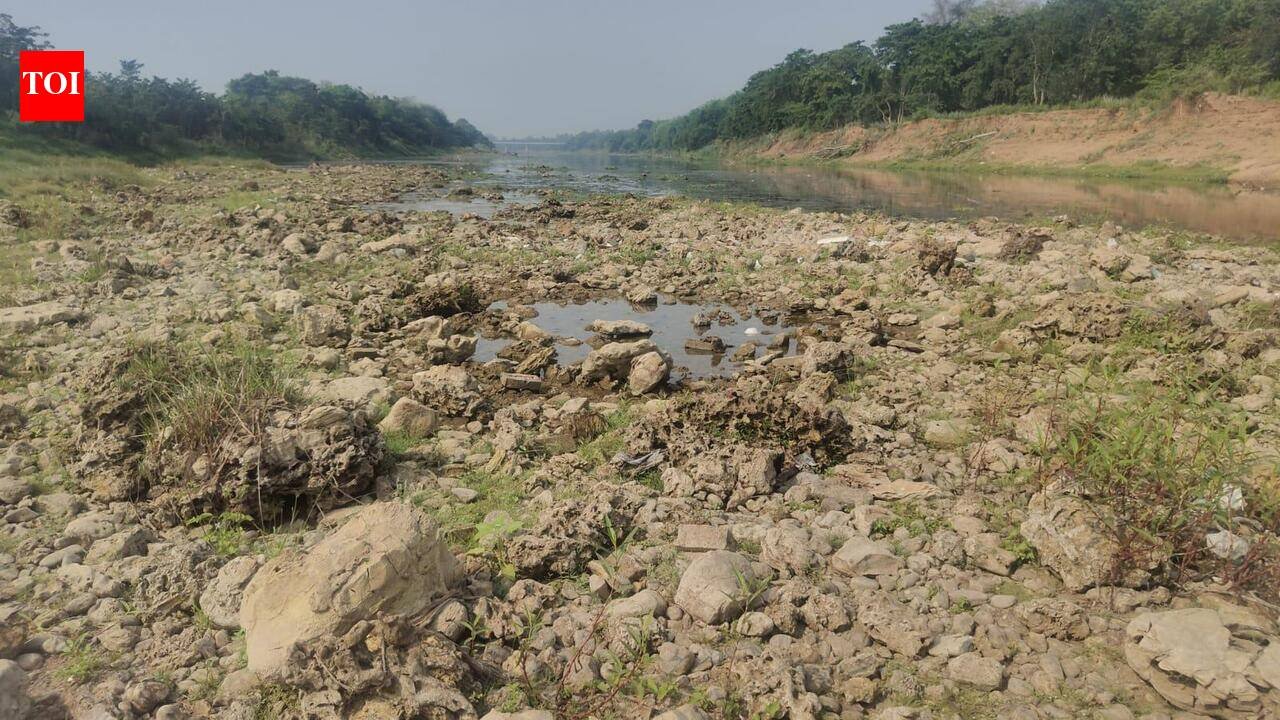
At first glance, they may appear to be nothing more than rocks scattered across the bed of the Budhabalanga river in Mayurbhanj district. Look closer, however, and the rocks reveal something far more fascinating – fossils of shark teeth, rays, crabs, crocodilians, fish, molluscs and microscopic marine life, all preserved for millions of years.Locally known as Asura Hada, or the ‘Bones of a Demon’, the site is scientifically known as the Baripada Fossil Beds, or the Miocene Baripada Beds. Spread across Satpautia, Usurudihi, Itamundia and Mukuramatia villages, the beds contain marine fossils dating back to the Miocene epoch, a period of geological history that began around 23 million years ago and ended about 5.3 million years ago.The fossils tell a story very different from the landscape visible today. They suggest that much of the area around present-day Baripada was once covered by a shallow sea.Nine families of sharks and rays have so far been identified from the Mukuramatia and Itamundia localities. The finds include members of Carcharhinidae, Hemigaleidae, Alopiidae, Myliobatidae, Dasyatidae, Pristidae, Rhynchobatidae, Rajidae and Sphyrnidae.Geological investigations of the Baripada Beds have been carried out since 1872. In 1904, eminent geologist Pramatha Nath Bose first identified Tertiary rocks at Mahulia village, in the catchment area of the Budhabalanga, where fossil-bearing limestone deposits were subsequently found.According to Basanta Kumar Mohanta, professor of anthropology at Fakir Mohan University, the fossil beds provide evidence of repeated changes in the sea’s extent in the region. “Researches have shown that Baripada was once under the shallow sea, which can be seen from these Miocene marine fossil assemblages, including shark teeth, molluscs and foraminifers. After the deposition of these fossiliferous sediments during the marine transgression of the Miocene time, the sea retreated to its current position,” he said. Today, the sea is about 61.2 km away from the Baripada Beds, at Balasore district.For scientists, the fossils are more than remnants of long-extinct marine life. They can help reconstruct what the region’s environment and climate may have been like millions of years ago and trace how the landscape changed as the sea advanced and later retreated.But the window to see these fossils is a short one. The fossil-bearing rocks remain submerged under the Budhabalanga during the monsoon and become visible for only about two to three months a year. Natural weathering continues to affect some of the exposed material.“The fossils remain naturally preserved in the river bed even as some natural weathering has been happening. Preserving the site is a difficult proposition because you will have to divert the river in that case,” Mohanta said.That vulnerability has prompted calls for the site to receive formal protection.Earlier this year, Rashmi Rajya Laxmi Bhanj Deo, convenor of INTACH’s Mayurbhanj chapter, wrote to the state government seeking recognition of Asurahada as a State Geo-Heritage Site. She has also proposed a fossil park and interpretation centre with a curated museum showcasing the area’s fossil diversity.She said protecting the entire area from activities such as sand mining would be important to preserve the fossil exposures in their natural setting.Anil Dhir, convener of INTACH’s Bhubaneswar chapter, said the site offers a rare opportunity to understand the evolution of life in the region over millions of years. “Preserving this heritage is not only a scientific responsibility but also a visionary step toward promoting Odisha as a global geo-tourism destination,” he said.Dhir said India has several fossil parks featuring dinosaur, plant and other vertebrate fossils, but none dedicated to marine fossils. If the Baripada site receives Geo-Heritage recognition and is developed as proposed, he said, it could become the country’s first marine fossil park.


