


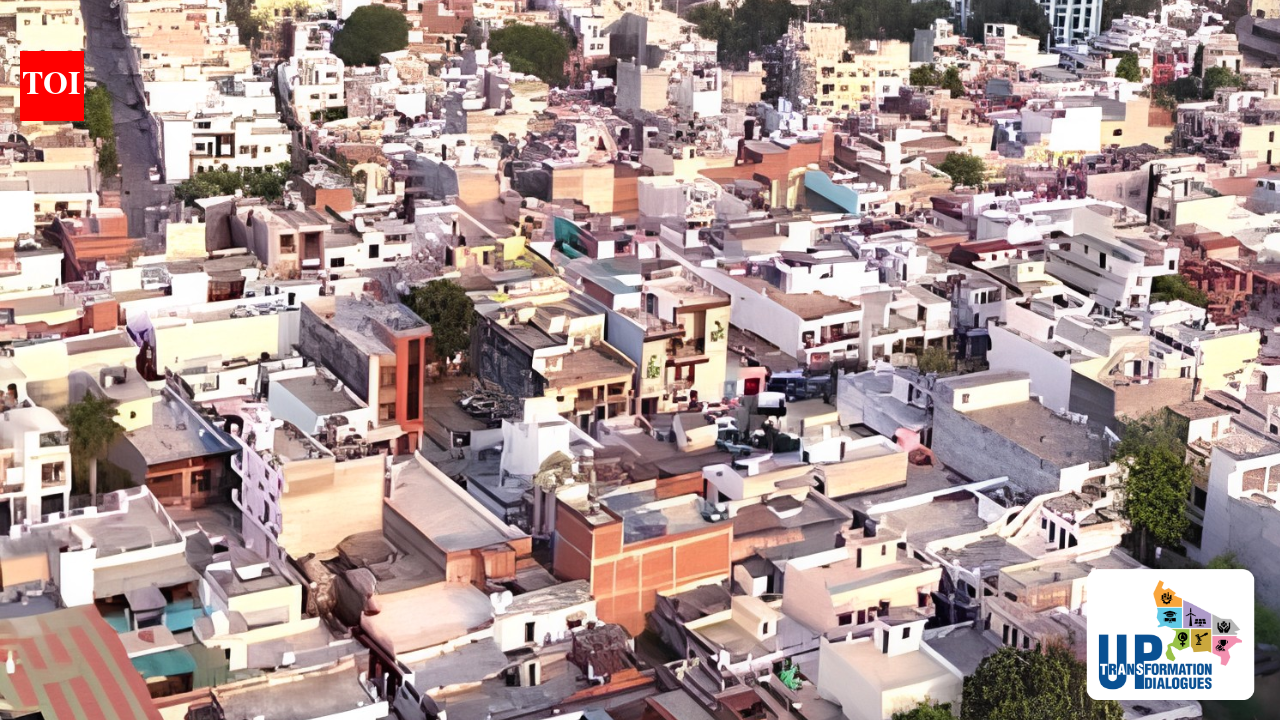
Bareilly, located centrally in the Indo-Gangetic Plains, approximately 252 kilometers northwest of Lucknow and 265 kilometers east of New Delhi, is a major city in Western Uttar Pradesh and the administrative headquarters of the Rohilkhand region.With its strategic location, it has been designated a “Counter Magnet” city for the National Capital Region (NCR) and acts as a central junction linking the plains of Uttar Pradesh with the Himalayan foothills of Uttarakhand.Under the leadership of chief minister Yogi Adityanath since 2017, the city of Bareilly has undergone a massive infrastructural metamorphosis. The Uttar Pradesh government has strategically prioritized robust road connectivity, bridge construction, and systematic urban expansion. Projects totaling hundreds of crores have been dedicated to the public, including the signature Mahadev Bridge alongside numerous Public Works Department (PWD) initiatives.A significant milestone occurred in March 2024 when chief minister Yogi inaugurated 64 distinct development projects valued at Rs 328.40 crore. To sustain this momentum, recent administrative directives have targeted the swift clearance of over 2,200 development proposals, setting the stage for foundation stones to be laid consecutively from August 2025 onward. Long-term urban planning is further exemplified by the “Greater Bareilly” initiative and new satellite township strategies under the MukhyamantriShahri Vistaarikaran Scheme, backed by substantial seed capital to ensure highly structured, futuristic expansion.Concurrently, connectivity and economic infrastructure have experienced a marked upward trajectory. Interventions include optimized road networks, major railway station upgrades, and aggressive industrial promotion aligned with Uttar Pradesh’s broader macroeconomic growth. Bareilly benefits immensely from the state’s expansive network of expressways and industrial corridors, which have collectively acted as a magnet for private investment. Airport modernizations and logistics sector enhancements have drastically improved regional trade dynamics.To accommodate rising demographic pressures, the Bareilly Development Authority has rolled out comprehensive housing schemes designed to foster sustainable growth. Furthermore, core Smart City components—such as interactive digital e-kiosks, foot-over bridges, and accessible community facilities—have dramatically elevated citizen services and localized mobility.Urban development and housing initiatives have gained tremendous speed. The state government launched the Greater Bareilly Residential Scheme alongside the definitive Master Plan 2031 to manage rapid urbanization efficiently. New city development proposals for Bareilly received unprecedented budgetary backing in 2026, drawing from a massive Rs 3,500 crore statewide fiscal allocation reserved exclusively for planned urban expansions in selected cities. These deliberate interventions aim to de-congest the core city center, supply affordable housing options, and construct modern, self-sustaining townships equipped with superior amenities.This overall progress mirrors the broader transformation of Uttar Pradesh into India’s leading growth engine. Although socioeconomic challenges like healthcare and educational disparities still persist across certain rural blocks, state-managed welfare and development schemes have successfully expanded grass-roots facilities.Regular high-value project inaugurations, such as the Rs 933 crore investment package launched in 2025, showcase the administration’s sustained development focus. Critically, the starkly improved law and order situation under the Yogi administration has fostered a secure and conducive environment for commerce, positioning Bareilly for accelerated progress through industrialization, infrastructure, and comprehensive urban renewal.Economically, Bareilly’s One District One Product (ODOP) initiative, pioneered by chief minister Yogi Adityanath in 2018, prominently features Zari-Zardozi as the district’s flagship craft. This intricate embroidery style, utilizing real gold and silver threads, has stood as a hallmark of Bareilly’s cultural heritage for centuries. The ODOP scheme provides local artisans with vital financial support via the ODOP Margin Money Scheme, alongside specialized skill development, common facility centers, and direct market linkages. These robust interventions have revived and scaled this heritage art, allowing local enterprises in Bareilly to scale their commercial operations while preserving time-honored techniques.Complementing this flagship craft, other ODOP products—including bamboo items, wooden furniture, and specialized goldsmith work—have diversified Bareilly’s microeconomic ecosystem. Government backing extends to strategic branding, e-commerce integration, export promotion, and cluster development. These concentrated efforts have successfully generated employment for hundreds of thousands of local artisans, raised rural household incomes, and effectively placed Bareilly’s traditional crafts onto national and international stages. The ODOP philosophy aligns perfectly with the state’s overarching goals of self-reliance, reducing distress migration, and transforming the district into an active hub for handicrafts and value-added manufacturing.Consequently, this traditional gold and silver thread embroidery craft has achieved major global traction, with finished products exported to over 40 countries. This success heavily feeds into Uttar Pradesh’s historic export surge, where ODOP and allied handicrafts account for approximately 50% to 70% of the state’s total exports.Notably, the state’s overall exports nearly doubled from Rs 86,000 crore in fiscal year 2017-18 to around Rs 1.86 lakh crore in recent years. The Zari-Zardozi sector alone supports an artisan population estimated between 2 to 4 lakh individuals within the cluster, generating substantial local economic turnover that previously hovered around Rs 175 crore annually. This micro-level success directly boosts Uttar Pradesh’s Gross State Domestic Product (GSDP) through MSME expansion, skill building, and value-added manufacturing, perfectly aligning Bareilly with the state’s ambitious march toward a $1 trillion economy.Simultaneously, Bareilly has undergone a revolutionary education transformation, emerging as a leading pioneer in digital learning infrastructure across Uttar Pradesh. The district achieved the distinction of being the very first in the state to equip 100 percent of its government schools with smart classrooms. Over 2,500 such interactive facilities have been established locally out of Uttar Pradesh’s total pool of 15,000, enabling technology-driven pedagogy through collaborative initiatives by the Bareilly Municipal Corporation and the Smart City Mission.This technological leap is heavily complemented by Mahatma Jyotiba Phule Rohilkhand University (MJPRU), which serves as the region’s premier hub for higher education, offering diverse undergraduate, postgraduate, and advanced research programs. This academic ecosystem has expanded access, elevated education quality, and enhanced vocational skill development. Literacy rates show consistent upward trends while successfully narrowing historic gender gaps. The systemic integration of modern digital tools and National Education Policy (NEP)-aligned reforms continues to empower the youth, dramatically reduce dropout rates, and align local education with global market opportunities in a historically artisan-rich region.Ultimately, Bareilly’s Smart City vision focuses on transforming this historic trading and cultural epicenter into a highly sustainable, inclusive, and technology-driven urban center that seamlessly blends deep heritage with cutting-edge modernity. Fully aligned with the national Smart Cities Mission, it prioritizes core infrastructure, an elevated quality of life, a clean environment, and smart municipal solutions. This is achieved through Area-Based Development—redeveloping vital zones with mixed-use planning, heritage restoration of landmarks like Ghanta Ghar, upgrades to Gandhi Udyan, skywalks, and urban haats—alongside comprehensive Pan-City initiatives covering 276 square kilometers. Key elements driving this transition include an Intelligent Traffic Management System, an Integrated Command and Control Centre, advanced GIS mapping platforms, e-learning networks, smart health kiosks, optimized solid waste management, large-scale solar energy adoption, and citizen-centric applications like ‘Mera Bareilly’. Together, these components enhance mobility, economic vibrancy, governance efficiency, and environmental sustainability, creating a highly replicable model of inclusive urban growth.
