






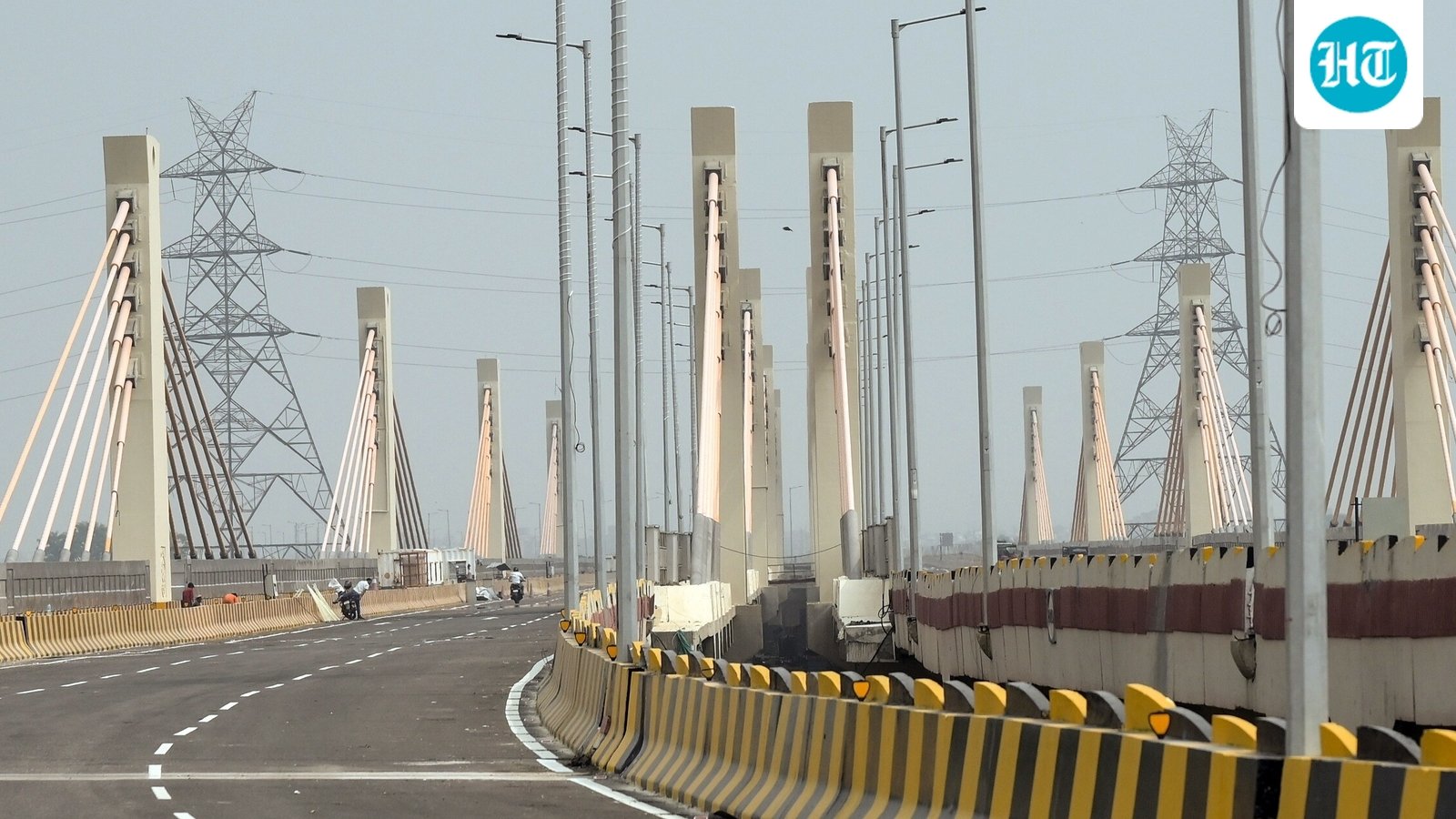
A new road connection can do more than cut travel time. For property markets, improved connectivity can reshape where people choose to live, work and invest. With Delhi’s long-delayed Barapullah Phase III corridor set to open on September 29, Mayur Vihar and parts of Noida could be among the housing markets that are expected to benefit.

The signal-free corridor connects Mayur Vihar Phase I with Sarai Kale Khan and links into the existing Barapullah network towards AIIMS. Officials estimate that the project could bring down travel time between East Delhi/Noida and AIIMS from around 35–40 minutes to about 15 minutes, depending on the starting point and traffic conditions.
Impact on Mayur Vihar’s real estate market
For Mayur Vihar, the impact could be particularly relevant because the locality already has strong links with South Delhi through the DND and is served by the Pink and Blue Metro lines, not to mention the RRTS that connects the area to Meerut. It also attracts residents working in South Delhi, Central Delhi and Noida.
According to L R Sharma of Asia Estates, a real estate broking agency in Mayur Vihar, the improved connectivity could have an impact of around 5–10% on both rentals and capital values, given the area’s existing demand-supply imbalance.
“Average rentals are around ₹35000 to ₹40,000 for a 2BHK, while there is very limited housing stock available for sale. Whenever a property comes on the market, there are already several buyers looking for it, despite much of the housing stock being more than two decades old. This gives sellers considerable pricing power, leaving buyers with very few options,” Sharma said.
The improved road connectivity could further strengthen this demand by making the locality more accessible to employment hubs in South and Central Delhi, while also improving the commute towards Noida, say local brokers.
Impact on Noida’s real estate market
For Noida, the impact of Barapullah III is likely to be more dispersed. The corridor does not directly pass through the city, but faster access to Delhi could add to the appeal of sectors that offer relatively easy connectivity to Mayur Vihar and the new corridor. The effect could be particularly relevant for new projects and emerging residential clusters where developers are already selling connectivity as a key part of the location story, say real estate experts.
“Barapullah III is a bigger deal for Mayur Vihar than for Noida overall. Mayur Vihar, Vasundhara Enclave, Patparganj and the Delhi-facing Noida sectors around 15A, 16A, 44 and 94 should feel the benefit most. A Mayur Vihar to AIIMS journey potentially coming down from 35-40 minutes to 15 minutes materially changes its South Delhi connectivity,” Gaurav Gupta of ReraTracker, a real estate intelligence platform that helps people research developers and projects, track the market, and make better-informed property decisions, told Hindustan Times Real Estate.
“Noida Expressway is already seeing a structural shift towards larger, more premium homes. Now another easier access to South Delhi simply makes that proposition even stronger,” he said.
At the same time, the impact on property prices is unlikely to be uniform. Homes closest to access points could benefit more than those farther away, while the extent of the premium in Noida would depend on the ease and time taken to reach the corridor. Some of the anticipated benefits may also already be reflected in property prices, given that the project has been in the works for more than a decade, real estate experts say.
MPD 2047 and housing societies
For Mayur Vihar, where a significant portion of the housing stock was developed several decades ago, the proposed regeneration framework under the Delhi Master Plan 2047 in the future could open a new chapter for ageing housing societies, provided residents are able to reach a consensus and meet the applicable redevelopment and planning requirements, say experts.
According to Gupta, Mayur Vihar is an interesting market. It already has Metro, schools, markets and mature social infrastructure, but much of the housing stock is old. If MPD-2047 actually makes redevelopment of these ageing societies viable, you get old established location plus new connectivity plus new housing stock. That combination can genuinely re-rate this entire area in the times to come.
Barapullah Phase III: A project years in the making
Barapullah Phase III is the largest of the four projects planned under the Barapullah network. The corridor is designed to provide seamless, signal-free movement between East and South Delhi, with the new stretch merging with the existing Barapullah flyover at Sarai Kale Khan.
Originally approved in 2014 and initiated in 2015, the project was originally scheduled for completion in 2017. However, land acquisition, tree-related clearances, construction challenges around the Yamuna and the Covid-19 pandemic contributed to repeated delays. The revised project cost had risen to around ₹1,635 crore from the initial estimate of about ₹1,260 crore.


