





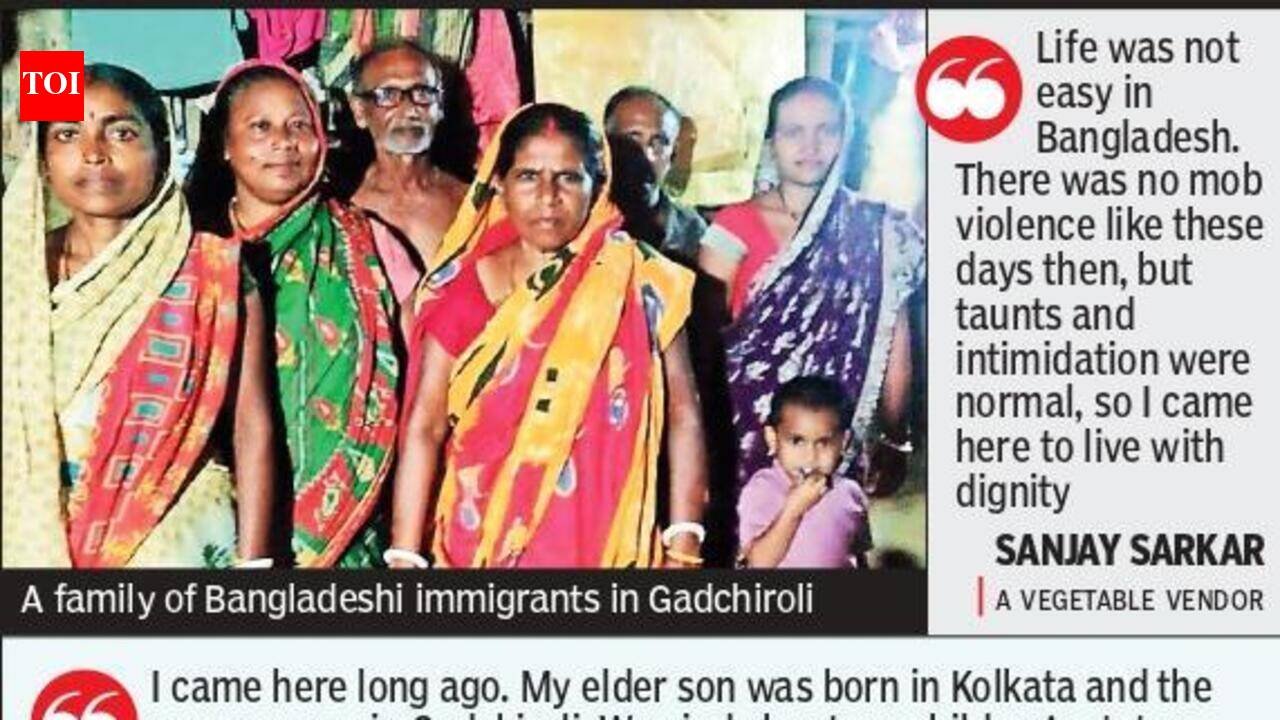
Nagpur: Soon after her marriage, Reepa and her husband left their village in Khulna district of Bangladesh and reached Tarunnagar in the interiors of Gadchiroli. In her forties now and easily mixed into the local milieu, Reepa and her family had left Bangladesh far behind. Their peace was usurped a few months ago when they heard of the Special Intensive Revision (SIR) of electoral rolls in Gadchiroli.Fearing that not only would their names be deleted from voters’ list, but they may also be thrown out of the country if not able to prove their credentials as Indians. Reepa and over 30 others in Tarunnagar and Bhawanipore villages in the former Red corridor rushed to push their applications under Citizenship Amendment Act (CAA). With no papers to prove that they are indeed from Bangladesh, their applications remain in limbo. Hastily, they got Bangladeshi papers that may prove their residence or even that of their parents through WhatsApp from their kin still in the country. As porous borders allowed them to sneak into India undetected, many don’t have border slips to prove they came before Dec 31, 2014, the cutoff date under CAA.“The photo copies of the PDF files submitted have been turned down by officials, saying only original papers are needed. Their cases remain under review for over three months,” says Nikhilesh Adhikari, a lawyer who has helped them file applications.At least 30 such people have filed applications and attended CAA hearings in Gadchiroli, and more are waiting, he says. There may be hundreds who came down between the 1990s and 2000s and settled in Gadchiroli. With SIR, they all need to have their papers right; so 30 of them in Tarunnagar and Bhawanipore villages have mustered the courage to admit they are Bangladeshis and have applied for citizenship, said Adhikari.Gadchiroli has been the destination for scores of Bangladeshis post 1971, when refugees were settled by India during the Bangladesh liberation war.It may not be directly linked, but SIR has triggered fears of expulsion. They think once the names are deleted from the voters’ list, it may form a basis for marking them as infiltrators, said Adhikari, who also works for Nikhil Bangla Samanbay Samiti, an association of erstwhile East Pakistan and Bangladeshi immigrants.Recently, Centre empowered West Bengal govt to hold CAA hearings and grant certificates. However, West Bengal govt can take up cases only of immigrants living within its state. It may help thousands of Bangladeshis living there, but the struggle continues for those in Gadchiroli and other parts of Vidarbha, said sources.Sanjay Sarkar, who earns a living selling vegetables, is also from Khulna and had crossed the border, and is now settled in Bhawanipore. “Life wasn’t easy in Bangladesh. There was no mob violence like these days then, but taunts and intimidation were normal, so I came here to live with dignity,” said Sarkar. Now Sarkar only has a copy of a voter card that he got from Bangladesh over WhatsApp to prove his case. Ashit Mandal, 47-year-old farmer in Gadchiroli, also could get just a PDF copy of a voter card from Bangladesh.Ratan Malik runs a shop in Tarunnagar, has two children and speaks fluent Hindi. “I came here long ago. My elder son was born in Kolkata and the younger one in Gadchiroli. Worried about my children’s status post SIR, I have preferred to declare my identity as Bangladeshi and apply under CAA. I have heard that it’s going to be much easier in West Bengal, so why not relax the rules for Bangladeshis here,” he says. From Barisal in Bangladesh, Malik says none of his relatives are to send him the papers.


