






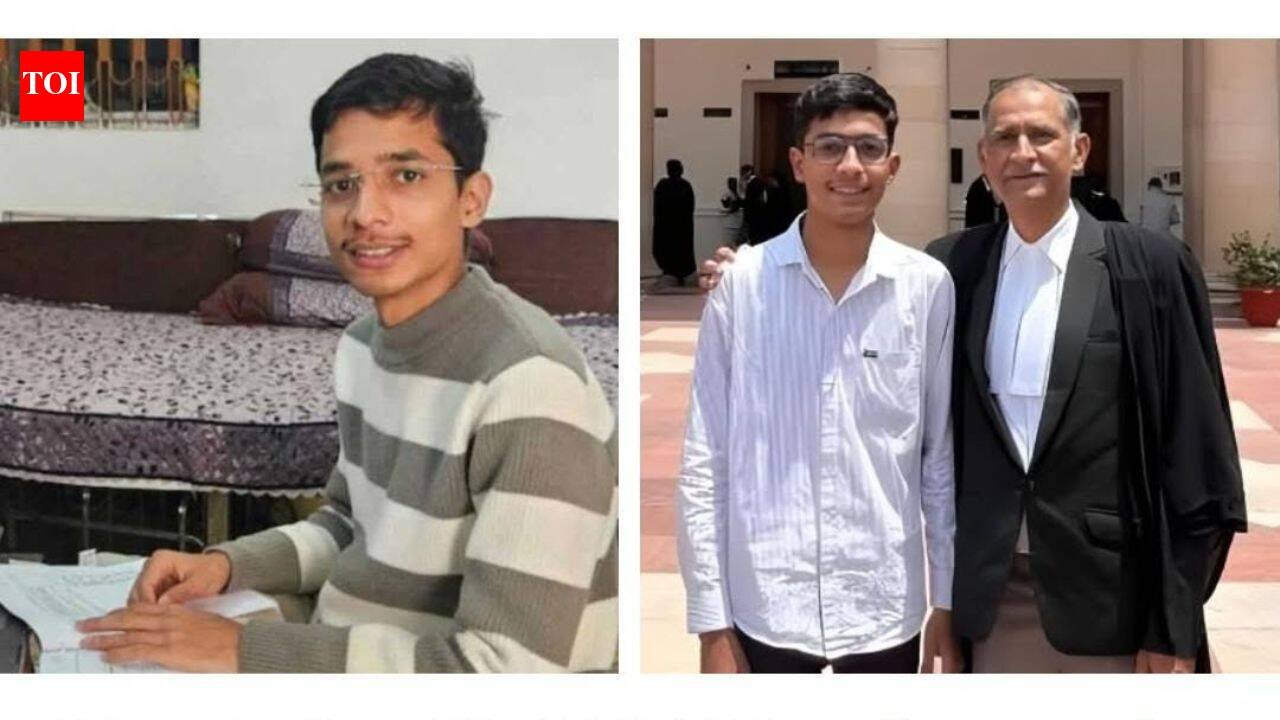
Most students believe that clearing NEET is the hardest part of becoming a doctor. For Atharva Chaturvedi, the real battle began after the exam was over. According to a story shared by The Better India on Instagram, the 19-year-old from Jabalpur, Madhya Pradesh, cleared NEET not once but twice with an impressive score of 530 marks. Yet, despite qualifying under the Economically Weaker Section (EWS) category, he was denied admission to an MBBS course in a private medical college. Many would have accepted defeat. Atharva chose to fight. Not with protests. Not with anger. He chose to fight with the Constitution of India.
Why he was denied admission
28 Jul 2026 | 16:22
How do you teach children about money and financial responsibility?
Atharva discovered that while EWS reservation existed in government medical colleges in Madhya Pradesh, it was not being implemented in private medical colleges because the required additional seats had not been created. This meant students like him were losing opportunities despite qualifying on merit. Instead of giving up, Atharva began reading court judgments, constitutional provisions, and admission rules. He watched court proceedings online, learned legal procedures on his own, and prepared his petition from home.
A law student without a law degree
Atharva had never studied law. He simply wanted justice. To save money, he drafted his own Special Leave Petition and filed it online. He spent weeks understanding Article 15(6) of the Constitution, which provides for EWS reservation, along with previous Supreme Court judgments related to the issue. His goal was simple: prove that deserving students should not lose their future because of a policy gap.
The day he stood before the Supreme Court
When his matter came up before the Supreme Court, Atharva argued the case himself. As the court was about to rise, he politely requested the judges for just a few more minutes to complete his argument. Those few minutes changed everything. He calmly explained why he believed he deserved admission under the EWS quota and backed every point with constitutional provisions and earlier judgments. The judges listened carefully. Eventually, the Supreme Court exercised its extraordinary powers under Article 142 of the Constitution and directed that Atharva be granted admission, ensuring complete justice in his case.
Even the High Court praised him
Before the Supreme Court hearing, Atharva had argued his own case before the Madhya Pradesh High Court as well. Although the High Court did not immediately grant him admission, it acknowledged his remarkable effort. In its judgment, the court specifically appreciated the 19-year-old for personally arguing a complex constitutional matter and directed the state government to complete the process required to implement EWS reservation in private medical colleges within a year. That recognition alone was extraordinary for someone who had never attended law school.
More than one student’s victory
Atharva’s fight was never just about securing one MBBS seat. His case highlighted a larger issue affecting EWS students across Madhya Pradesh. By questioning the system, he brought national attention to a gap in medical admissions that many students had silently accepted for years. His journey showed that ordinary citizens can understand the law, ask difficult questions, and stand up for their rights.
A lesson in courage
Today, Atharva is finally set to begin the medical education he worked so hard for. His story is not simply about winning a court case. It is about believing that knowledge is power. A teenager who wanted to become a doctor first had to teach himself the law. He walked into India’s highest court without a legal degree, trusted the Constitution, and proved that determination can sometimes achieve what seems impossible. His white coat did not come through luck. It came through courage, preparation, and the refusal to stop fighting for what was right.


