



CHANDIGARH: “Ae pawan sut dilawar Hanuman Ji, aap imdaad itni hamari karein, lijiye ye angoothi nishani meri, ab chalne ki jaldi tayari karein.”As Lord Ram entrusts Hanuman with his ring and prepares him for the search for Sita, the words carry a legacy that is as much about language as faith. At Panjab University’s Ramleela, the dialogues remain rooted in Urdu, preserving a theatrical tradition that has travelled from pre-Partition Lahore to Chandigarh and across three generations of a family.
Ramleela tradition born in Lahore in 1935
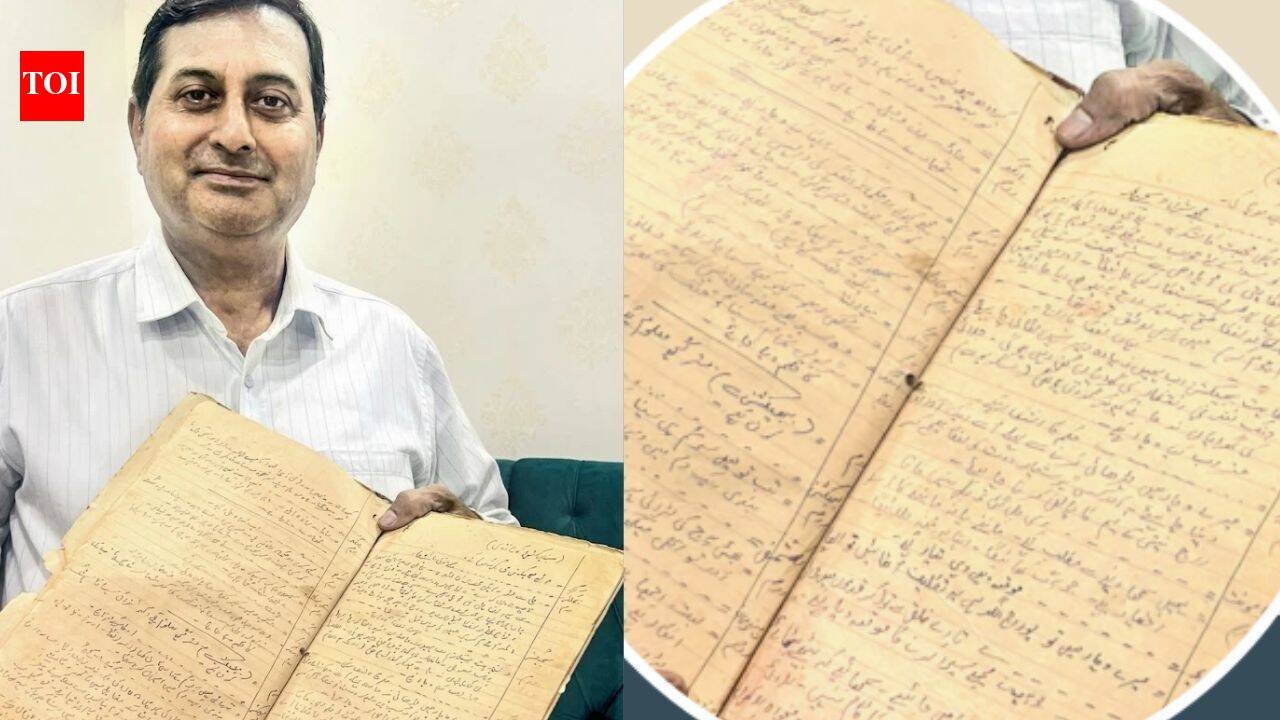
For Rajan Sharma, the words are also a connection to his father, Shanti Prakash Sharma, who played Ram for three decades and preserved the dialogues in Urdu. A lab technologist at the university health centre, Shanti Prakash retired from PU in 1997 and died in 2009. His handwritten scripts remain with Rajan, who has played Ram for 38 years and directed the Shri Arjuna Amateur Dramatic Club for the past two years.“Since not everyone can read Urdu nowadays, we have it in Hindi as well,” Rajan said. The Hindi version helps performers learn their lines, while the original scripts preserve the language and cadence of the dialogues. Keeping them alive, he says, is part of carrying forward a tradition his father helped sustain.The family’s association with the Ramleela has now entered its third generation. Rajan’s 29-year-old son, Karan Sharma, plays Shatrughan, bringing another generation into a production where roles, scripts and stage experience are passed down alongside family memories.The club’s history dates back to Lahore in 1935, when the university was still based there. Historical accounts credit Sardar Yashwant Singh Verma Tohanvi with the original Urdu draft, while Khariti Lal Bahl revised the script in 1970. The tradition survived Partition and the university’s relocation, eventually becoming part of campus life in Chandigarh.The Arjuna Amateur Dramatic Club’s repertoire extends beyond the Ramayana to productions such as Raja Harishchandra and Veer Abhimanyu.Its history is also linked to theatre figures Tara Chand Gandhi and Khem Raj Behal, who helped shape the club’s dramatic tradition.Yet it is the Urdu dialogue that gives the Ramleela its distinctive character. The story of Ram is familiar, but the language offers a glimpse into Punjab’s older theatrical culture, when Urdu formed part of a shared literary and performance tradition.Nearly nine decades after the Ramleela began in Lahore, those words continue to resonate in Chandigarh. Most are now read from Hindi transcriptions, but the original Urdu survives in handwritten pages preserved by a son who has become a custodian of the tradition.And when Ram hands Hanuman his ring, the dialogue does more than move the story forward. It carries the voice of one generation into the next.
