



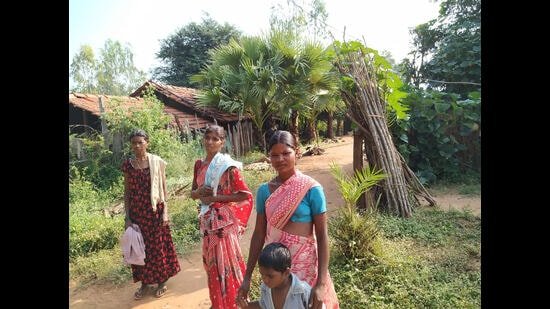
As the decades-long insurgency by the Communist Party of India (Maoist) has more or less come to an end in the country, the fate of thousands of Adivasis, who migrated from strife-torn areas of Chhattisgarh into the border districts of Telangana and Andhra Pradesh in search of livelihood and security, hangs in the balance.


Over a period of 15-20 years, forest in Telugu states bordering Chhattisgarh have become home for these migrant Adivasis – now referred to as Internally Displaced People (IDPs).
They were forced to leave their birthplaces in Chhattisgarh because of the constant crossfire between the security forces and Maoists.
According to a survey done by the local NGOs like Agriculture and Social Development Society (ASDS) and Sitara, there at least 270 settlements comprised of IDPs in both Telugu states, with a total population of not less than 32,000.
“Most of them are settled in the interior forest areas of Bhadradri Kothagudem district in Telangana and Alluri Sitarama Raju and Eluru districts of Andhra Pradesh. In Bhadrari Kothagudem alone, there are as many as 147 IDP settlements,” Shaik Haneef, an activist with Sitara, said.
These displaced Adivasis from Chhattisgarh had been resorting to a traditional method of agriculture — “podu cultivation,” — which involves felling trees and clearing large swathes of forest land to take up cultivation.
“According to a tentative estimate, at least 70,000 acres of forest land has been under cultivation by these tribes,” Haneef said.
There have been periodic attempts by the forest authorities of both the Telugu states to prevent indiscriminate felling of trees by Adivasis and relocate them from their settements. The authorities were putting sustained pressure on them to go back to their homes in Chhattisgarh, but they were not willing to return to the conflict zones.
The local NGOs have been regularly urged the National Commission for Scheduled Tribes (NCST) to take up the matter with the Chhattisgarh, Andhra Pradesh and Telangana governments to resolve the problems faced by IDPs and find an amicable solution to the question of settlement.
“Most of the Adivasis from Chhattisgarh migrated to Andhra Pradesh and Telangana over a period of time to escape violence between Maoist guerrillas and security forces. They cleared forest land and cultivated it for survival over 20 years. In the past two years, both state governments have started reclaiming these lands,” Vetti Bhaemaiah, general secretary of Valasa Adivasula Samaikya (Federation of migrant Adivasis) in Bhadradri Kothagudem district, said.
He said he had submitted a petition requesting urgent intervention to stop forced evictions of IDPs from Telugu states.
A high-level meeting held by NCST, chaired by Antar Singh Arya on January 19, 2026 in New Delhi, discussed the issue of the Telangana and Andhra Pradesh governments’ land reclamation attempts and allied attempts to forcefully clear IDP settlements and send the tribal settlers back to Chattisgarh.
As per the minutes of the meeting, which HT has seen, the Commission advised Chhattisgarh to prepare a strategy of providing at least five acres of arable land for those migrant Adivasis who returned to their birth villages, besides house sites, employment opportunities, healthcare and other infrastructural amenities.
It also asked the Chhattisgarh government to ensure basic development infrastructure like primary schools, primary health centres, anganwadi centres, electricity and drinking water in IDP settlements.
“The Chhattisgarh government may also come out with a settlement plan for rehabilitating the families returning from Telangana and Andhra,” said the Commission.
It added that if any displaced Adivasis desire to continue to reside in the states they are currently settled in, they can be provided with specific rights as per Section 3(1)(m) of the Forest Rights Act, 2006, which grants a specific right to restitution for Scheduled Tribes and other traditional forest dwellers who were illegally displaced or evicted, including provision of alternative land.
According to Integrated Tribal Development Authority (ITDA), there are 2,100 migrant households, comprising 8,435 people, belonging to the Gothi- koya tribe from Chhattisgarh, currently living in Chintur, Andhra Pradesh.
“These Adivasis have been categorised as general populations and the state government is providing basic amenities to them,” an ITDA officer said.
On the other hand, the Telangana government informed the NCST that the survey was yet to be completed. An official, however, said Gothikoyas are not treated as ST in Telangana, but the government was providing basic facilities to them.
The Commission suggested that Telangana, Andhra Pradesh and Chhattisgarh states conduct a joint survey of these displaced Adivasis. A time bound exercise for conclusion of enumeration may be undertaken within two months and the Union ministry of home affairs may take a lead to settle the issue.
After the conclusion of survey, the IDPs, if so willing, may be given the option to return back to their birth villages. The Chhattisgarh government may chalk out the plan for that purpose in consultation with the IDPs. “The children of the Gothi-koya families may be provided relaxations for facilities of admission in the government schools and colleges in Telangana and Andhra Pradesh,” the Commission suggested.
According to Haneef, many Adivasis, who have settled in Telangana and parts of Andhra Pradesh are not keen on returning to their birth villages in Chhattisgarh, though they are aware of reports that the Maoist movement has come to an end and an atmosphere of peace prevails in their original hamlets.
“They have developed a lot of attachment with the lands they have been cultivating in the Telugu states over the last 15-20 years. They have a kind of sentiment on their settlements and are not willing to go back. They are asking for the Telangana government to treat them as locals,” Haneef said.
Vukey Suresh (30), who migrated from Kishtaram village in Sukma district of Chhattisgarh a decade ago, and settled down deep in the forests of Ramanakkapeta in Ashwaraopet block in Bhadradri Kothagudem, numbers among those who would rather stay on where they settled.
“My parents have gone back to Kishataram a couple of years ago. But I have remained here. Last week, I went to my village where everything is peaceful. But I returned to Ramanakkapet, as I feel more comfortable here,” he said.
However, he added that he would like to settle down near Konta, about 5 kilometres from the Andhra Pradesh border, if he is allotted two acres of land.
Madvi Deva (50), who also belongs to the Gothi-koya community, who left Gollapalli in Sukma and settled down with his four brothers and their families in Palvancha, Kothagudem, wants to go back.
“We came here only in 2025 after Operation Kaagar intensified in Chhattisgarh. Now that the insurgency has come to an end, I am going back along with my family, but my brothers want to stay back in Telangana. They are not convinced about their safety. But my land is intact in my village and I shall resume cultivation there,” he said.
According to Deva, at least 10 other Adivasi families comprising around 60 people are likely to return to their native villages in different parts of Chhattisgarh.
38-year-old Ravva Madaiah, who migrated from Tummidipara hamlet of Kishtaram block in Sukma district in 2006 and settled in Cheepurugudem in the interior forest area of Kukkunuru block in West Godavari district of Andhra, says he doesn’t want to go back. “We are safe and secure here. We don’t have any attachment to Chhattisgarh now,” he said.
Most of these tribes have assimilated to the local lifestyle in Telugu states and maintained good relations with the local tribes and non-tribals, though they continue to celebrate their festivals which coincide with harvesting seasons.


