


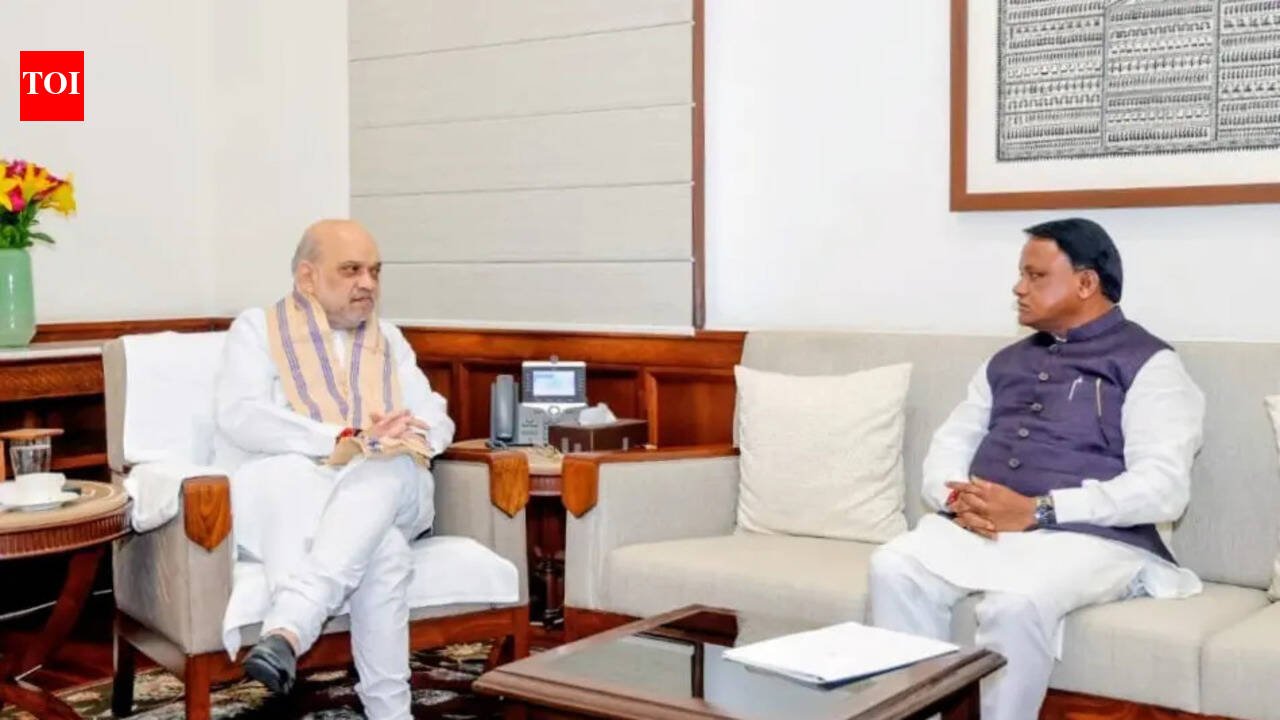
Bhubaneswar: Two years after a surprise elevation as Odisha chief minister, Mohan Charan Majhi has been entrusted with his first significant political assignment beyond the state — as the BJP’s central co-observer for choosing the party’s legislature party leader in West Bengal. The move signals his growing influence within the organisation and the central leadership’s rising confidence in him.The BJP has named Union home minister Amit Shah as the central observer for the exercise, with Majhi assisting as co-observer — a role that, while secondary in protocol, is politically loaded in terms of visibility and trust.Majhi’s rise has been swift and unconventional. A relatively low-profile, four-time tribal MLA, he was not counted among the state BJP’s prominent faces before the 2024 polls. His elevation to the top post followed the party’s first-ever majority in Odisha — a transition that reshaped the state’s political hierarchy and thrust him into the spotlight overnight.Political observers see the Bengal assignment as a calibrated endorsement of Majhi’s consolidation within the party. “It reiterates the central leadership’s faith in him and signals his ascent among key BJP influencers,” R K Satapathy, a retired professor of political science, said. “Even if the role appears symbolic, such assignments carry weight. It strengthens his position within the state unit and helps him tighten his grip over the party apparatus,” he added.While there is a perception that the BJP high command may have already firmed up its choice for its first chief minister in West Bengal, Majhi’s inclusion in the process enhances his political capital at a crucial juncture. He is set to complete two years in office next month, a phase typically associated with internal assessment within the party.His selection has a strategic underpinning. As chief minister of a neighbouring state, Majhi has been at the centre of periodic friction between Odisha and Bengal — from disputes over potato supply to jurisdictional issues in border villages. The political sparring has extended to cultural sensitivities as well, most notably over the use of the term “Jagannath Dham” for a temple in Digha. Majhi had written to West Bengal CM Mamata Banerjee last year, urging her to drop the tag, arguing that it hurt Odia sentiments and diluted the sanctity of Puri as the original Jagannath Dham.Reacting to BJP’s electoral success in Bengal, Majhi credited the outcome to PM Narendra Modi’s leadership and vision. He described the mandate as “a transition from ‘bhay’ (fear) to ‘bharosa’ (trust)” and said it reflected a collective aspiration for stability and development. “This is more than an electoral verdict. It marks beginning of a new phase of accelerated growth and aligns with the broader vision of a Viksit Bharat,” he said.
