


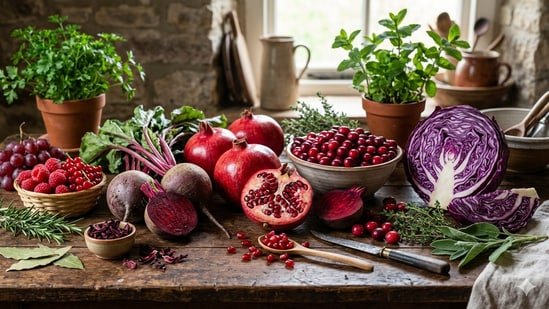
A nutritious diet is just as responsible for a thriving gut microbiome as a healthy lifestyle. Eating whole foods and avoiding ultra-processed items and added sugars is the foundation of a healthy gut. However, when you dive deeper, you would understand that certain foods work best to support your gut: for instance, red-pigmented foods.
On April 23, Dr Karan Rajan, a UK-based surgeon, highlighted the significant health advantages of consuming red-pigmented foods to support the gut microbiome. He emphasised that the nutrients present in these foods act as a protective barrier, effectively flushing out undesirable bacteria before they can colonise the body.
Why red pigmented food is best for your gut
According to Dr Karan, the vibrant red pigmented foods, such as cranberries, red cabbage, pomegranates and beets, contain powerful compounds known as pro-anthocyanidins that nourish beneficial bacteria while preventing harmful pathogens from attaching to the intestinal lining.
“If you want a really easy way to level up your gut health, eat more red berries, beets, red cabbage, pomegranates, and cranberries. These foods contain polyphenols, which don’t just feed your good bacteria; they actively prevent bad bacteria from colonising your gut,” he explained.
Moreover, the surgeon noted that these foods contain a magic compound called pro-anthocyanidins or PACs, which give them the red pigment. “PACs feed beneficial bacteria like Akkermansia and Bifidobacteria. They also block pathogenic bacteria such as E. coli and Klebsiella from adhering to your intestinal mucous membranes. Bad bacteria can’t stick, they can’t colonise, and they just pass through; it’s like Teflon for your gut lining,” Dr Karan noted.
This is why, according to Dr Karan, cranberry juice might offer some benefit in UTIs, as PACs can stop E. coli from sticking to the bladder walls. Furthermore, he stressed that the same mechanism can work in your gut.
Whole foods > juices
Though we know that red-pigmented foods can support gut health, many reach for juices rather than whole foods. While juices offer some benefits, Dr Karan argues that whole foods are superior because their natural fibre ensures these nutrients reach the deep colon.
“Whole foods are better than beet juices because you get the fibre and polyphenols together. The fibre acts as a vehicle, carrying the polyphenols deep into your colon, where your gut bacteria live. Without fibre, the polyphenols get absorbed and broken down way too early in the small intestine,” he explained.
Lastly, he suggested eating a cup of mixed berries to feed the gut. He noted, “ A cup of mixed berries gives you 8 g of fibre plus the polyphenols; that is the synergy your gut bacteria need.”
In the end, the surgeon added that nature has a weird habit of colour-coding its nutrition: if it’s red or dark purple, it’s probably feeding your microbiome. So, next time you shop for your gut, you know what to pick.
Note to readers: This article is for informational purposes only and not a substitute for professional medical advice. Always seek the advice of your doctor with any questions about a medical condition.
This report is based on user-generated content from social media. HT.com has not independently verified the claims and does not endorse them.
