



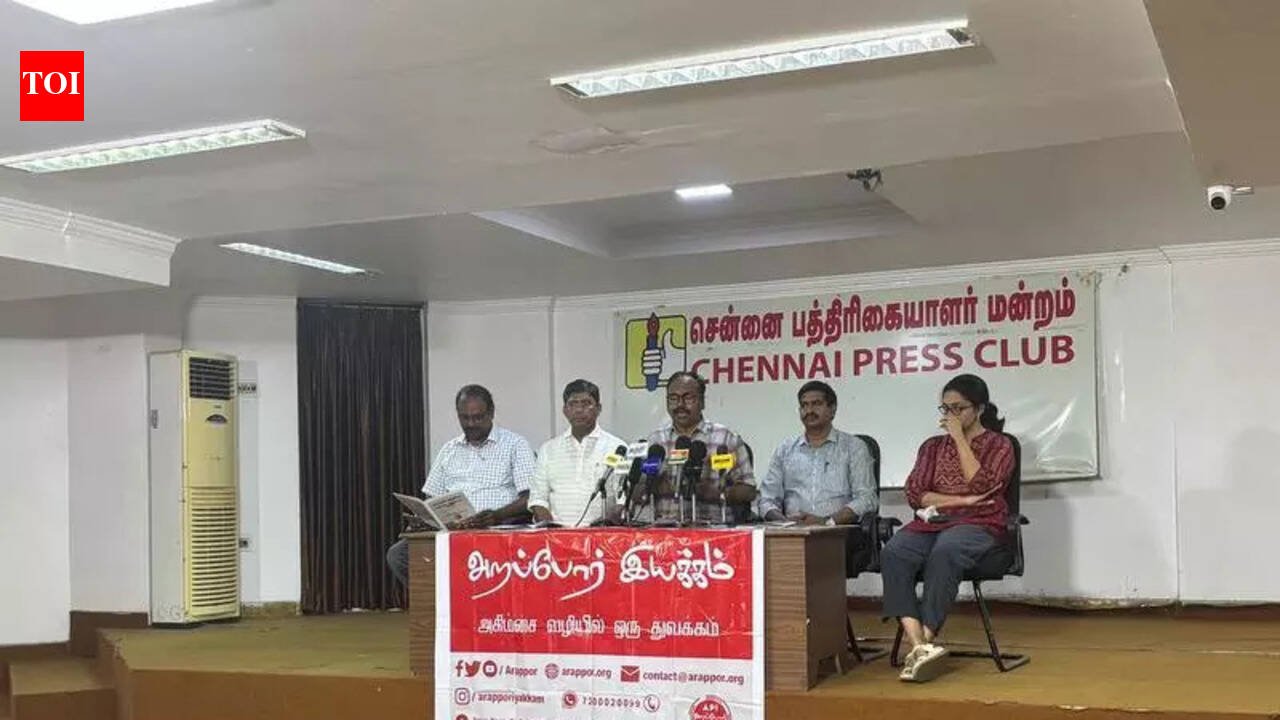
Chennai: City-based NGO Arappor Iyakkam released its anti-corruption manifesto, which proposed key recommendations, including amendments to the Tamil Nadu Lokayukta Act 2018 to make it an independent investigating and prosecuting body with powers to file FIRs and pursue cases in special courts. It also accused the govt of not releasing the smart-city corruption report against the AIADMK govt. Convenor Jayaram Venkatesan slammed the TN govt for not releasing the smart city corruption report despite the committee submitting it two years ago. “The committee headed by retired IAS P W C Davidar was formed to probe corruption in Greater Chennai Corruption’s (GCC) smart city projects. The IAS officer who headed the corporation during the period is now heading the MAWS department. The committee is submitting the report to the same IAS officer. How will they release the report?” he told reporters.He slammed directorate of vigilance and anti-corruption (DVAC) for being a “lapdog” of the TN govt, as multiple corruption cases involving GCC’s IP-address scam, KP Park’s poor construction quality scam, and bus shelter scam, among others, were gathering dust. The manifesto demanded full proactive disclosure of public information under Section 4 of the RTI Act, creation of a state-wide transparency portal on the lines of Rajasthan’s Jan Soochna platform, online RTI filing and appeals for all departments, and strengthening of the State Information Commission by appointing up to the permissible number of commissioners.It also called for a Right to Services Act to guarantee time-bound delivery of govt services, a whistleblower protection law, removal of prior sanction provisions under the Prevention of Corruption Act, and strict action against environmental corruption, including illegal mining.The manifesto further recommended mandatory end-to-end e-tendering for contracts above 1 lakh, cancellation of single-bid tenders, penalties for bid rigging and collusion, and full online publication of tender documents to prevent cartelisation.On democratic reforms, it sought elected Area Sabhas, empowered Ward Committees, a social audit law for govt schemes, and mandatory public consultation on draft legislation. Police reforms proposed included independent complaints authorities, a minimum two-year tenure for officers, anti-torture legislation, work-life balance measures, and regular integrity training.


