


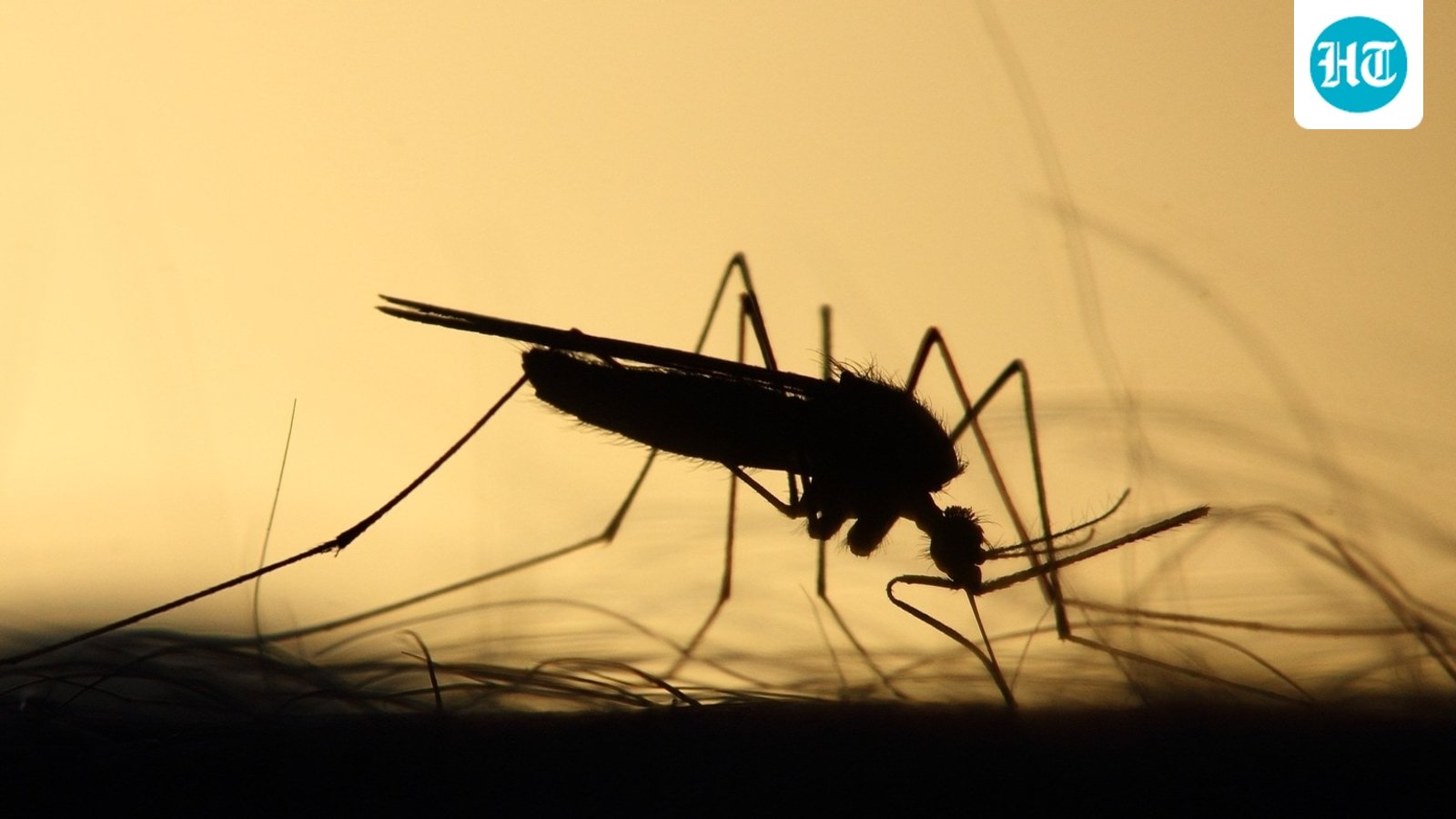
India knows how to eliminate malaria. The question is how to scale it up with precision and a strategy that moves away from the business-as-usual approach.
The answer is now available through lessons learned from an indigenous, first-of-its-kind Public-Private Partnership designed to demonstrate that eliminating malaria is feasible in a time-bound manner. The project, Mandla-Malaria Elimination Demonstration Project (MEDP), was between the Indian Council of Medical Research (ICMR), Government of Madhya Pradesh (GoMP) and the Foundation for Disease Elimination and Control (FDEC), which was established by Sun Pharma in 2016.
The operational and implementation plan for the MEDP emerged from extensive consultations initiated by the Project Director, Dr Altaf Lal, who identified Mandla, a forested tribal district in Madhya Pradesh, as having some of the most difficult conditions for malaria control in India.
At the time planning for MEDP began in 2016, India was transitioning from malaria control to malaria elimination, following the Prime Minister of India and leaders of 22 Asia-Pacific nations’ commitment to eliminating malaria by 2030.
Between 2017 and 2021, the MEDP achieved a 91% reduction in indigenous malaria cases. For months at a stretch, not a single locally transmitted case was reported. Mandla succeeded because it treated malaria elimination not as a routine national programme practice, but as a mission driven by accountability, operational discipline, and continuous review.
One thing Dr Lal mentioned in the very early days of the project was that, while the MEDP project is founded as a not-for-profit, he treats it as a for-profit project, with his vision of returns on investment delivered through infections prevented, illness averted, attendance at children’s school maintained, adults able to go about their daily routine to contribute to household income, and, most importantly, the prevention of even one death from malaria.
What followed offers one of the most important operational lessons in Indian public health. Those lessons can broadly be understood through eight themes:
- Community engagement and behavioural change: MEDP recognised early that malaria elimination cannot succeed without trust. In tribal communities, trust determines whether families seek treatment quickly, allow spraying inside homes, use bed nets consistently, or report fever promptly.
- Capacity-building of frontline workers: Village workers, ASHAs, and field coordinators received continuous training, supervision, and feedback. MEDP recognised that elimination depends fundamentally on the competence and motivation of people working at the last mile.
- Aggressive surveillance and rapid case management: Fever cases were identified actively rather than waiting for patients to reach health facilities. Migrant populations were tracked because imported malaria remained a constant threat to elimination.
- Mosquito control is a management exercise rather than merely a commodity distribution: MEDP improved the quality and supervision of indoor residual spraying and long-lasting insecticidal net distribution. The project demonstrated that the effectiveness of vector control depends not only on the availability of commodities but also on operational planning, quality assurance, and community participation.
- Structured programme reviews and accountability systems: Weekly review meetings became the backbone of operations. These were not ceremonial presentations, but problem-solving sessions focused on operational failures, delays, surveillance gaps, and corrective action.
- Digital systems and operational intelligence: Through the digital surveillance platform, the programme integrated surveillance, supply chains, workforce management, and reporting into a unified real-time system. This allowed managers to quickly identify underperforming areas, prevent stockouts of medicines and diagnostics, and make rapid operational decisions.
- Forecasting and data analytics for strategic planning: Time-series analyses and predictive models helped MEDP understand long-term malaria trends, assess the impact of interventions, and estimate future elimination trajectories. These analyses reinforced an important reality: Sustained investment and operational discipline determine whether elimination accelerates or stagnates.
- Importance of monitoring drug and insecticide resistance: Continuous surveillance helped ensure that treatment regimens and vector control strategies remained effective against evolving parasite and mosquito resistance patterns.
The larger lesson is important; malaria elimination should not be viewed as routine government expenditure but as an investment in building national infrastructure. This is an issue that requires appropriate, context-specific and flexible investments. Investing in malaria elimination achieves something equally important: School absenteeism due to malaria will become a thing of the past; healthier children in schools, safer pregnancies for women, healthier adults at work, and stronger rural economies.
We have come to know that the most important lesson from Mandla is ultimately about governance, accountability, and frequent external and independent reviews. Transformative public health outcomes are possible when scientific tools are combined with operational rigour, empowered leadership, community participation, and continuous accountability.
(The views expressed are personal)
This article is authored by Nirmal K Ganguly, former director general, Indian Council of Medical Research, and Yogendra K Gupta, former head, department of pharmacology, AIIMS, New Delhi.
