


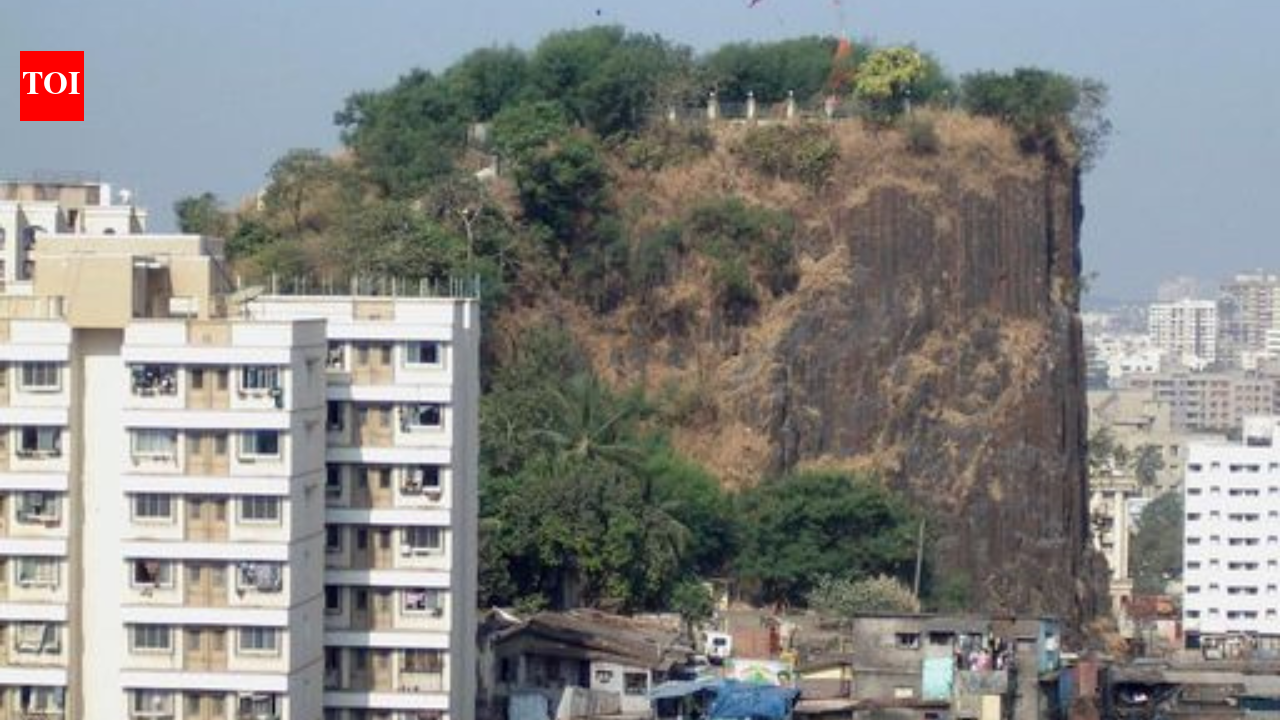
Anand Mahindra’s recent post yet once again struck a familiar nerve among urban Indians who are forever bookmarking faraway travel bucket lists while ignoring what lies next door. “Travel bucket-list items can be right in your hometown,” he wrote, adding that a quick check revealed Gilbert Hill to be one of only three volcanic columns in the world, and yet, even he had no idea it was here in Mumbai. His question was simple, “How do we make this a more visited destination?” Coming from someone known for spotlighting forgotten corners of India, the post reopened a conversation about how cities like Mumbai routinely overlook their most extraordinary natural assets.
Located in Andheri, Gilbert Hill rises about 200 ft above its surroundings as a sheer column of black basalt rock, a geological anomaly in the middle of one of India’s most crowded suburbs. Formed around 66 million years ago during the Mesozoic Era, the hill dates back to a time when massive volcanic eruptions spread molten lava across large parts of present-day Maharashtra, Gujarat and Madhya Pradesh. Unlike typical volcanic mountains that grow layer by layer, Gilbert Hill was created when lava surged vertically through cracks in the Earth’s crust, solidifying into what geologists describe as a laccolith.Read more: 12 Jyotirlingas in India: Legends and why they must be on your travel listWhat makes the formation even more remarkable is its global rarity. Experts have often compared Gilbert Hill’s vertical basalt columns to the iconic Devils Tower National Monument in Wyoming and the Devils Postpile National Monument in eastern California. Once, similar columnar formations also existed nearby in Jogeshwari, but quarrying wiped them out decades ago, leaving Gilbert Hill as the last surviving remnant of this volcanic episode in Mumbai.Despite its scientific importance, the surroundings of the hill tell a different story. Dense slums and residential buildings press right up against its base, visually and physically isolating it from the city’s consciousness. In 2015, a local builder reportedly attempted to damage the rock using water jets, an incident that highlighted how vulnerable the site remains even today. Ironically, what has helped protect it so far is faith: perched atop the column are the Gaodevi and Durgamata temples, accessed via a steep staircase carved into the rock, drawing daily worshippers who may not realise they are climbing a geological wonder.Read more: “Was I scammed?” A tourist’s $2,500 small marble souvenir purchase in Agra sparked scam debateFrom the summit, Gilbert Hill offers sweeping views of suburban Mumbai, a rare vantage point in a city where open natural viewpoints are increasingly scarce. Recognising its importance, the Central Government declared it a National Park as early as 1952 under the Forest Act. In 2007, after sustained lobbying by geologists, the Municipal Corporation of Greater Mumbai granted it Grade II heritage status, banning quarrying and construction-related activity around the monument. Even so, experts have warned about severe erosion over time, worsened by pollution, neglect and unchecked urban pressure.That such a site exists barely 5 km from Chhatrapati Shivaji Maharaj International Airport and within easy reach of Mumbai’s local rail network makes its obscurity even more puzzling. Anand Mahindra’s post sparked curiosity among people who may have driven past Andheri for years without knowing that a 66-million-year-old volcanic column stands quietly amid the chaos.


