



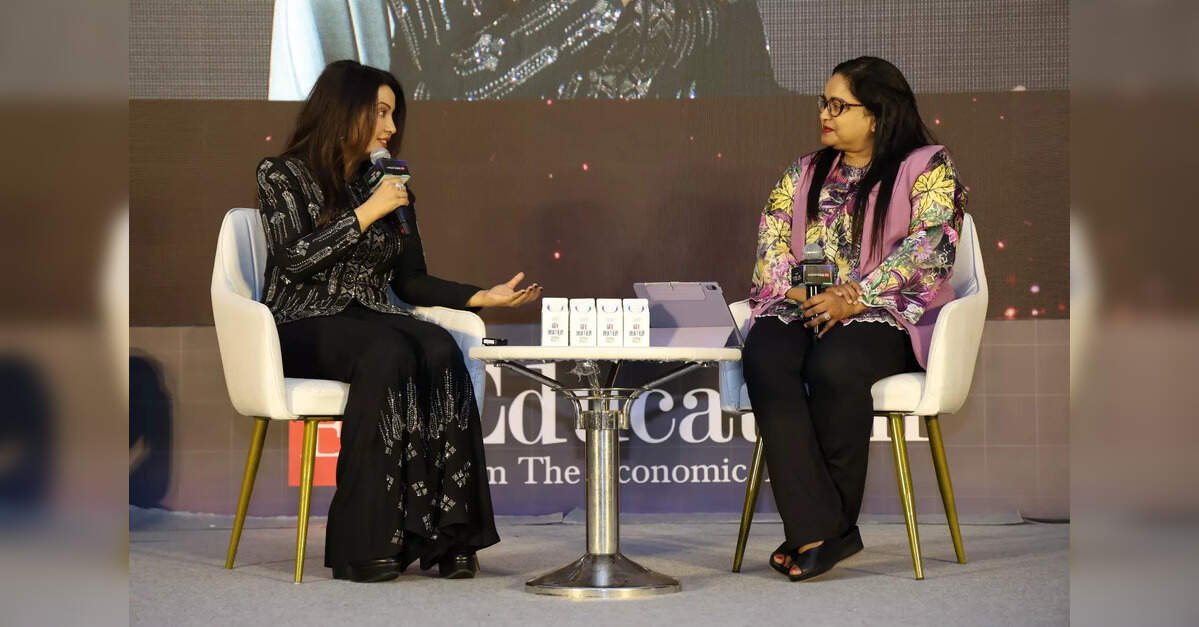
Amid wide-ranging discussions on policy reform, artificial intelligence, and institutional transformation at the ETEducation TechEdu India Summit, a reflective fireside chat titled “The Power of Becoming: Education, Identity, and Impact” offered a more personal lens on the purpose of education. In conversation with Yasmin Taj, Editor – ETEducation & ETHRWorld, The Economic Times, Amruta Fadnavis — banker, artist, and social activist — traced how family values, mindset, and continuous learning shaped her journey across finance, music, and social initiatives.
Raised in a family of doctors deeply committed to community service, Fadnavis described education not as a static achievement, but as an evolving force. What often begins as pressure to excel, she noted, can gradually transform into possibility and purpose. “When you have the ability to learn, to absorb, you will always be at the top of your game,” she said, underscoring that adaptability is the defining skill of the future. In a world where industries and career paths are in constant flux, she argued, the real competitive advantage lies not in mastering a single domain but in mastering the ability to learn continuously.
At the heart of this philosophy is mindset. Reflecting on her own journey, Fadnavis emphasised that she never confined herself to a singular professional identity. Instead, she focused on committing fully to every opportunity. “Life unfolds when you give your best,” she observed, encouraging students to cultivate resilience, openness, and confidence rather than fear uncertainty. For educators, this translates into fostering curiosity and adaptability alongside academic excellence.
She also pointed to two critical gaps in mainstream education: financial literacy and creativity. Financial awareness, she asserted, is “the crux of any skill set.” Understanding savings, planning, and responsible borrowing from an early age equips students to navigate adulthood with independence and confidence. Equally important, she argued, is embedding creativity more deliberately within curricula. While the economy requires engineers, technologists, and professionals, it equally depends on thinkers and artists who can innovate with empathy and imagination.
Discussing her engagement with the DBS Foundation, Fadnavis framed its mission as one of restoring dignity and self-worth. Rather than viewing philanthropy as transactional charity, she described it as a pathway to empowerment. When individuals recognise their intrinsic value, she suggested, they move beyond comparison and competition toward meaningful contribution — a shift that education must actively nurture.
The conversation concluded with a call for equity in access to quality education. “The quality of education a child in a village receives should be equivalent to what a child in a metropolitan city gets,” she said, advocating collaboration between government, NGOs, and educational institutions to bridge systemic gaps through technology and outreach. Her closing message to students and parents alike was both simple and profound: believe deeply, work boldly, and pursue your aspirations with conviction — because education, at its core, shapes identity, builds confidence, and ultimately fuels nation-building.


