



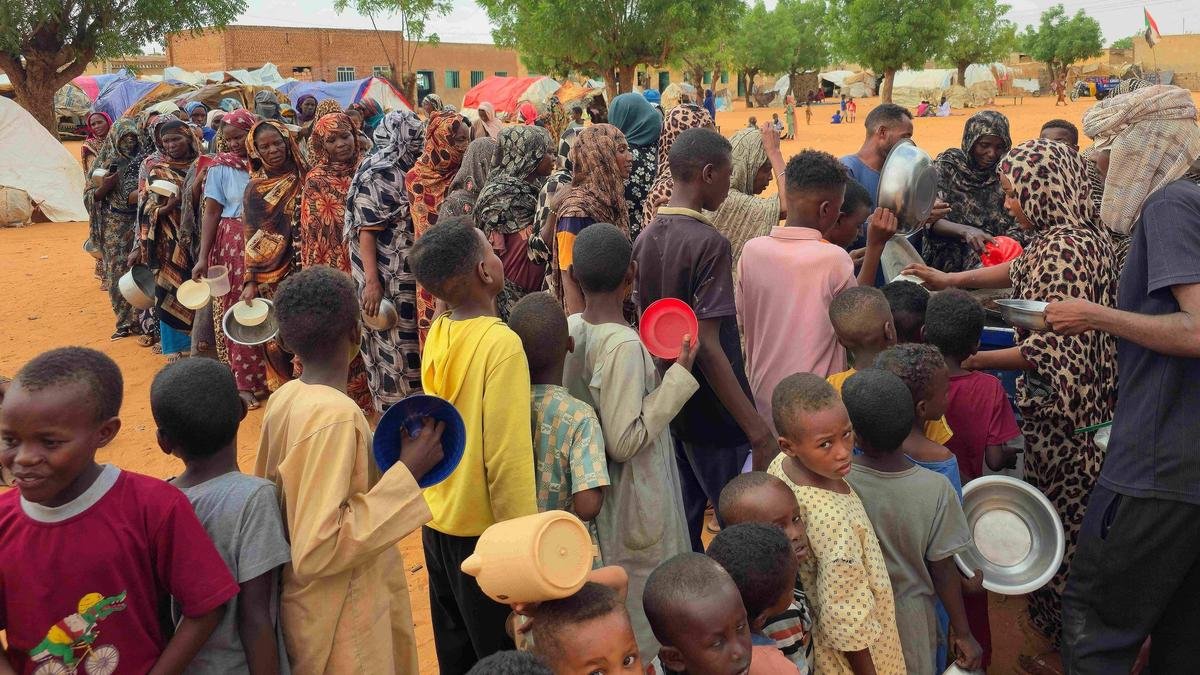
In a report ‘City Under Siege, Children Under Fire: Rapid Support Forces’ Crimes Against Humanity in North Darfur’ released on July 1, Amnesty International concluded that Sudanese paramilitary Rapid Support Forces (RSF) committed “crimes against humanity and carried out ethnic cleansing” during its campaign to seize El Fasher in Sudan’s North Darfur state.
Sudan has been mired in a brutal war since April 2023 between the Sudanese Armed Forces (SAF) and the RSF, which has killed tens of thousands of people and displaced millions, according to the United Nations.
What is the report?
The report documents widespread abuses against civilians in and around El Fasher between early 2024 and October 2025, as the RSF fought the SAF and allied joint forces in a conflict that devastated North Darfur.
According to Amnesty, the RSF committed murder, forcible transfer, imprisonment, torture, rape, sexual slavery, other forms of sexual violence, enslavement, extermination and persecution.
The investigation, conducted over eight months between August 2025 and April 2026, is based on interviews with 247 people, including 208 survivors (169 adults and 39 children) who experienced or witnessed conflict-related abuses. Amnesty also verified 89 videos and analysed satellite imagery from North Darfur.
What does it say?
Amnesty concluded that the RSF committed crimes against humanity and carried out ethnic cleansing during its campaign to seize El Fasher.
The report states that the RSF had taken control of four of Darfur’s five State capitals by November 2023, leaving El Fasher as the last major stronghold of the SAF and allied joint forces. Beginning in 2024, the RSF systematically attacked villages, towns and displacement camps surrounding the city, targeting civilians, looting property and burning civilian infrastructure. Many of the affected communities were predominantly inhabited by the Zaghawa and other non-Arab ethnic groups.
Amnesty further finds that the pattern of destroying villages in Abu Zerega area, populated primarily by Zaghawa communities along with smaller numbers of other non-Arab ethnic groups, which took place between December 2024 and March 2025, is consistent with ethnic cleansing. This conclusion is reinforced by the RSF’s continued control of these areas, preventing displaced populations from returning.
The report also says the RSF repeatedly used the derogatory slur ‘falangay’ (or ‘falangayat’ in the plural), a term referring to slavery or servitude, while attacking civilians from non-Arab ethnic groups. Amnesty concluded that the RSF committed the crime against humanity of persecution on ethnic grounds.
The RSF besieged El Fasher from May 2024 to October 2025, restricting the entry of food and humanitarian aid while shelling the city almost daily. As famine spread, many residents reportedly survived by eating ambaz, a by-product of peanut oil production normally used as animal feed. Pregnant women were also reported to have given birth while fleeing attacks.
Many civilians attempted to flee towards Tawila, but the RSF made escape nearly impossible, according to the report. By October 2025, El Fasher was encircled by a 57-km network of earthen berms that restricted civilian movement. Witnesses told investigators that RSF fighters intercepted civilians attempting to flee, with many being executed or tortured.
Amnesty interviewed 18 people who were present at the Saudi Maternity Hospital, El Fasher’s last functioning hospital, including staff, patients and relatives, who said they witnessed RSF fighters kill scores of people there.
The report also documented widespread rape and other forms of conflict-related sexual violence. It said the RSF unlawfully detained civilians, held many hostages for ransom in inhumane conditions, and recruited and used boys in violation of international law.
Amnesty also identified three RSF commanders allegedly responsible for serious violations of international law. It named Maj. Gen. Gedo Hamdan Ahmed Mohamed, known as ‘Abu Shouk’, Lt. Col. Abbas Khater Bakhit, and commander Al-Fateh Abdullah Idris, also known as ‘Abu Lulu’, citing witness testimony and verified videos that allegedly showed torture and summary executions.
What are the recommendations?
Agnès Callamard, Amnesty International’s Secretary General, urged the international community to move beyond statements of concern and take concrete steps to protect civilians and end impunity.
She called on Sudan’s international partners to ensure that humanitarian aid, including child-focused services, reaches refugees and internally displaced people. She also urged action against the commanders identified in the report.
The report further called on all countries to immediately stop supplying arms and ammunition to parties to the Sudan conflict. It specifically urged States to stop providing arms to the United Arab Emirates (UAE), which Amnesty described as the RSF’s principal foreign backer, until it complies with the UN arms embargo.
Published – July 07, 2026 05:04 pm IST


