



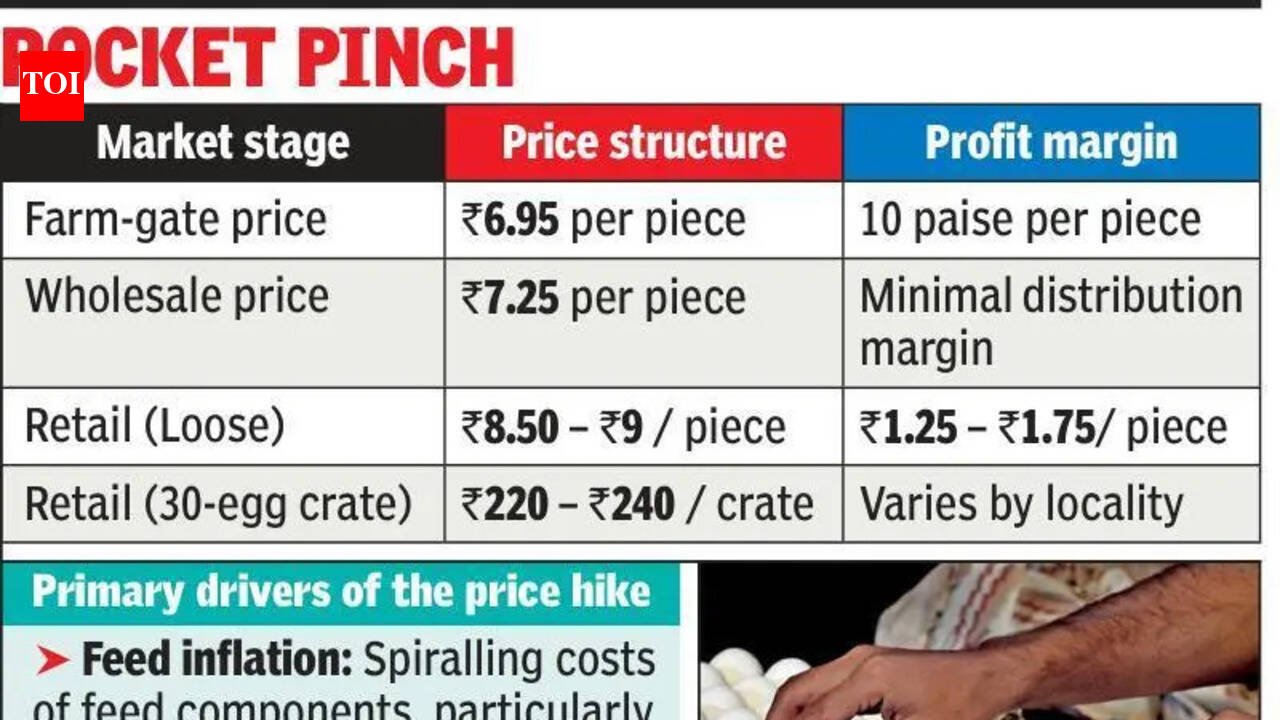
Kolkata: Retail egg prices have shattered previous records, crossing Rs 8 per piece to pinch household budgets across the region. A standard loose egg is currently retailing between Rs 8.50 and Rs 9 in neighborhood markets, while a 30 pieces egg crate has skyrocketed to the Rs 220 to Rs 240 range, burdening the consumers reliant on this affordable protein source.The dramatic surge stems from a severe supply-demand mismatch fueled by rising input costs, high flock mortality rate, and logistical bottlenecks. Poultry operators indicate that rearing layer chickens—birds raised specifically to lay commercial eggs—has become financially unsustainable for smaller farms.“The mortality rate among our birds has risen sharply over the last few months due to unexpected seasonal disease outbreaks,” explained a commercial farm owner from West Midnapur. “At the same time, our operational expenses are soaring. The price of chicken feed, especially maize and soybean meal, has spiraled completely out of control. Many small-scale farms are scaling back production or shutting down entirely.“Because layer poultry cycles require several months for newly introduced chicks to mature and begin laying, industry experts warn that production deficits cannot be corrected overnight. This prolonged supply crunch, paired with escalated diesel costs for interstate transportation, has kept retail shelves undersupplied.While consumers bear the brunt of the Rs 8.50 – Rs 9 an egg, a fierce debate over middleman profiteering has broken out between poultry farmers and retail vendors. Industry representatives argue that farmers are operating on thin survival margins while retail merchants pocket the majority of the profit.Madan Mohan Maity, secretary Bengal poultry federation, strongly criticised the current pricing breakdown and called for retail restraint. “The fallacy is that the farmer only has a 10-paise margin against each egg he sells, yet the retailer makes a profit of Re 1 or more. The retail price should not exceed Rs 8 per piece under current market logic. The farmer is selling an egg at Rs 6.95, and the wholesale price remains fixed at Rs 7.25. In such a situation, the retailer must restrain his profiteering. When wholesale prices fall, retailers make a profit of Rs 1.50 per egg. When market prices are high, they must limit their profit margins to protect the consumer.”As retail pricing remains volatile, consumers are finding themselves squeezed out of a nutritional staple. Economists predict that until raw feed ingredients stabilize and local poultry populations recover, the high pricing structure will persist through the coming quarter. “Eggs are the cheapest source of animal protein. The upswing affects our kitchen budget as our egg consumption is high,” said Debolina Sarkar, a school teacher and householder of her five-member household.


