


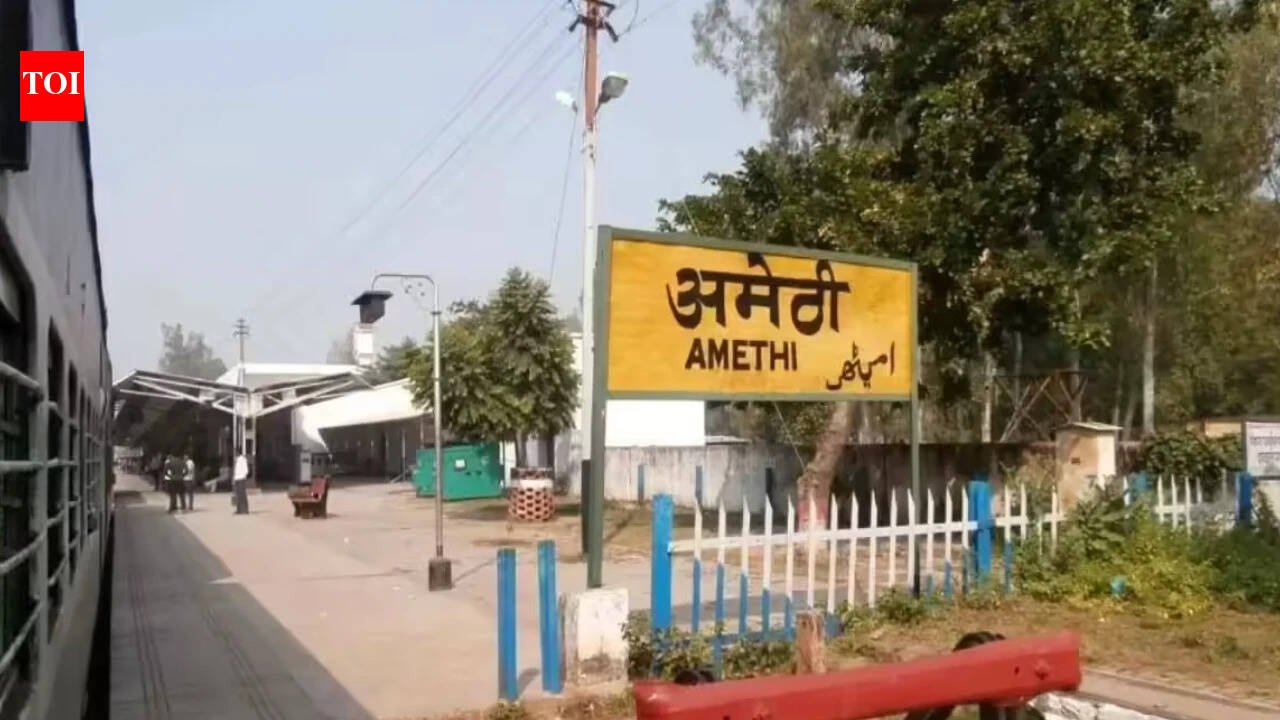
For decades, Amethi occupied a distinctive place in India’s political imagination. But over the last nine years, the Uttar Pradesh district has increasingly begun to acquire a different identity—one shaped by industrial investment, improved connectivity, expanding public infrastructure and new opportunities for local employment. The transformation is particularly visible around Jagdishpur, while road and railway connectivity, agriculture, education, healthcare and traditional crafts have together broadened the district’s economic base.The change is important because Amethi’s development story is not limited to a single large project. It represents an attempt to build an ecosystem in which industry, infrastructure, agriculture and human development reinforce one another. The result is a district that is gradually moving beyond its traditional dependence on agriculture and government-related activity towards a more diversified economy.
Industry
The Jagdishpur Industrial Area, spread across approximately 2,650 acres, is at the heart of Amethi’s economic transformation. Over the past several years, the industrial zone has attracted investments estimated at more than Rs 3,000 crore, giving the district a significant manufacturing base.The presence of large companies has strengthened this industrial ecosystem. Units associated with Coca-Cola and Reliance, besides sizeable poultry-feed manufacturing facilities, have created productive capacity as well as employment opportunities. The significance of these investments extends beyond the factories themselves. Industrial activity generates demand for transportation, logistics, maintenance, warehousing, retail and other services, thereby creating a multiplier effect across the local economy.For a district that historically saw many young people leave in search of employment in Lucknow, Delhi, Mumbai and other metropolitan centres, the expansion of local industry is particularly significant. The availability of jobs closer to home can reduce migration pressures while allowing local households to retain a larger share of the income generated by their workforce.The Rail Neer plant is another example of economic activity linked to the district’s expanding infrastructure. With a production capacity of approximately 72,000 bottles of packaged drinking water a day, the facility adds to local manufacturing and employment while serving the wider railway network.Together, these developments indicate a gradual shift in Amethi’s economic structure—from a predominantly agrarian economy towards one combining agriculture with manufacturing, services and logistics.
Connectivity
Economic development cannot be sustained without reliable connectivity, and this has been one of the most visible areas of change in Amethi. The Purvanchal Expressway has significantly improved the district’s road connectivity with Lucknow and eastern Uttar Pradesh. For industries, better road access reduces transportation time and logistics costs. For farmers and small businesses, it expands access to larger markets. The expressway also strengthens Amethi’s potential to participate in supply chains extending beyond the district.Railway infrastructure has witnessed parallel improvements. Electrification and doubling projects on important routes, including the Bachharawan-Pratapgarh section and the Utraitia-Varanasi line through the Amethi region, have strengthened the railway network. Improved rail infrastructure is particularly valuable for an emerging industrial district because it facilitates the movement of both passengers and freight. Railway stations have also received attention. Gauriganj, Bani and Jais stations have been upgraded with improved passenger facilities and developed as model stations. The construction of a railway overbridge at Gauriganj has helped address a long-standing traffic bottleneck.Such investments may appear primarily infrastructural, but their economic consequences are considerable. Better connectivity brings markets, workers, consumers and investment closer together. It also makes smaller towns and industrial areas more attractive to businesses.
Moonj craft brings women into the growth story
Amethi’s transformation is not confined to large factories. Traditional economic activities are also being integrated into modern markets.The One District One Product (ODOP) initiative has provided a commercial platform to the district’s traditional ‘Moonj craft’. Products made from Moonj grass—including baskets, bags and decorative items—are increasingly being redesigned and marketed for contemporary consumers.The social and economic significance of this intervention is especially visible among women and self-help groups. What was once largely a traditional household skill can increasingly become a source of organised income. Training, collective production, packaging and market access can enable artisans to move from informal production towards more sustainable enterprises.This is an important dimension of Amethi’s economic transformation. Industrialisation need not mean replacing traditional livelihoods; it can also mean upgrading them. When women participate more actively in income-generating activities, the economic benefits reach households directly and contribute to greater financial independence.
Agriculture gets greater institutional support
Despite the growth of industry, agriculture remains fundamental to Amethi’s rural economy. Consequently, improving agricultural productivity is critical to ensuring that development reaches the district’s villages.The approval of a Soil Testing Laboratory and a Krishi Vigyan Kendra has strengthened the institutional support available to farmers. Soil testing can help farmers determine nutrient requirements and make more informed decisions about fertilisers and crop management. A Krishi Vigyan Kendra can further connect farmers with improved cultivation practices, new technologies, crop diversification and scientific agricultural methods.Such interventions are important because increasing farm productivity does not depend solely on expanding cultivated land. Better inputs, scientific advice, irrigation, post-harvest management and market access can all contribute to higher agricultural incomes.The combination of agricultural modernisation and industrial expansion therefore offers Amethi an opportunity to develop a more balanced rural-urban economic structure.
Healthcare and education
The transformation of a district is ultimately measured not only by factories and roads but also by the quality of services available to its people. Amethi has witnessed significant investment in healthcare infrastructure, including the development of a medical college. Approvals for specialised facilities, including a women’s medical hospital in the Jamo block, are intended to expand access to healthcare within the district.The expansion of medical infrastructure has wider economic implications. Better healthcare reduces the need for residents to travel to distant cities for specialised treatment while also creating skilled employment for doctors, nurses, technicians and other healthcare professionals.Education and skill development have similarly received attention. The establishment of institutions such as a Military School and Kendriya Vidyalaya in Gauriganj, along with the presence of the Footwear Design and Development Institute and expansion of technical education facilities, has strengthened Amethi’s human-capital base.These institutions can create long-term benefits by improving educational opportunities and exposing young people to professional and technical career paths.
A broader economic identity
Amethi’s transformation over the last nine years can therefore be viewed through several interconnected numbers and developments: an industrial area of around 2,650 acres, more than Rs 3,000 crore in industrial investment, a Rail Neer facility capable of producing 72,000 bottles a day, upgraded road and railway networks, new educational and healthcare institutions, and the commercialisation of Moonj craft through ODOP.The larger significance lies in the diversification of the district’s economic opportunities. Industry provides jobs and investment; expressways and railways provide connectivity; agriculture receives scientific support; ODOP creates opportunities for artisans and women; and new schools, technical institutions and medical facilities strengthen human capital.Amethi’s journey is consequently no longer defined only by its political prominence. Its emerging identity is that of a district attempting to convert infrastructure into investment, investment into employment and traditional skills into modern enterprises. If the momentum of industrialisation, connectivity and human development is sustained, Amethi could increasingly become an important economic node in central-eastern Uttar Pradesh—demonstrating how a district once known primarily for politics can gradually build a broader and more diversified development story.
