


For much of the ongoing 21st century, American foreign policy has been stretched in opposite directions. One priority direction points toward the Indo-Pacific region, where rise of China stands as the most important long-term challenge for the US. The other direction keeps pulling Washington back into West Asia, where crises remain immediate, volatile, and carry heavy political and financial costs. Seen through the prism of imperial overstretch, this is not just a matter of divided attention, it is a warning that the US may be asking more of its power than it can sustainably deliver. Therefore, it is a classic example of what historian Paul Kennedy called imperial overstretch.

Kennedy argued that great powers do not usually collapse because they suddenly lose a single decisive battle or run out of soldiers. Instead, they weaken over time when their worldwide commitments grow faster than their economic strength, industrial base, and domestic support can handle. In his landmark 1987 book, he showed how empires expanded their responsibilities, spent more on defense, and slowly drained the productive resources that made them strong in the first place. Today, that same pattern feels uncomfortably relevant to America’s situation.
Kennedy explained that the real measure of a great power is not just its current military size but how its relative strength changes compared to others. When a nation pours resources into far-flung commitments while its economic edge slips, it sets itself up for long-term trouble. Military spending that comes at the expense of investment in education, infrastructure, and new technology creates a slow decline. This is exactly the risk the US faces as it tries to manage both the China challenge and repeated West Asian emergencies at the same time.
Back in 2011, the Obama administration launched what it called a “pivot to Asia.” The thinking was clear and sensible. China’s economy was expanding rapidly, its military was modernising, and its influence across Asia was growing. American leaders understood that the world’s strategic center of gravity was shifting eastward. They wanted to rebalance diplomatic efforts, military forces, trade policies, and alliances to meet that new reality.
Yet the pivot never turned into a full, consistent grand strategy. Domestic political fights, budget pressures, and new crises elsewhere kept interrupting the effort. The decision to step back from the Trans-Pacific Partnership trade deal sent a worrying signal to allies in Asia. Partners there looked for steady, long-term American commitment, not just strong speeches that might change after the next election.
Kennedy would likely see this as a missed chance to align means with ends. He emphasised that successful powers focus their resources where they matter most for the future. A true strategic shift would have required sustained investment in the Indo-Pacific through stronger alliances, industrial policy, and reliable diplomacy. Without that discipline, old problems in other regions easily pull the US off course.
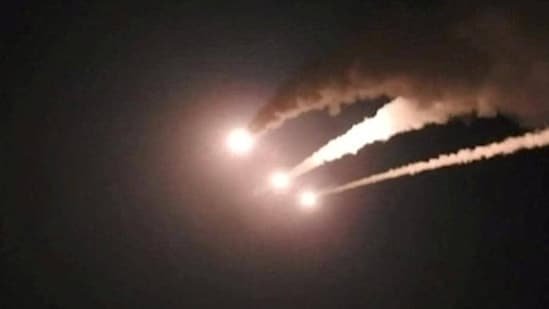
The renewed crisis in West Asia has exposed just how easily the US can be pulled back into the region it once hoped to deprioritize. In late February, the US and Israel carried out major strikes on Iran. Iran responded with missile and drone attacks across the region and heavy disruption in the Strait of Hormuz. This narrow waterway carries roughly one-fifth to one-quarter of the world’s oil trade. Iran’s actions like attacks on vessels, threats, and restrictions has sharply reduced shipping, drove up oil prices, raised insurance costs, and created shocks felt in economies far beyond the Gulf.
American forces moved quickly to escort ships, counter threats, redirect vessels, and maintain some flow of traffic. These operations demonstrated US military capability, but they also tied down naval assets, munitions, attention, and command focus at a time when resources are already stretched. Even with periods of ceasefire and pauses in escort missions, tensions have continued into May and June. Iran has pushed for new transit rules and fees, while the US has enforced its own measures. The result is ongoing strain on global energy markets and higher costs for everyone.
Kennedy’s framework helps explain why this matters so much. A militarily superior power can still be strategically trapped by a less powerful adversary if that adversary can use geography, proxies, missiles, cyber operations, and disruption to impose disproportionate costs. A stronger but less capable adversary like Iran does not need to win traditional battles. It only needs to make the price of involvement persistently high. Again, the reality is quite visible to the world, how Iran’s asymmetric warfare has been adding to the costs of war for America. Each new American deployment or crisis response adds another layer of commitment. Over time, these layers drain the bandwidth needed for the bigger strategic picture in Asia. This is imperial overstretch in real time: The ability to respond still exists, but the cumulative price in resources, readiness, and focus keeps rising.
History shows many examples where great powers got pulled into secondary theaters and paid for it later. Kennedy traced how Spain, France, and Britain all faced similar pressures when their global duties outran their economic foundations. The US today is not in immediate danger of collapse, but the pattern of repeated West Asia involvement risks the same slow erosion of relative power.
One of the less visible but more dangerous effects is alliance fatigue. American power has always gained strength from its ability to lead coalitions rather than act completely alone. Yet when US priorities appear to swing from one crisis to the next according to the demands of the moment rather than a coherent long-term plan, partners become more cautious. Some hedge by building ties with other countries, including China. Others quietly reduce their dependence on Washington or ask for more concrete proof of long-term support.
Kennedy noted that great powers lose their edge not only through direct military spending but also when they lose the multiplier effect of reliable allies. As predictability declines, building strong coalitions for any challenge, whether in West Asia or against China gets harder. In the Indo-Pacific, allies and partners have already voiced concerns about whether America can maintain steady focus while it manages fresh flare-ups elsewhere. This erosion of credibility is one of the most important warning signs of overstretch.
The US does not need to abandon West Asia entirely. The region remains important for energy security, key alliances, and preventing wider instability. But it must refrain from assuming that every new contingency necessitates a leading and enduring US role in crisis management. Restraint, in this sense, is not weakness. It is the discipline to match commitments with means.
True discipline, in Kennedy’s sense, means carefully matching commitments to available resources. It requires protecting core interests without turning every regional shock into an open-ended strategic obligation. This would involve investing more consistently in the Indo-Pacific through deepened alliances such as Quad, steady trade and technology cooperation, and reliable diplomatic engagement. It also means accepting that America can remain a global leader without trying to solve or lead on every problem in every theatre at full strength all the time.
Continuing on the current path risks confirming Kennedy’s warning: Great powers weaken when they become too scattered, too busy reacting, and too confident that another deployment or temporary fix will always suffice. A superpower can be global but it cannot be limitless. The real test of leadership is not how often it intervenes, but whether it knows where intervention matters most. If Washington keeps getting deeply drawn into West Asian emergencies while giving less steady effort to the defining challenge in Asia, it may discover that imperial overstretch is no longer just a historical theory. It has become a description of the present.
(The views expressed are personal)
This article is authored by Hilal Ramzan, assistant professor, political science, Akal University, Punjab.
