


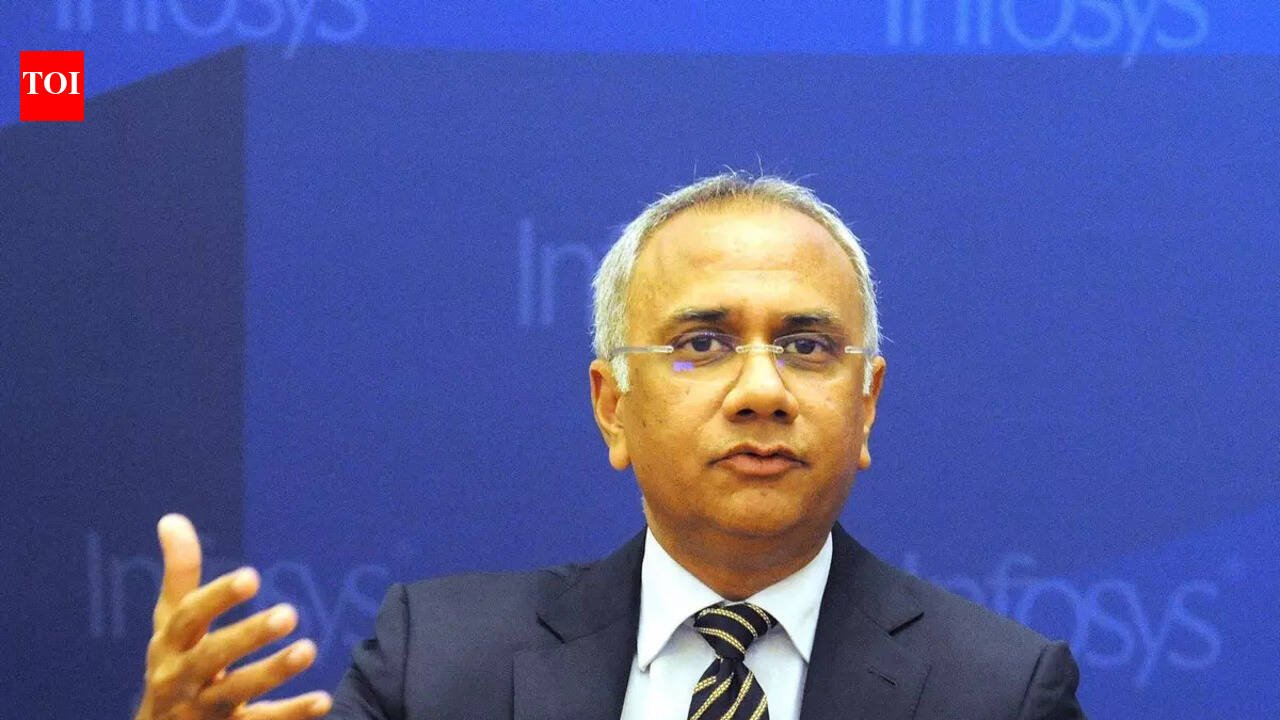
New Delhi: Infosys CEO Salil Parekh suggested that stock market investors may be misreading the impact of AI tools from companies like Anthropic, arguing that rather than shrinking opportunities for IT services firms, such technologies are likely to expand and reshape the demand for their capabilities. He said the tools can automate parts of software development, but that’s only a slice of the enterprise technology lifecycle. Integrating the software into complex legacy systems, testing it, securing it, deploying it into production and maintaining it at scale are entirely different challenges, he said. Most large enterprises, he noted, operate in “brownfield” environments built over decades. Introducing AI into such landscapes requires orchestrating and integrating multiple elements, as also understanding the nuances of specific industries and companies-capabilities IT services firms have built over years of digital transformation work. The share prices of leading IT services companies have dropped by 15-20% since early this month when Anthropic announced a slew of new and enhanced AI tools. Parekh said AI is a $300-$400 billion opportunity for IT services companies by 2030-including in areas like helping enterprises with creating an AI strategy, getting their data ready for AI training, transforming their processes with AI, modernising their legacy systems, and ensuring the AI systems can be trusted. Clients, he said, are seeking Infosys’ help in all of these areas. He said the world is heading into an era where the amount of software required would explode because of AI. That he said will also ensure the IT services workforce will continue to expand. Even as investors worry that tools like Anthropic and Cognition will reduce the need for large teams, Infosys is still hiring at scale. Parekh said the company is on track to add about 20,000 college graduates this year and hire a similar number next year. Net headcount has risen in the first three quarters as new work comes in. The shift, Parekh said, is not fewer jobs, but different skills. Even if AI tools lift engineering productivity many times over, he said demand could still rise faster than productivity, requiring more engineers. Infosys is betting on reskilling its employees. Parekh said that’s what the company did even during the cloud and digital transformation years. Thousands of employees are already being certified on AI tools, platforms and delivery methods. He also pushed back against the idea that AI makes learning computing and programming fundamentals optional. Freshers at Infosys, he said, are still trained to programme without AI tools first. Only then are they given AI copilots and agents. “If you cannot write code yourself, you cannot assess whether the machine’s output is correct,” he said. The most valuable talent in the AI era, he said, will blend strong engineering with deep domain understanding. AI agents, he said, can automate tasks, but they struggle with industry nuance. However, he acknowledged that AI tools would raise expectations of clients, who will now demand faster delivery, tighter integration and measurable impact.


