


Earlier this year, Cambridge University Press & Assessment published its first Future Ready Learners report, drawing on the voices of over 3,000 teachers and nearly 4,000 students across 150 countries, including India. One line from its foreword stays with me: “Never has the role of schools and teachers been more important.”
While this was written before the current wave of AI tools entered classrooms at scale, it feels more true now than when it was published.
How can AI help make the education system more secure, fair, and reliable?
That conviction resonates with particular force in India right now. The country’s education landscape is undergoing one of its most consequential transformations, as the education policy moves from vision to practice, the educator’s role is being reimagined in genuine ways. The question is no longer whether classrooms will change, that has already begun to happen. The more consequential question is how every teacher gets what they need to lead that change with clear outcomes and purpose.
A timeless profession evolving for a new era
The competency-based classroom is asking something different of educators, and most are rising to meet it. Designing for transferable skills, using formative assessment as an everyday tool, responding to learners with different readiness levels, and these require a depth of professional judgement that cannot be assumed.
It has to be built, continuously, through practice and structured reflection.
AI is accelerating that demand, not creating a separate one. When a teacher uses AI for everyday work, they are not automating their role, they are freeing themselves to do the harder, more human work that competency-based education actually requires – asking better questions, building trust that makes a student willing to participate.
A third of educators, globally, are already using AI this way, most without waiting for formal guidance. Now it is for the schools to build the professional environment in which teachers can use it with confidence, discernment, and genuine pedagogical purpose.
Why emotional preparation matters as much as academic preparation during competitive exams
Around half of teachers using AI do so without any institution level policy governing its use. Only 20% feel prepared for generative AI in the classroom, and just 29% have received related training. These are not technology gaps. They are professional development gaps, and they matter because a teacher who is uncertain about the tool is less likely to use it in ways that genuinely serve learning.
India has the foundations to close this gap. A nationwide study of 3,000 educators showed strong foundational pedagogy scores – a solid base on which competency-specific and technology-integrated capabilities can be built. The National Professional Standards for Teachers defines what effective teaching looks like across career stages – from the newly qualified educator to the experienced school leader.
Anchoring mandatory development to these standards means, for the first time, that growth is being measured against a common national benchmark.
The opportunity ahead
A new generation of teachers is entering the profession already fluent with digital tools and asking the right questions about what learning should look and feel like.
The task for school leaders and policymakers is to meet that energy with development that is sustained, practice-embedded, and stage-appropriate. A newly qualified teacher needs grounding in pedagogy. An early-career educator needs mentoring and subject-specific depth. A teacher with a decade of experience needs pathways into leadership that keep their expertise in the classroom. That progression is what turns a policy commitment into a genuine professional ecosystem.
Technology has a clear role here too. Used well, it reduces the administrative load that crowds out professional growth and creates space for peer observation, co-planning, and structured reflection. But that requires AI literacy frameworks, clear guidelines on responsible use, and training that reaches every teacher, not only those in well-resourced schools.
Great education reaches every student through an educator. Every framework, every assessment, every technology investment lives or dies in the quality of that relationship. Investing in teachers is no longer one pillar among many in India’s reform agenda. It is the foundation everything else rests on.
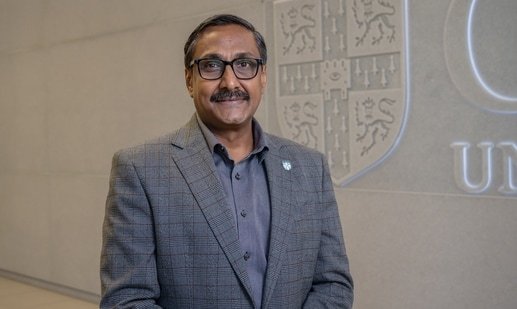
(This article is written by Arun Rajamani, Managing Director, South Asia, Cambridge University Press & Assessment)
