



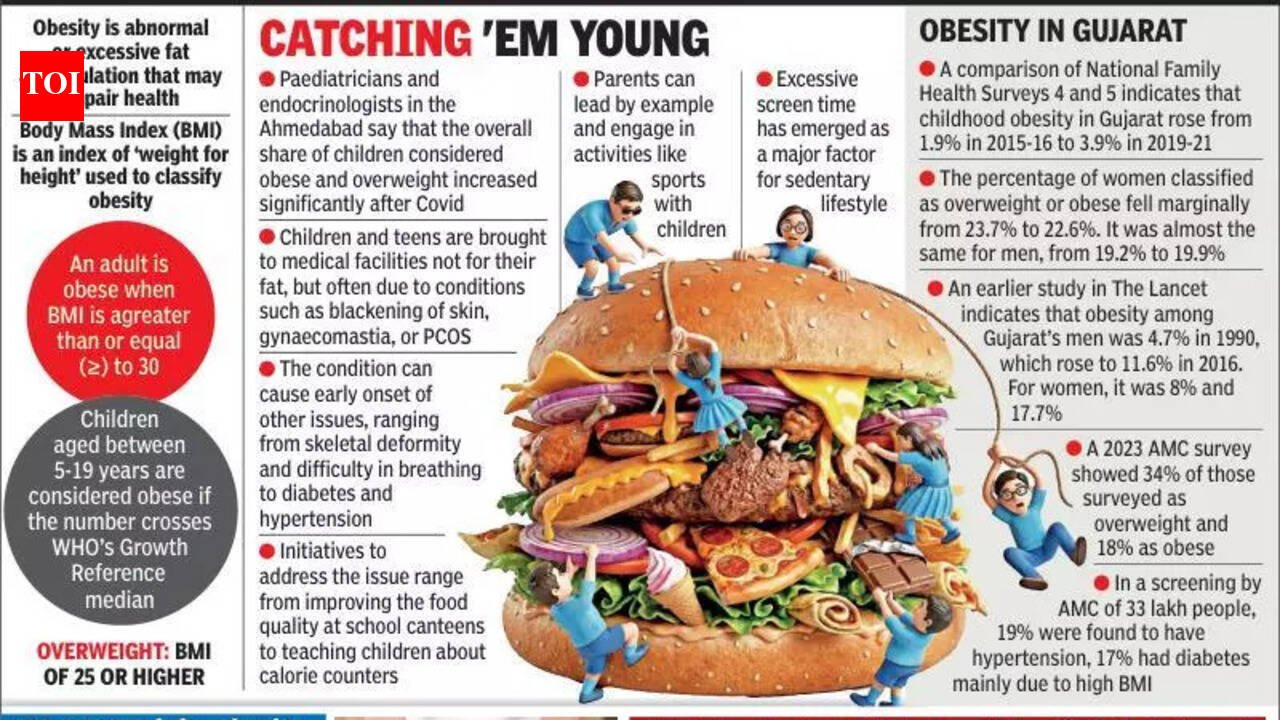
Ahmedabad: An 18-year-old patient sitting in Dr Vivek Arya’s clinic, an endocrinologist in the city, shares an interesting story of transformation. When he first walked into the doctor’s clinic, he weighed 120kg. Standing at 5 feet 5 inches, his body mass index once hovered around 40, which was firmly in the morbidly obese range. Today, he weighs 85kg. “The family attempted diet control and asked the teen to engage in activities like football daily. However, when nothing worked, they decided to seek medical advice. We placed him on the glucagon-like peptide (GLP)-1 treatment, which helped him lose up to 3 kg per month. He was also enrolled in a counselling and lifestyle modification programme,” said Dr Arya, adding that the reduction in weight helped him gain confidence and become more active.The case highlights the growing crisis of adolescent obesity, a subject brought into sharp focus as World Obesity Day is observed annually on March 3. This year’s theme — “8 billion reasons to act on obesity” — highlights the deeply personal journeys and motivations behind every individual’s struggle to shed excess weight. Experts say the theme could not be more fitting for adolescents and teenagers, who form one of the most vulnerable groups. The concern extends beyond their present health: early-onset lifestyle diseases, sleep apnoea, and breathlessness are among the serious future implications they face.Dr Sanjeev Phatak, a city endocrinologist, confirmed that the number of children and teenagers seeking medical intervention for obesity is on the rise. “It often becomes debilitating for teens. While the overweight and obese population is increasing, most patients below 18 had previously been managed through lifestyle modifications alone. Now, however, the combined effect of multiple factors such as a sedentary lifestyle, increased screen time, greater consumption of processed food, and lack of physical activities has left no choice but to resort to medication in several cases,” he said. Dr Phatak added that success stories do emerge when disciplined teens manage to reduce weight through diet and exercise alone.Experts explained that GLP-1 is a hormone that regulates blood sugar, promotes satiety, and slows gastric emptying. When administered as a medication, available under several brand names, it mimics this hormonal function by reducing appetite. The drug is approved for use in the paediatric age group based on specific clinical parameters and is now being prescribed to control obesity in patients as young as 14 and 15 years of age. The Economic Survey 2025-26 identifies obesity as one of the country’s major health challenges, with the prevalence of overweight and obese individuals rising from 9% among men and 13% among women in 2005 to 22.9% and 24% respectively by 2019. The report also indicated that the consumption of ultra-processed food (UPF) increased in India from 0.9 billion USD to a whopping 37.9 billion USD between 2005 and 2019.


