


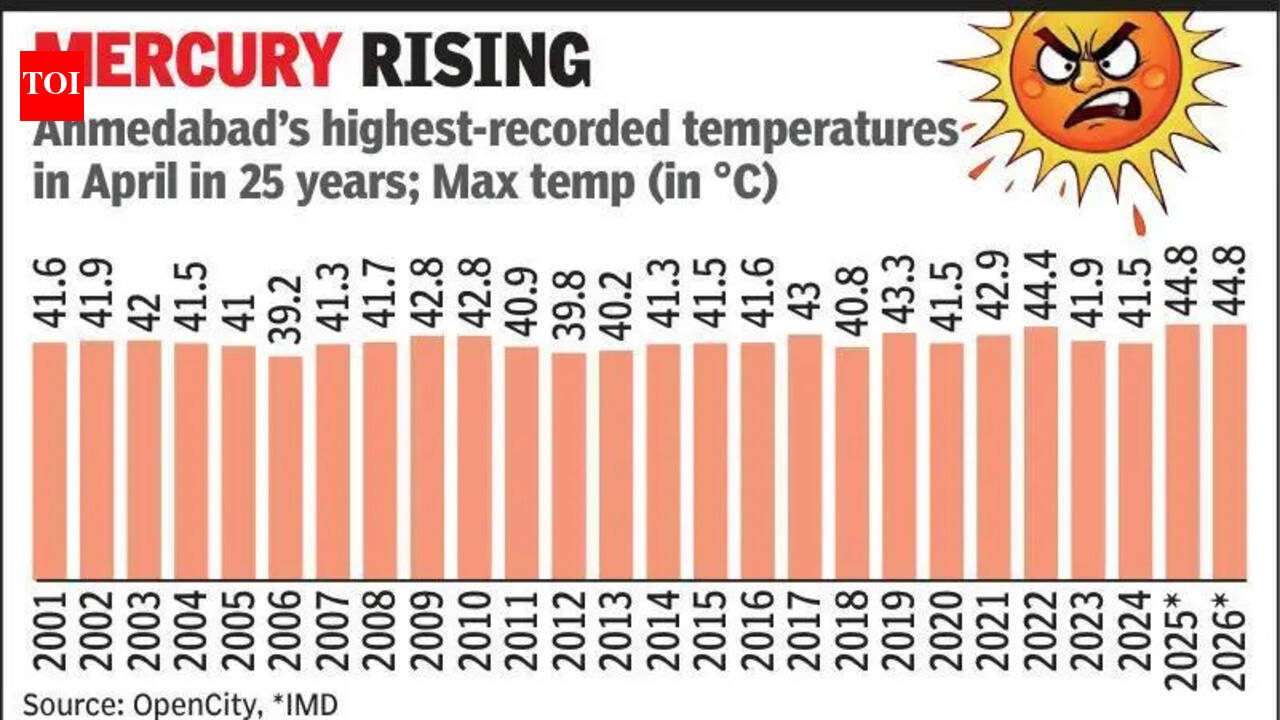
Ahmedabad: Amdavadis stepped out to vote on Sunday under one of its hottest April days in recent memory. The temperature climbed to 44.8°C, matching the same figure recorded on April 29 last year. This makes it one of the hottest April days in Ahmedabad in at least 25 years. Early April offered some respite. Since April 12, however, the city has seen 18 straight days above 40°C. Data shows that such extremes are becoming more frequent in the past five years. The shift is raising fresh concerns about urban heat and its growing impact on daily life. Long-term data suggests this is not just a one-off spike. According to temperature trends from the OpenCity portal, the average maximum temperature in April hovered around 41.5°C between 2001 and 2010, and 41.4°C between 2011 and 2020. During these two decades, the highest April temperature recorded was 43.3°C in 2019.The pattern has shifted sharply since 2021. In the past five years, April temperatures have crossed 44°C three times: 44.4°C in 2022 and 44.8°C in both 2025 and 2026. This has pushed the recent five-year average to 43.4°C, higher than earlier decades.Weather experts say March is relatively cooler as the temperatures start peaking after mid-March. “April is traditionally a transition month before peak summer in May, when temperatures usually hit their highest levels in Ahmedabad and Gujarat. However, multiple factors are now intensifying April heat. While overall temperatures are increasing in India, the rising heat in Ahmedabad has also to do with microclimatic factors. Urban heat island effects — where dense built-up areas trap heat — are making parts of Ahmedabad hotter than surrounding regions. Wind speed and direction are also influencing daily temperature swings,” said a weather analyst from Ahmedabad.Data from the India meteorological department (IMD) shows that this April has also seen erratic fluctuations. Western Disturbances have caused temperature variations of up to 3°C within a week, said senior Met department officials. At the same time, higher-than-normal minimum temperatures have reduced nighttime cooling, making it harder for the city to recover from daytime heat.
