






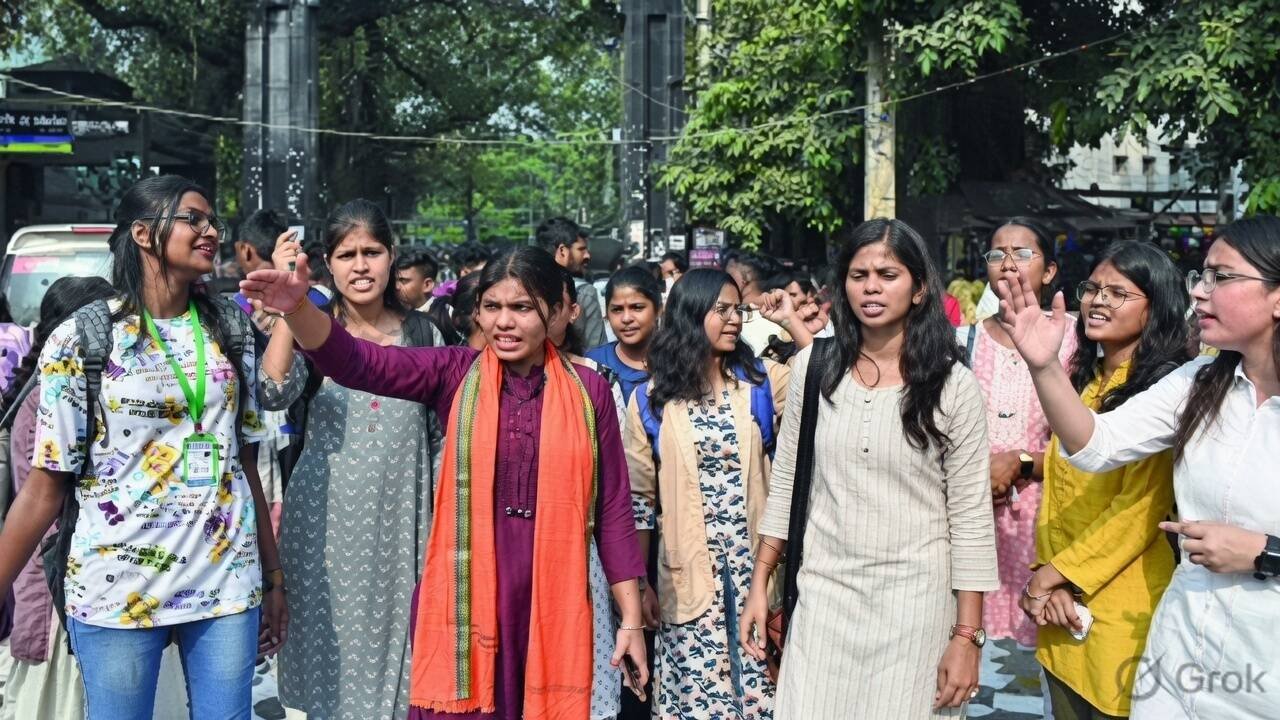
The anti-CAA-NRC protests of December 2019 were among the last instances when Mumbai’s campuses appeared politically vibrant.Though it briefly seemed student politics in the city was witnessing a revival, the momentum quickly faded. With student union elections absent from most campuses and increasing curbs on student activities at several institutions in recent years, student politics in Mumbai gradually died a slow death, say former student leaders.In the absence of traditional student organisations gaining traction on these issues, some say students seem to have found a leader in Sonam Wangchuk, while social media has given the students’ movement fresh momentum, helping issues reach a wider student audience.Amarjit Singh Manhas, from the Congress, who was elected consecutively to the Mumbai University’s senate for more than 30 years until 2010, said the allowed to keep term (ATKT) policy was introduced at the university following a student movement in the late 1970s.Recalling another major protest in 1978, when student leader Saroj Tripathi occupied the vice-chancellor’s Fort office over a fee hike, Manhas said what is missing in campus politics today is leadership.“There is no proper leadership within the academic community today to mobilise the youth. People are only communicating in writing, and this is not yielding results. Agitations are not being organised the way they used to be. Earlier, colleges had their own students’ unions and we managed to get around 510 representatives from each college who were willing to participate in agitations,” said Manhas.Sandesh Kondvilkar, a Congress politician who was part of a state committee formed to examine the implementation of the Lyngdoh Commission report on student elections, agreed that leadership has declined.“With the student election system gone, leadership within student politics failed to develop the way it once had. Former student leaders such as Jeetendra Awhad, Vinod Tawde, Parag Lalwani, and Ashish Shelar went on to become prominent political figures,” said Kondvilkar.“The absence of regular student elections has created a leadership vacuum increasingly filled by the children of established politicians rather than by students rising through campus politics,” said Mrudul Nile, a Mumbai University professor in the department of civics and politics.“A large proportion of students enrol in commerce and management programmes and focus on corporate careers, entrepreneurship and opportunities abroad, rather than the civil services, public life or political engagement. With relatively few students exposed to the social sciences, there is also less space on campuses for sustained reflection on public policy,” said Nile.The student movements that remain visible are often driven by Left-leaning organisations, said Nile.In recent years, campuses such as TISS and IIT, which have traditionally had active student collectives, have introduced stricter rules for organising protests and events.State universities, including Mumbai University, have also issued circulars restricting gatherings and demonstrations on campus without prior permission.


