


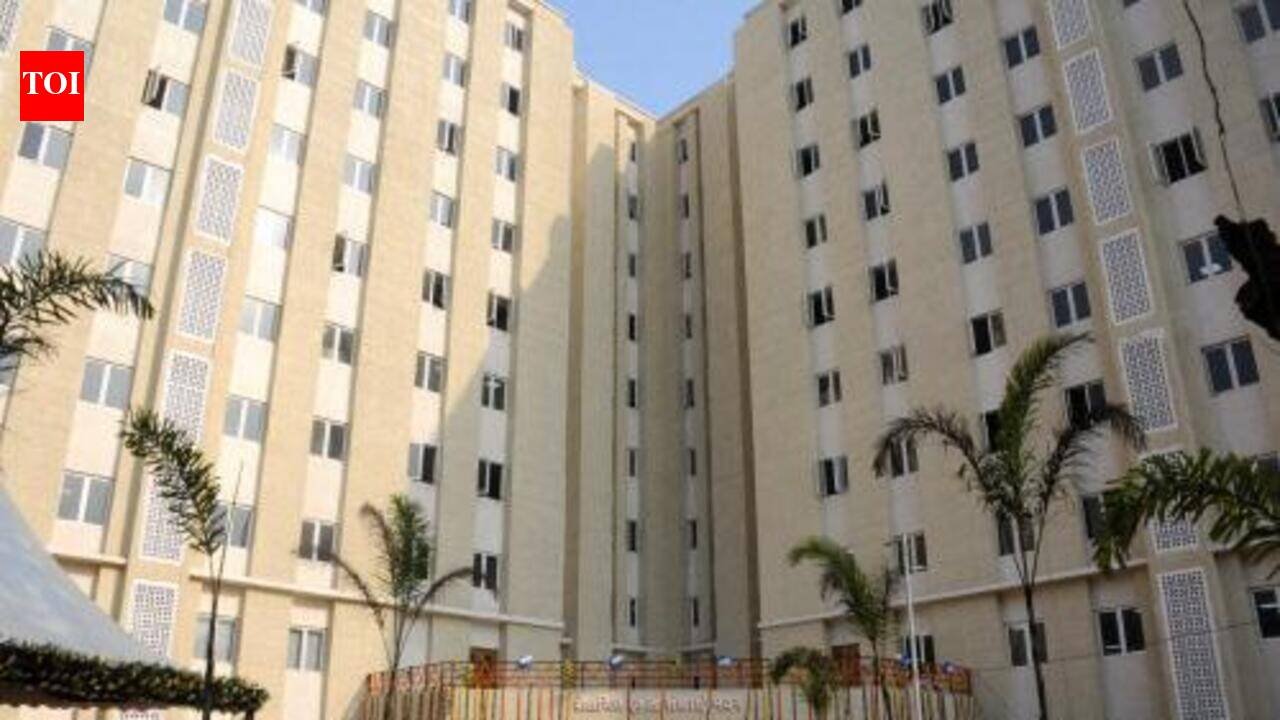
Patna: Even as Patna University (PU) began its 2026-27 academic session on Monday after a monthlong summer vacation, academic and administrative activities could not start from its newly constructed academic and administrative blocks at Krishna Kunj as the buildings are yet to be handed over to the university.The G+8 administrative block and G+9 academic block, constructed by the Bihar State Education Infrastructural Development Corporation (BSEIDC) at a cost of Rs 147 crore, were inaugurated nearly three months ago by then chief minister Nitish Kumar. However, the PU administration is still awaiting their formal handover.With plans to begin the new academic session from the new campus, the university had constituted a four-member committee headed by the internal quality assurance cell (IQAC) director to inspect the buildings. The committee submitted its report to vice-chancellor Ajay Kumar Singh, pointing out that several essential works relating to infrastructure, furnishing, utilities and campus development were still pending.Expressing concern over the delay despite the formal inauguration, Ajay forwarded the inspection report to the chancellor’s secretariat, the higher education department and the BSEIDC chairman, seeking urgent intervention so that the buildings could be put to use in the larger interest of academics.Dean of students’ welfare Kameshwar Pandit said the university could not shift its offices and postgraduate departments until the buildings were formally handed over. “The shifting work will also take some time,” he said.The administrative block has been designed to house the central university offices, deans’ offices, the placement cell, IT cell, research centre and evaluation centre. It also has CCTV surveillance on every floor, a control room, meeting and seminar halls, purified drinking water facilities and a state-of-the-art auditorium with a seating capacity of more than 700.The academic block will accommodate postgraduate departments currently functioning from the congested Darbhanga House complex. It includes smart classrooms, digital studios, an ICT lab with 100 computers, a cafeteria, boys’ and girls’ common rooms and lifts.Pandit said a dedicated electricity substation had been set up on the campus, while a solar power plant would provide backup during power cuts. Parking facilities and landscaped gardens are also being developed.
